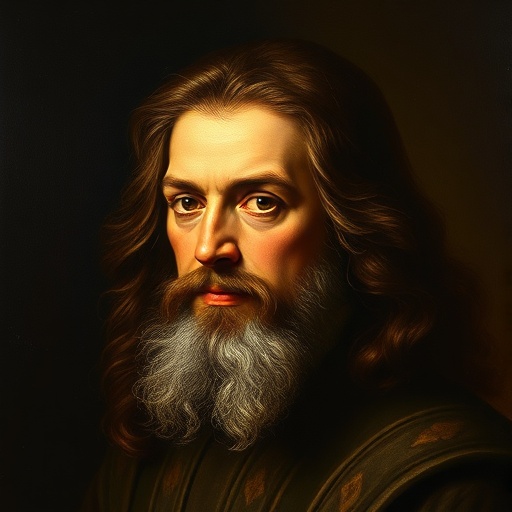
Leonardo da Vinci — "Simplicity is the ultimate sophistication."
Simplicity is the ultimate sophistication.
Simplicity is the ultimate sophistication.
Click any product to generate a realistic preview. Up to 3 at a time.
* Initial load can take up to 90 seconds — revising the preview in another color is nearly instant.
"Experience does not err. Only your judgments err by expecting from her what is not in her power."
"Blinding ignorance does mislead us. O! Wretched mortals, open your eyes!"
"Painting is poetry that is seen rather than felt, and poetry is painting that is felt rather than seen."
"I have offended God and mankind because my work didn't reach the quality it should have."
"Why does the eye see a thing more clearly in dreams than the imagination when awake?"
Found in 1 providers: grok
1 source checked
True mastery isn't about complexity or ornamentation — it's about distilling something to its essential form. Real sophistication means removing everything unnecessary until only what matters remains. The best designs, solutions, and ideas look effortless because the hard work of refinement is invisible. Complexity is easy to achieve; genuine clarity is difficult, and that difficulty is what makes simplicity the highest form of intelligent effort.
Leonardo worked simultaneously as painter, anatomist, engineer, musician, and architect. His Vitruvian Man reduces human proportion to pure geometric harmony. His sfumato technique — blurring painted edges so subtly the method becomes invisible — embodies this belief in practice. His engineering notebooks show thousands of iterations stripping mechanisms to their cleanest form. He believed understanding nature's underlying mathematical order, not decorating surfaces, was the highest intellectual achievement.
The Italian Renaissance was actively rejecting medieval ornamentation and scholastic complexity. The printing press, spreading from the 1440s, rewarded clarity over elaboration. Humanist scholars recovering ancient Greek texts prized proportion and reason above decoration. Florence and Milan competed as commercial centers where elegant, functional engineering had real economic value. Architects like Brunelleschi and Alberti proved mathematical precision produced greater beauty than elaborate surface embellishment.
AI-generated insights based on extensive research and information for context. Factual errors? Email [email protected].
Your cart is empty