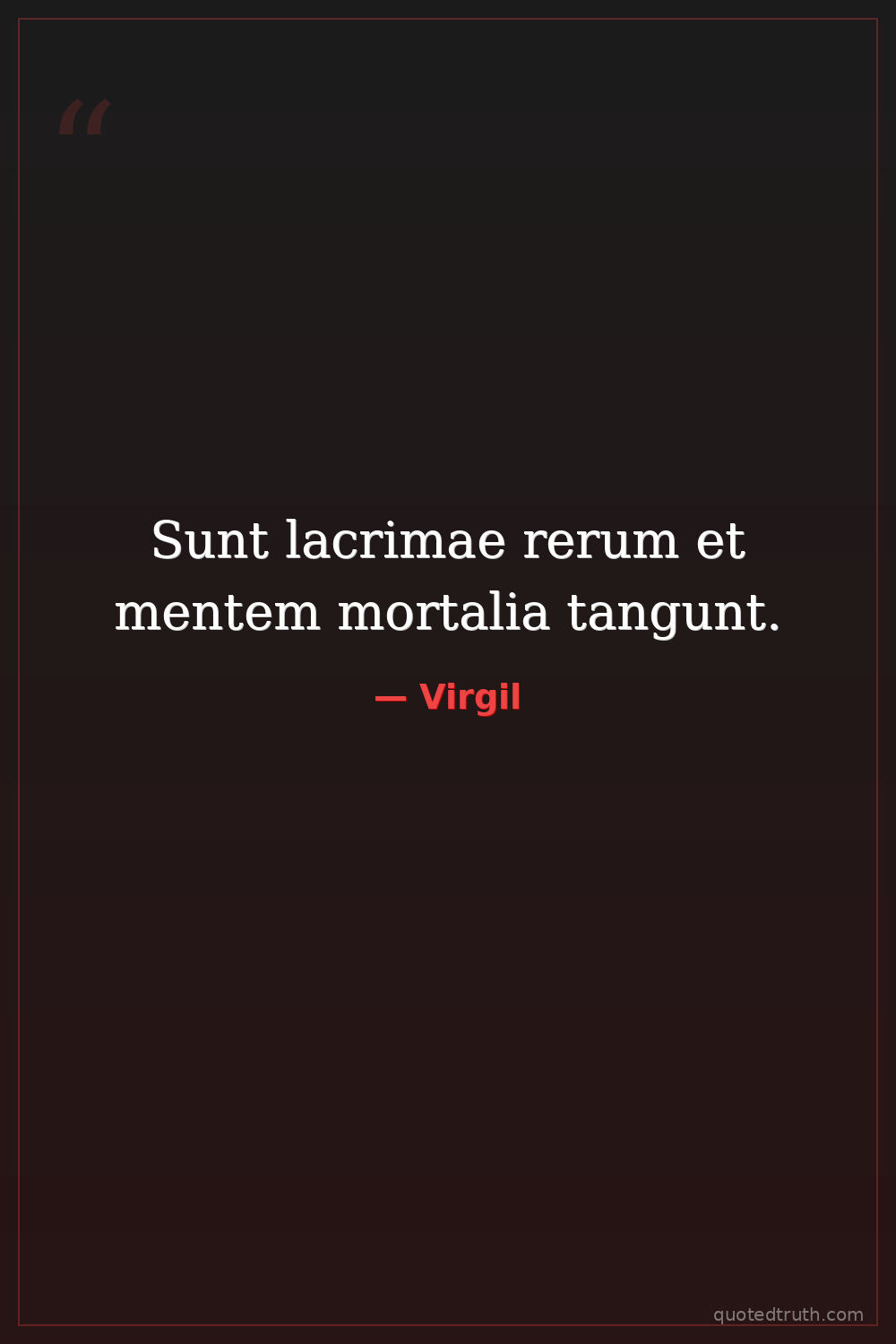
Virgil — "Sunt lacrimae rerum et mentem mortalia tangunt."
Sunt lacrimae rerum et mentem mortalia tangunt.
Sunt lacrimae rerum et mentem mortalia tangunt.
Click any product to generate a realistic preview. Up to 3 at a time.
* Initial load can take up to 90 seconds — revising the preview in another color is nearly instant.
"Audentes Fortuna iuvat."
"Forsan et haec olim meminisse iuvabit."
"Omnia vincit Amor; et nos cedamus Amori."
"The snake lurks hidden in the grass."
"Timeo Danaos et dona ferentes."
Roman poet of the Augustan age whose Aeneid is the founding national epic of Rome and Western literature's most-imitated hexameter poem. Closely associated with Ovid (younger Augustan poet of Metamorphoses) and Horace (third Augustan-era major poet). For an intellectual contrast, see Lucan, Roman poet (39-65 CE) of the Pharsalia — Lucan's Pharsalia explicitly rejected Virgilian Augustan epic by writing a civil-war epic that refused divine machinery and treated Roman empire as tragedy rather than destiny. Lucan's Pharsalia is a 60-years-later rebuke of the Aeneid's imperial theology — civil war as crime instead of providence.
Your cart is empty