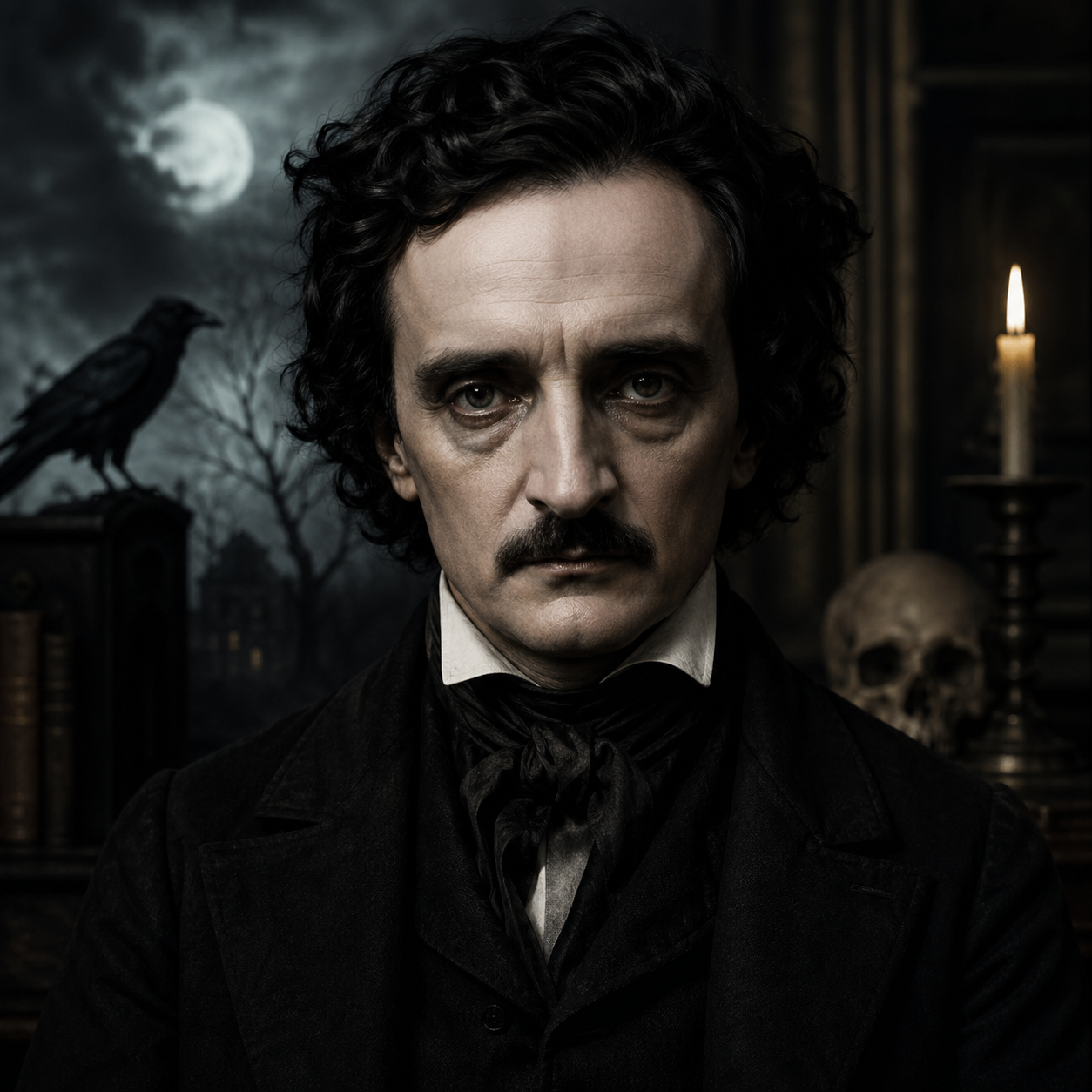
Edgar Allan Poe — "That man is a fool who cannot be a knave when he pleases."
That man is a fool who cannot be a knave when he pleases.
That man is a fool who cannot be a knave when he pleases.
Click any product to generate a realistic preview. Up to 3 at a time.
* Initial load can take up to 90 seconds — revising the preview in another color is nearly instant.
"That which you mistake for madness is but an overacuteness of the senses."
"In the ludicrous heightened into the grotesque; the fearful coloured into the horrible; the witty exaggerated into the burlesque; the singular wrought out into the strange and mystical. You may say al…"
"Who has not, a hundred times, found himself committing a vile or a silly action for no other reason than because he knows he should not?"
"To die laughing must be the most glorious of all glorious deaths!"
"I would define, in brief, the Poetry of words as The Rhythmical Creation of Beauty. Its sole arbiter is Taste. With the Intellect or with the Conscience, it has only collateral relations. Unless, inde…"
American Gothic poet and short-story writer who invented the detective story (Murders in the Rue Morgue) and shaped horror literature. Closely associated with Nathaniel Hawthorne (fellow American Gothic) and Charles Baudelaire (his French translator and torch-bearer). For an intellectual contrast, see Ralph Waldo Emerson, Transcendentalist optimist of self-reliance — Poe wrote essays attacking the entire Transcendentalist circle as didactic and intellectually thin — he derisively called them 'Frogpondians' and treated their cheerful mysticism as the literary opposite of his macabre realism.
Attributed, but precise source is debated. Often cited as from a critical essay or letter.
Date: Undated
GeneralFound in 1 providers: grok
1 source checked
Your cart is empty