Hippocrates — "That which is used - develops. That which is not used wastes away."
That which is used - develops. That which is not used wastes away.
That which is used - develops. That which is not used wastes away.
Click any product to generate a realistic preview. Up to 3 at a time.
* Initial load can take up to 90 seconds — revising the preview in another color is nearly instant.
"The powers of the elements are shown in the seasons."
"The greatest joy in life is to be healthy."
"The best diet is that which is most simple."
"The body is the garden of the soul."
"Sleep, when disturbed, is a sign of disease."
A principle of 'use it or lose it', applicable to both physical and mental faculties.
Date: c. 5th Century BCE
PhilosophicalFound in 1 providers: gemini
1 source checked
Active engagement builds capability; neglect causes decline. This applies universally — muscles atrophy without exercise, skills fade without practice, and minds dull without stimulation. The principle anticipates what modern science calls use-dependent plasticity, or the use-it-or-lose-it rule. Whether physical or mental, our capacities respond directly to how much we demand of them. Consistent use strengthens; sustained disuse inevitably degrades what we fail to exercise.
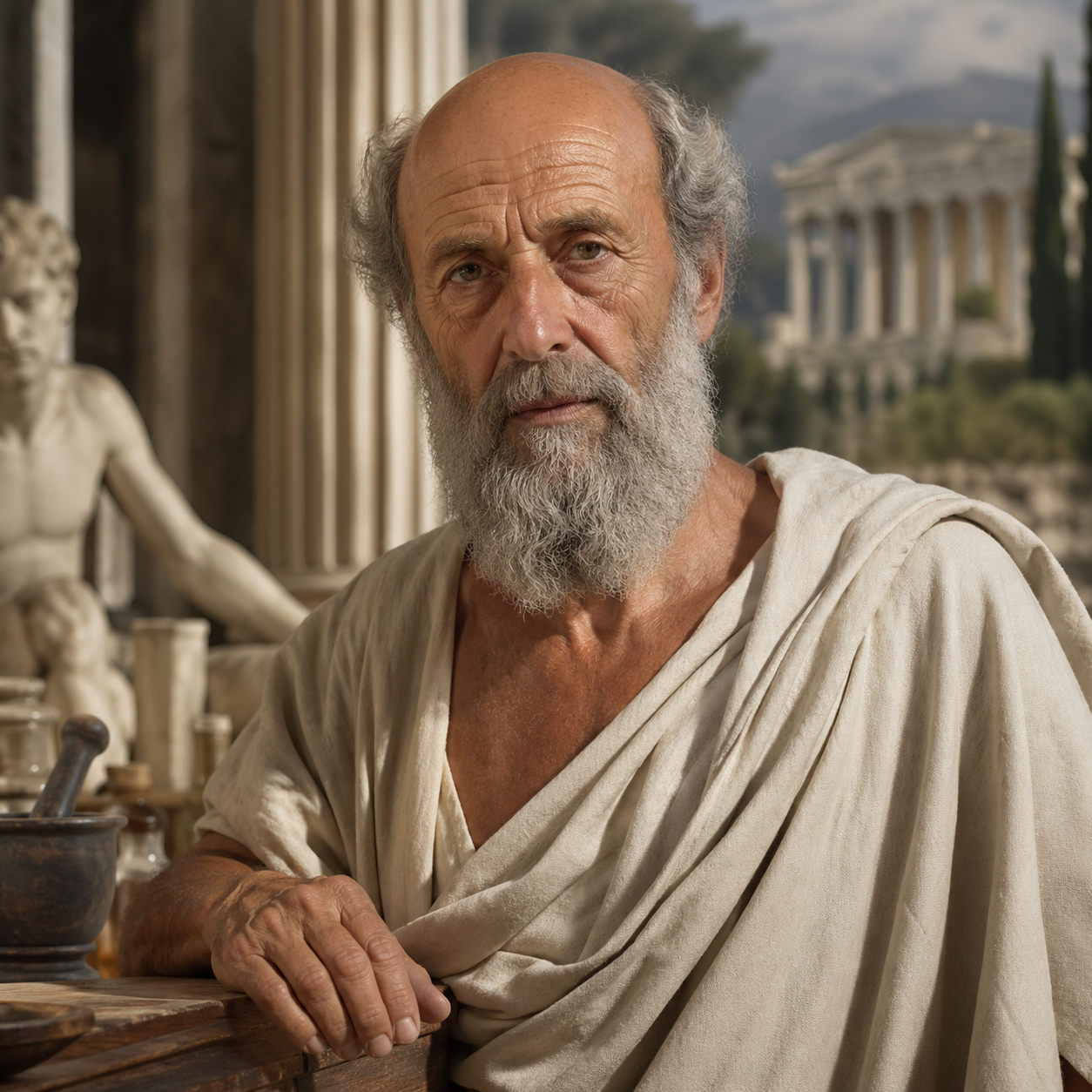
Hippocrates (~460–370 BC) built medicine on direct observation rather than superstition. He would have watched bedridden patients lose muscle mass and injured limbs wither — clinical evidence that the body responds to its demands. His emphasis on diet, exercise, and lifestyle as healing tools flows directly from this insight. It reflects his core conviction that the body is self-correcting when properly engaged and self-destroying when left idle.
In 5th-century BC Greece, medicine was transitioning from temple-based healing under Asclepius toward empirical observation. Greek culture celebrated physical excellence through the Olympics and rigorous athletic training, making the body's response to use visible to all. Simultaneously, philosophers were beginning to explain natural phenomena through reason rather than divine will. Hippocrates stood at this intersection, where bodily discipline and rational inquiry together reshaped how Greeks understood health and disease.
AI-generated insights based on extensive research and information for context. Factual errors? Email [email protected].
Your cart is empty