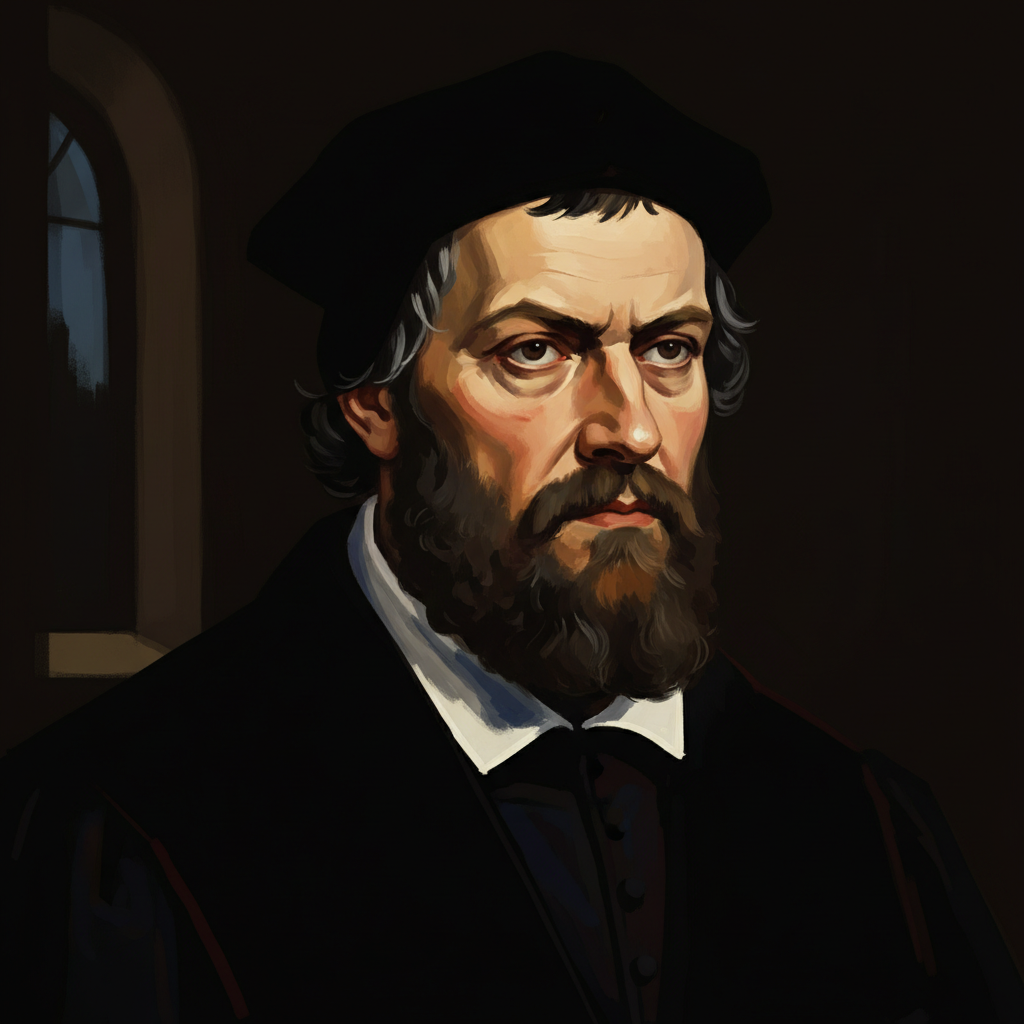
Martin Luther — "The Bible is alive, it speaks to me; it has feet, it runs after me; it has hands…"
The Bible is alive, it speaks to me; it has feet, it runs after me; it has hands, it lays hold on me.
The Bible is alive, it speaks to me; it has feet, it runs after me; it has hands, it lays hold on me.
Click any product to generate a realistic preview. Up to 3 at a time.
* Initial load can take up to 90 seconds — revising the preview in another color is nearly instant.
"I have to confess that I have no desire to be a martyr."
"I cannot choose but adhere to the word of God, which has possession of my conscience; nor can I possibly, nor will I even make any recantation, since it is neither safe nor honest to act contrary to c…"
"We should not break our heads at work and injure our bodies … I myself used to do such things, and I have racked my brains because I still have not overcome the bad habit of overworking. Nor shall I o…"
"The assembly of his greased and religious crew in praying was altogether like the croaking of frogs, which edified nothing at all."
"You have as much laughter as you have faith."
German theologian whose 95 Theses (1517) launched the Protestant Reformation and broke the Catholic Church's monopoly on Western Christianity. Closely associated with Philipp Melanchthon (Lutheran systematizer) and John Calvin (later Reformer who built on Luther's break). For an intellectual contrast, see Pope Leo X, Renaissance pope (1513-1521) — Leo X's indulgence sales triggered Luther's break and Leo excommunicated him in 1521 — Luther's entire Reformation is structured as a direct answer to the indulgence-funded Vatican Leo represented.
Found in 1 providers: grok
1 source checked
Luther describes scripture as a living, active presence rather than a static text. The Bible isn't just something you read passively; it pursues you, grabs you, and demands a response. Its words feel personal and urgent, reaching into daily life with the force of a living voice. Reading it becomes an encounter, not an exercise, where the text itself seems to chase down the reader and refuse to let go.
Luther staked his life on scripture's authority, translating the Bible into German so ordinary people could read it themselves. His doctrine of sola scriptura made the text the sole rule of faith, above pope or council. Having wrestled personally with guilt and grace through Paul's letters, he knew the Bible as something that had seized him first. This quote captures the intimate, combative relationship with scripture that fueled his break from Rome.
In early modern Europe, the Bible was chained in Latin and mediated through priests; laypeople rarely read it directly. Gutenberg's press (c. 1450) and Luther's 1522 German New Testament shattered that monopoly, putting scripture into vernacular hands for the first time at scale. The Reformation was reframing the Bible as a personal authority rather than church property, and Luther's vivid, bodily language matched an age discovering that reading scripture could upend empires.
AI-generated insights based on extensive research and information for context. Factual errors? Email [email protected].
Your cart is empty