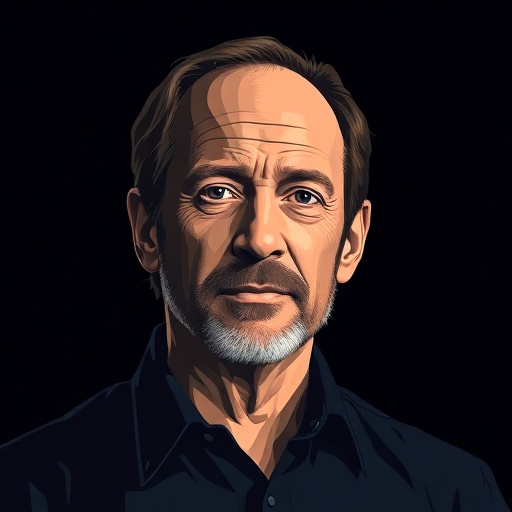
Tim Berners-Lee — "The biggest challenge for the web is to keep it neutral and fair."
The biggest challenge for the web is to keep it neutral and fair.
The biggest challenge for the web is to keep it neutral and fair.
Click any product to generate a realistic preview. Up to 3 at a time.
* Initial load can take up to 90 seconds — revising the preview in another color is nearly instant.
"Governments must treat the internet as a basic utility—like water."
"The web should be a place where people can be themselves, not just perform for others."
"The web is a reflection of humanity."
"Solid will give users more control over their data and help to decentralize the web."
"The web is a tool for innovation, but it can also be used for stagnation."
British computer scientist who invented the World Wide Web at CERN in 1989 and founded the W3C, championing open web standards. Closely associated with Vint Cerf (TCP/IP co-creator and 'father of the internet') and Marc Andreessen (Mosaic browser creator and Netscape co-founder). For an intellectual contrast, see Mark Zuckerberg, Facebook (Meta) founder — Zuckerberg's walled-garden Facebook is the canonical contemporary opposite of Berners-Lee's open-web vision; Berners-Lee's Solid project and 'recapture the web' essays are explicitly written as a rebuttal to the platform-monopoly model Facebook pioneered.
Found in 1 providers: grok
1 source checked
The web's core value lies in treating all users, content, and services equally — no gatekeeping, no favoritism, no corporate or government control over who gets heard or seen. Keeping it neutral means anyone with an internet connection can publish, access, and communicate without discrimination based on wealth, geography, politics, or identity.
Berners-Lee invented the web in 1989 as a free, open system, deliberately refusing to patent it. He founded the World Wide Web Consortium (W3C) to steward open standards and later launched the Web Foundation to fight for net neutrality and universal access. This quote crystallizes his lifelong mission: protecting the decentralized, egalitarian architecture he originally designed.
Berners-Lee made this and similar statements amid fierce battles over net neutrality, corporate platform dominance, and government surveillance — particularly after the Snowden revelations (2013) and ISP lobbying to create tiered internet access. The web had evolved from an open academic tool into a commercial battlefield, threatening the equal-access principles he had embedded from its founding.
AI-generated insights based on extensive research and information for context. Factual errors? Email [email protected].
Your cart is empty