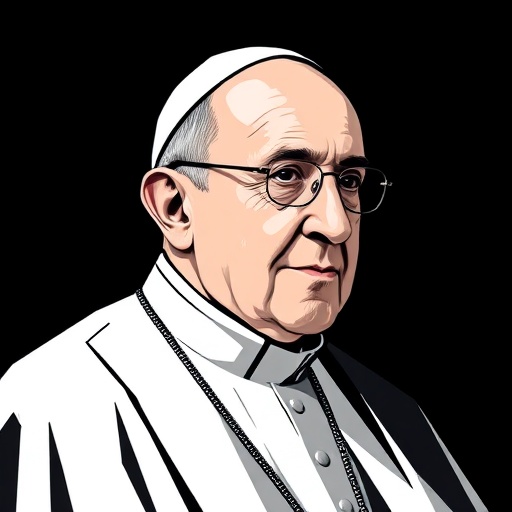
Pope Francis — "The Church is not a customs office."
The Church is not a customs office.
The Church is not a customs office.
Click any product to generate a realistic preview. Up to 3 at a time.
* Initial load can take up to 90 seconds — revising the preview in another color is nearly instant.
"The Roman Curia is the leprosy of the papacy."
"Marxist ideology is wrong."
"An economic system that has as its center the god of money needs to be denounced, because it is a system that kills."
"God is not a magician with a magic wand."
"Rigidity is not a gift from God; it is a human thing."
First Latin American and Jesuit pope (2013-), who has steered the Catholic Church toward pastoral inclusion on LGBTQ pastoral care, divorced Catholics, and climate. Closely associated with Pope John XXIII (the Vatican II reformer pope) and Cardinal Walter Kasper (his theological ally on pastoral reform). For an intellectual contrast, see Cardinal Raymond Burke, American traditionalist cardinal, former head of the Vatican Apostolic Signatura — Burke is the public face of Catholic traditionalism that views Francis's pastoral approach as doctrinally dangerous — he has formally challenged Amoris Laetitia and other Francis reforms.
Found in 1 providers: grok
1 source checked
The Church should not function as a bureaucratic checkpoint that inspects people's moral credentials before granting entry or belonging. A customs office stops, scrutinizes, and turns back those who don't meet requirements. Francis argues the Church must instead be open, merciful, and welcoming — not an institution evaluating whether someone is 'qualified' to receive grace or community. The metaphor rejects legalism in favor of radical inclusion.
Born in Buenos Aires and shaped by Jesuit spirituality and ministry among the poor, Francis built his pastoral identity around encounter over exclusion. He famously said 'Who am I to judge?' regarding gay Catholics, championed mercy in Amoris Laetitia for divorced and remarried Catholics, and described the Church as a 'field hospital.' This quote distills his lifelong conviction that rigid gatekeeping contradicts the Gospel's call to welcome sinners and outcasts.
Francis became pope in 2013 amid fierce Catholic debates over communion for divorced Catholics, LGBTQ+ inclusion, and lapsed believers returning after the clergy abuse crisis shattered institutional trust. Conservative factions pushed stricter doctrinal enforcement while progressive voices demanded pastoral flexibility. Globally, organized religion faced declining participation and perceptions of judgment and exclusivity. His 'customs office' metaphor was a direct theological challenge to those who weaponized Church rules as barriers rather than invitations.
AI-generated insights based on extensive research and information for context. Factual errors? Email [email protected].
Your cart is empty