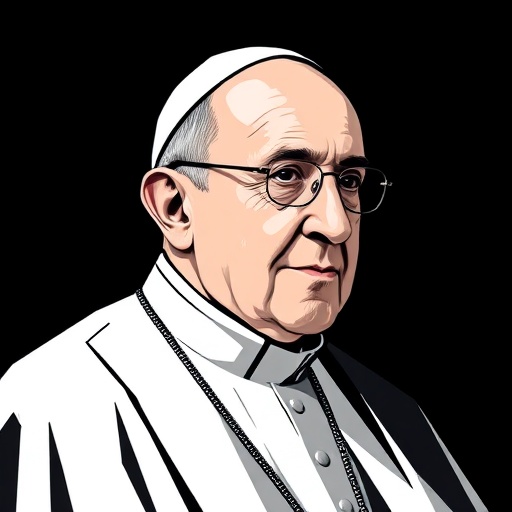
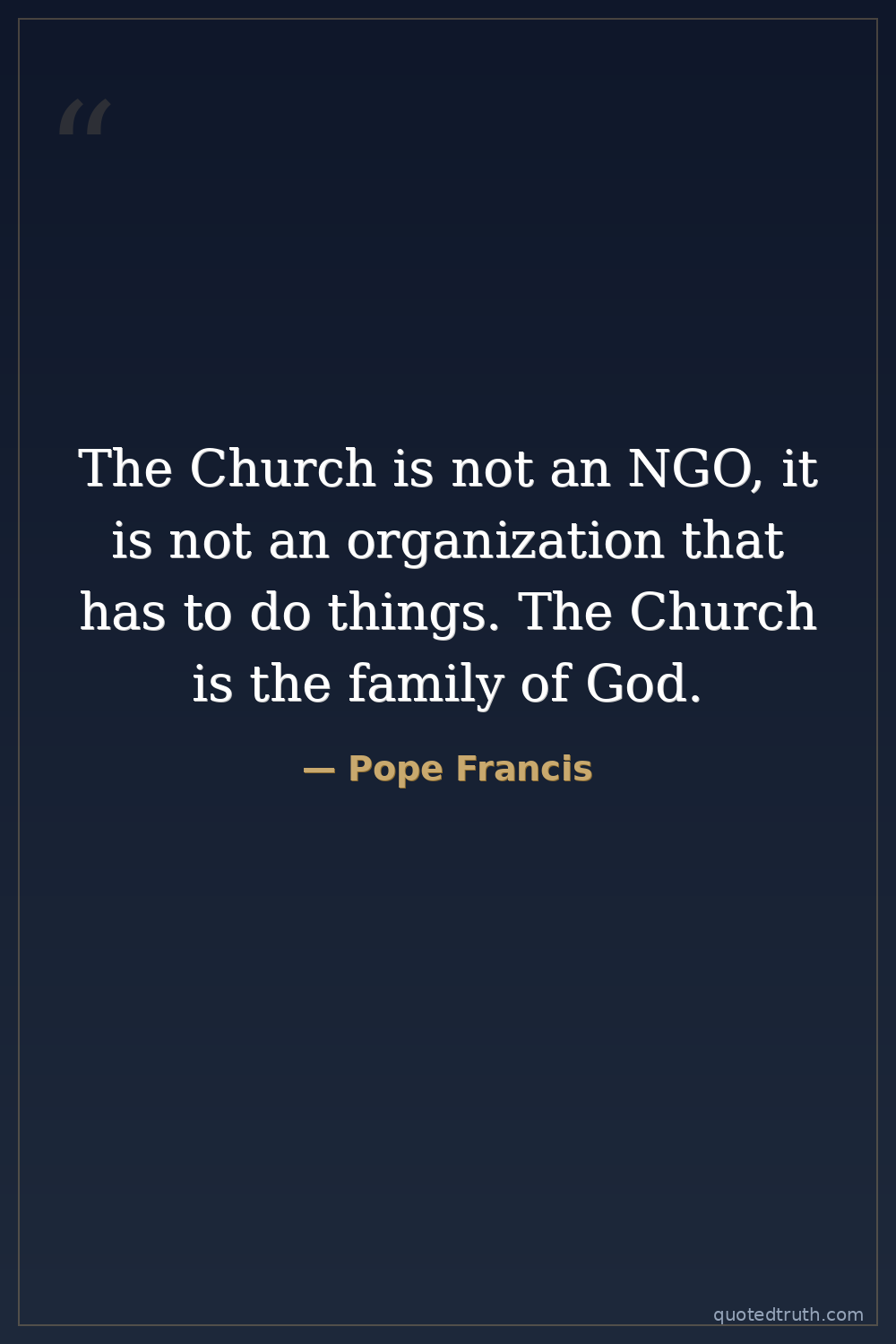
Pope Francis — "The Church is not an NGO, it is not an organization that has to do things. The C…"
The Church is not an NGO, it is not an organization that has to do things. The Church is the family of God.
The Church is not an NGO, it is not an organization that has to do things. The Church is the family of God.
Click any product to generate a realistic preview. Up to 3 at a time.
* Initial load can take up to 90 seconds — revising the preview in another color is nearly instant.
"A person who thinks only about building walls, wherever they may be, and not building bridges, is not Christian."
"Sometimes when I see a clericalist, I suddenly become anticlerical."
"Who am I to give a ticket to hell?"
"Globalization has made us neighbors, but not brothers."
"We must not be afraid of dialogue."
First Latin American and Jesuit pope (2013-), who has steered the Catholic Church toward pastoral inclusion on LGBTQ pastoral care, divorced Catholics, and climate. Closely associated with Pope John XXIII (the Vatican II reformer pope) and Cardinal Walter Kasper (his theological ally on pastoral reform). For an intellectual contrast, see Cardinal Raymond Burke, American traditionalist cardinal, former head of the Vatican Apostolic Signatura — Burke is the public face of Catholic traditionalism that views Francis's pastoral approach as doctrinally dangerous — he has formally challenged Amoris Laetitia and other Francis reforms.
Found in 1 providers: grok
1 source checked
This quote draws a sharp line between institution and community. Francis argues the Church's identity isn't built on programs, projects, or operational output—the way a nonprofit is measured by deliverables. Instead it exists as something prior to any mission: a family defined by belonging, love, and shared origin in God. The distinction pushes back against a transactional, managerial view of religion in favor of intimacy and unconditional membership.
Jorge Bergoglio grew up in Buenos Aires and became Archbishop before being elected pope in 2013—the first Jesuit and first pope from the Global South. He was known for riding public buses, visiting slums, and cooking his own meals. His Jesuit formation stresses personal relationship with God over institutional hierarchy. Throughout his papacy he consistently chose pastoral closeness over curial procedure, making the family-not-bureaucracy framing a direct expression of his lived priorities.
Francis became pope in 2013 amid collapsing church attendance across Western Europe and North America, cascading clerical sexual abuse scandals, and Vatican financial and governance scandals. Public trust in Catholic institutional structures was near historic lows. Reframing the Church as family rather than organization was a deliberate rhetorical pivot: separating the Church's essential identity from the damaged reputation of its bureaucratic apparatus and repositioning it on relational rather than institutional grounds.
AI-generated insights based on extensive research and information for context. Factual errors? Email [email protected].
Your cart is empty