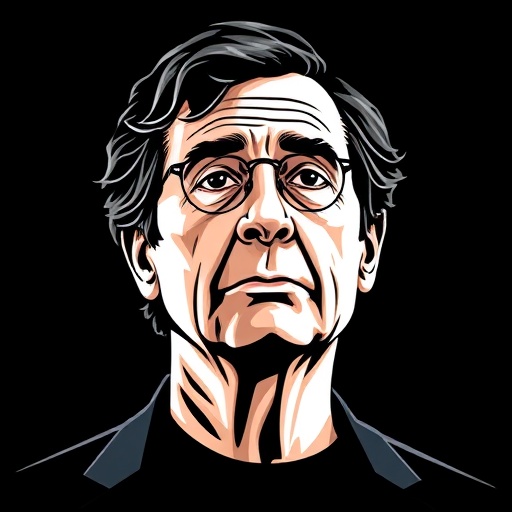
Carl Sagan — "The cure for a fallacious argument is a better argument, not the suppression of …"
The cure for a fallacious argument is a better argument, not the suppression of ideas.
The cure for a fallacious argument is a better argument, not the suppression of ideas.
Click any product to generate a realistic preview. Up to 3 at a time.
* Initial load can take up to 90 seconds — revising the preview in another color is nearly instant.
"Look again at that dot. That's here. That's home. That's us."
"An atheist is someone who is certain that God does not exist, someone who has compelling evidence against the existence of God. I know of no such compelling evidence. Because God can be relegated to i…"
"Understanding is a kind of ecstasy."
"The nuclear arms race is like two sworn enemies standing waist-deep in gasoline, one with three matches, the other with five."
"Science is a way of thinking much more than it is a body of knowledge."
Found in 1 providers: grok
1 source checked
When someone makes a flawed or wrong argument, the answer is to counter it with a stronger, better-evidenced one — not to ban or silence the speaker. Bad ideas don't disappear when suppressed; they fester. Open debate, where better reasoning can win out, is the only honest path to truth. Censorship, even of genuinely bad ideas, is an admission that you can't defeat them through logic and evidence.
Sagan spent his career combating pseudoscience, astrology, and UFO mythology not by dismissing believers but by engaging their claims with evidence. His 1995 book The Demon-Haunted World built a 'Baloney Detection Kit' — tools for critical thinking — embodying this exact principle. He debated opponents openly, believing bad ideas collapse under scrutiny. His commitment to open intellectual discourse reflected his core conviction that reason, not authority, should decide what is true.
Sagan wrote during decades of ideological tension: Cold War censorship on both sides, school board battles over evolution, and the emergence of 1980s culture wars where suppressing 'dangerous' ideas was common political strategy. The Soviet Union's state-mandated rejection of Mendelian genetics had already shown how idea-suppression corrupts science. In America, creationist movements sought to remove evolution from curricula. Sagan witnessed both failure modes and argued consistently that open discourse was the only reliable corrective.
AI-generated insights based on extensive research and information for context. Factual errors? Email [email protected].
Your cart is empty