Edward Jenner — "The discovery of vaccination is one of the most important that has ever been mad…"
The discovery of vaccination is one of the most important that has ever been made.
The discovery of vaccination is one of the most important that has ever been made.
Click any product to generate a realistic preview. Up to 3 at a time.
* Initial load can take up to 90 seconds — revising the preview in another color is nearly instant.
"The most pleasing part of my life has been spent in the pursuit of knowledge."
"The human mind is capable of great things; but it is also capable of great errors."
"...has effectually put a stop to the sneers of those little minded persons who think everything impossible which does not come within the narrow sphere of their own comprehension."
"The most beautiful part of the human frame is the eye; and yet it is the most liable to disease."
"It is the lot of man to suffer; but it is also his lot to alleviate the sufferings of others."
Found in 1 providers: grok
1 source checked
Vaccination — training the immune system with a harmless agent to prevent a deadly disease — fundamentally changed humanity's relationship with illness. This quote stakes the claim that preventing disease at scale, rather than simply treating it, is among the most consequential ideas humans have ever acted on. It reframes medicine as proactive rather than reactive, shifting the goal from surviving catastrophe to stopping it before it starts.
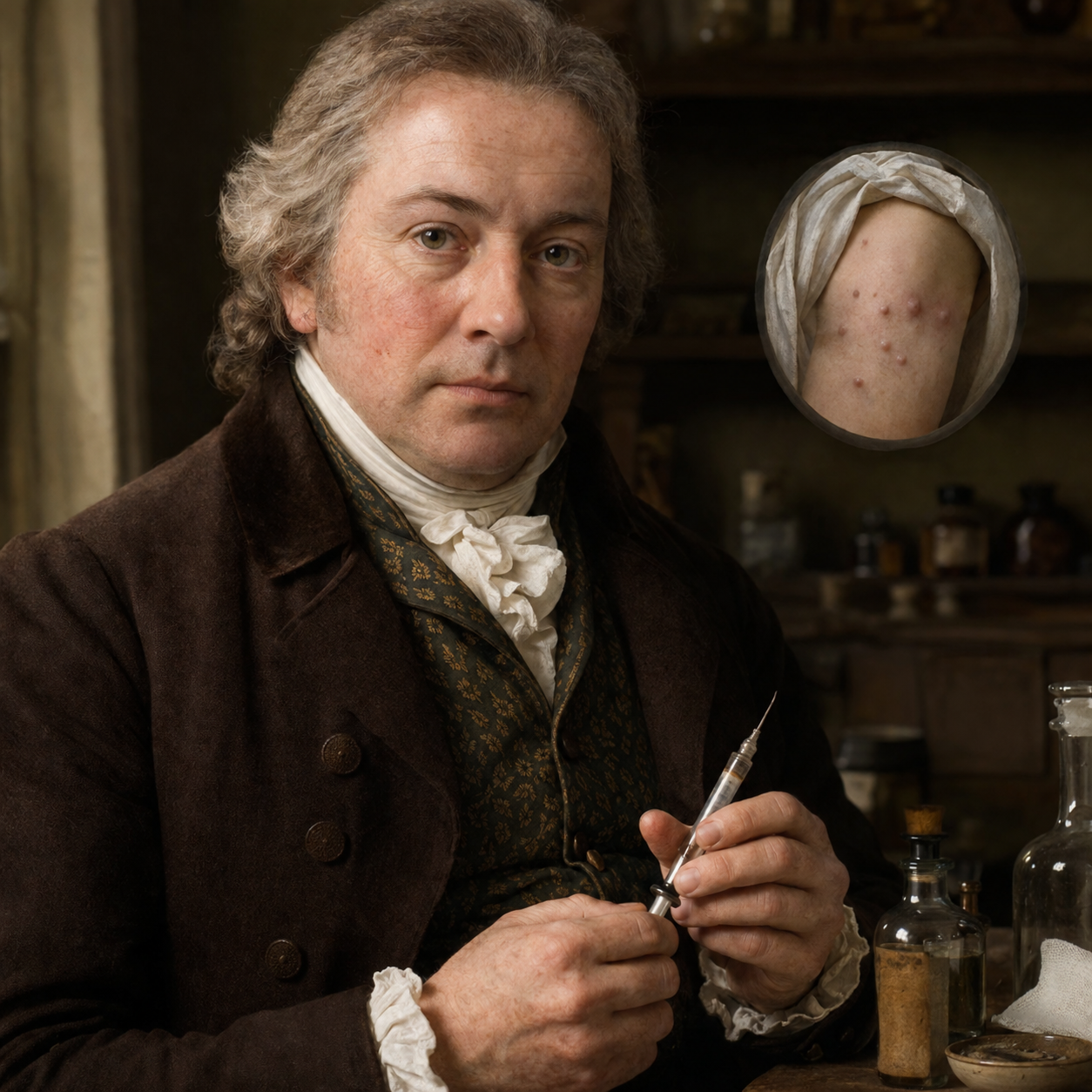
Jenner spent years observing that milkmaids who contracted cowpox rarely got smallpox. In 1796 he tested this by inoculating eight-year-old James Phipps with cowpox material, then exposing him to smallpox — the protection held. A country physician driven by fieldwork over theory, Jenner refused to patent the vaccine and campaigned his entire life to distribute it freely, treating the discovery as humanity's property rather than his own achievement.
In the late 1700s, smallpox killed roughly 400,000 Europeans annually and disfigured millions more. Variolation — deliberate infection with live smallpox — existed but carried real mortality risk. Jenner worked at the peak of Enlightenment empiricism, when systematic observation was displacing superstition, yet before germ theory or antiseptics. That a rural English doctor's agricultural observation would eventually eradicate one of history's deadliest diseases made this discovery feel almost incomprehensibly significant to his contemporaries.
AI-generated insights based on extensive research and information for context. Factual errors? Email [email protected].
Your cart is empty