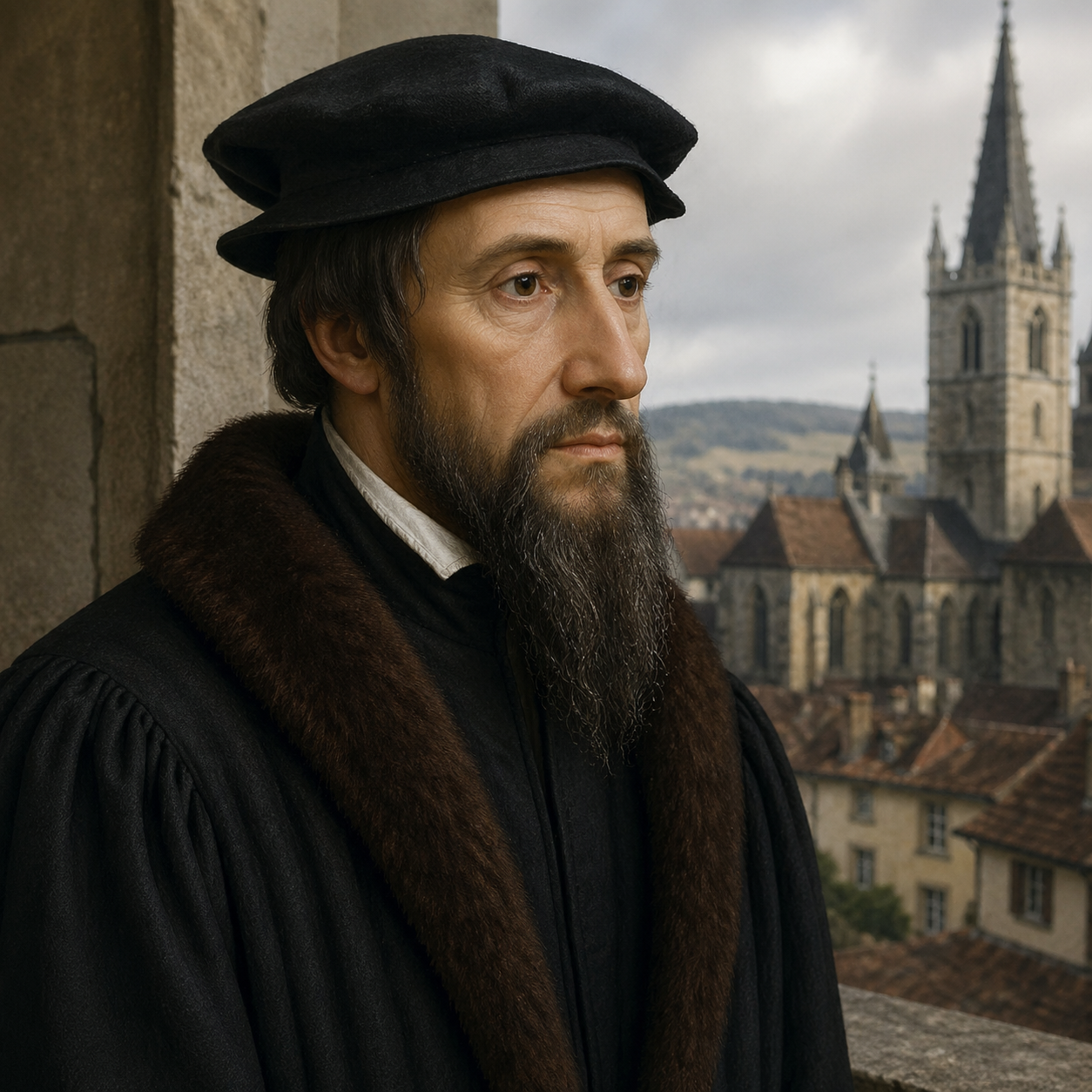
John Calvin — "The elect are vessels of mercy, and the reprobate are vessels of wrath."
The elect are vessels of mercy, and the reprobate are vessels of wrath.
The elect are vessels of mercy, and the reprobate are vessels of wrath.
Click any product to generate a realistic preview. Up to 3 at a time.
* Initial load can take up to 90 seconds — revising the preview in another color is nearly instant.
"All are not created on equal terms, but some are preordained to eternal life, others to eternal damnation."
"It is not in our power to believe, but it is the gift of God."
"The will of God is the cause of all things, and there is no other cause."
"It is not in our power to believe or not to believe."
"The best way to overcome evil is to do good."
French theologian whose Institutes of the Christian Religion (1536) systematized Protestant Reformed doctrine, including predestination. Closely associated with Martin Luther (Reformation founder, Calvin's predecessor). For an intellectual contrast, see Jacobus Arminius, Dutch Reformed theologian (1560-1609) — Arminius's rejection of strict double-predestination founded Arminianism — the theological tradition modern Methodism, most evangelicalism, and Pentecostalism descend from. The Calvinist-Arminian debate has divided Protestantism for 400 years.
Found in 1 providers: grok
1 source checked
God has predetermined certain people — the elect — to receive divine mercy and eternal salvation, while others, the reprobate, are destined for condemnation. No human action changes this outcome. Salvation is purely God's sovereign choice, not earned by works or faith. The vessels metaphor depicts people as passive instruments in God's hands, created to serve either his mercy or his righteous judgment.
Calvin developed double predestination most rigorously in his Institutes of the Christian Religion, first published in 1536 and expanded through 1559. As Geneva's dominant pastor and civic architect, he built a Reformed theocracy premised on God's absolute sovereignty. His theology rejected Catholic sacramental salvation entirely. This doctrine shaped his willingness to discipline — even execute — those deemed enemies of God's order, including theologian Michael Servetus in 1553.
The 16th-century Reformation shattered Catholic Europe's monopoly on salvation, which the Church administered through sacraments, confession, and indulgences. Calvin wrote amid religious wars, the Council of Trent's counter-reforms, and mass anxiety over eternal fate. Predestination offered believers radical assurance — if God chose you before birth, nothing revoked it. The doctrine directly undermined papal authority and the profitable indulgence system that had sparked Luther's revolt just decades earlier.
AI-generated insights based on extensive research and information for context. Factual errors? Email [email protected].
Your cart is empty