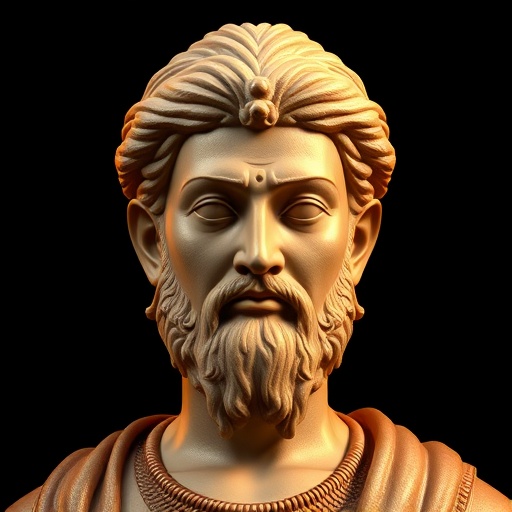
Mahavira — "The essence of knowledge is to know the self."
The essence of knowledge is to know the self.
The essence of knowledge is to know the self.
Click any product to generate a realistic preview. Up to 3 at a time.
* Initial load can take up to 90 seconds — revising the preview in another color is nearly instant.
"The true nature of the soul is bliss."
"The soul is the ultimate reality."
"The greatest mistake of a soul is non-recognition of its real self and can only be corrected by recognizing the real self."
"The light of knowledge dispels the darkness of ignorance."
"Conquer your passions and you will conquer the world."
24th and last Tirthankara of Jainism, whose teachings of strict ahimsa (non-violence), aparigraha (non-attachment), and karma reshaped ancient Indian religion. Closely associated with The Buddha (near-contemporary moral revolutionary, also reacting against Vedic ritualism). For an intellectual contrast, see Vedic Brahmanical ritual sacrifice, the animal-sacrifice-centered Vedic religion of his era — Mahavira's ahimsa demanded total non-violence, including not eating root vegetables that kill the plant — a maximum-distance ethical move from the Vedic priestly tradition that ritually sacrificed cattle and horses. The two cleanest poles of ancient Indian religious ethics.
Found in 1 providers: grok
1 source checked
True knowledge isn't just accumulating facts about the external world — it's turning awareness inward to understand your own nature, motivations, and consciousness. Until you understand who you are at the deepest level, all other learning remains incomplete. Self-knowledge is the foundation upon which genuine wisdom is built, not information collected from outside.
Mahavira spent twelve years in silent, solitary meditation and ascetic practice, deliberately withdrawing from society to investigate his own consciousness. His entire spiritual path centered on purifying the soul through rigorous self-discipline and introspection. Jainism's core doctrine holds that the liberated self — the jiva — is inherently all-knowing; recognizing your true nature is literally the path to moksha.
Mahavira lived in 6th-century BCE northern India during the Shramana movement, a broad philosophical revolt against Vedic ritualism and Brahmin priestly authority. Thinkers like Mahavira and the Buddha rejected external sacrificial religion in favor of inner transformation. In that environment, declaring that self-knowledge — not ritual performance — was the essence of knowing was a radical, countercultural claim with profound social implications.
AI-generated insights based on extensive research and information for context. Factual errors? Email [email protected].
Your cart is empty