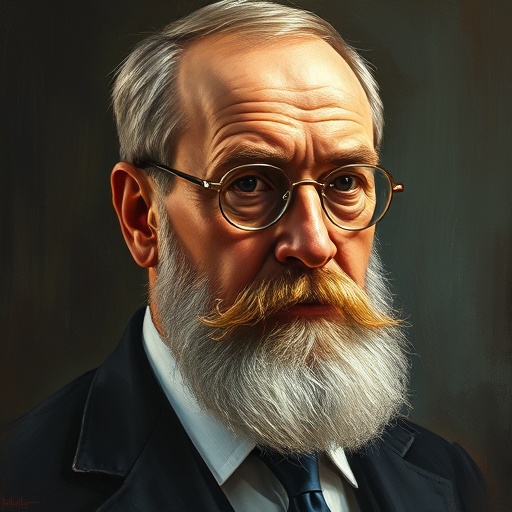
Robert Koch — "The fight against disease requires international cooperation."
The fight against disease requires international cooperation.
The fight against disease requires international cooperation.
Click any product to generate a realistic preview. Up to 3 at a time.
* Initial load can take up to 90 seconds — revising the preview in another color is nearly instant.
"The discovery of the cause of a disease is only the first step towards its eradication."
"The ultimate test of a scientific theory is its practical application."
"I am convinced that the future of medicine lies in bacteriology."
"The development of effective vaccines is a crucial step in controlling infectious diseases."
"It is a great privilege to be able to contribute to the progress of human knowledge."
Found in 1 providers: grok
1 source checked
Infectious diseases don't respect national borders — stopping them demands that nations actively share knowledge, resources, and coordinated response strategies. No single country can contain a pathogen that travels freely with people, goods, and trade routes. Effective disease control requires shared surveillance data, unified treatment protocols, and pooled funding — because one nation's uncontrolled outbreak will inevitably become every other nation's crisis.
Koch identified the bacterial causes of tuberculosis (1882) and cholera (1883), proving pathogens were definable, trackable agents. His cholera research required fieldwork in Egypt and India, exposing him firsthand to how epidemics crossed continents. He participated in international sanitary conferences, understanding that a disease endemic in one region would inevitably spread worldwide. His entire scientific career rested on the premise that knowing a pathogen's cause was the first step toward global control.
Koch worked during the late 19th century when steamships and railways accelerated global travel, carrying cholera and plague across continents at unprecedented speed. International Sanitary Conferences (1851–1903) struggled to coordinate quarantine rules among competing nations. Colonial troop movements and commerce constantly seeded new epidemics. The era urgently needed global health infrastructure but lacked scientific consensus to build it — Koch's germ theory provided the biological foundation that made coordinated international response logically necessary.
AI-generated insights based on extensive research and information for context. Factual errors? Email [email protected].
Your cart is empty