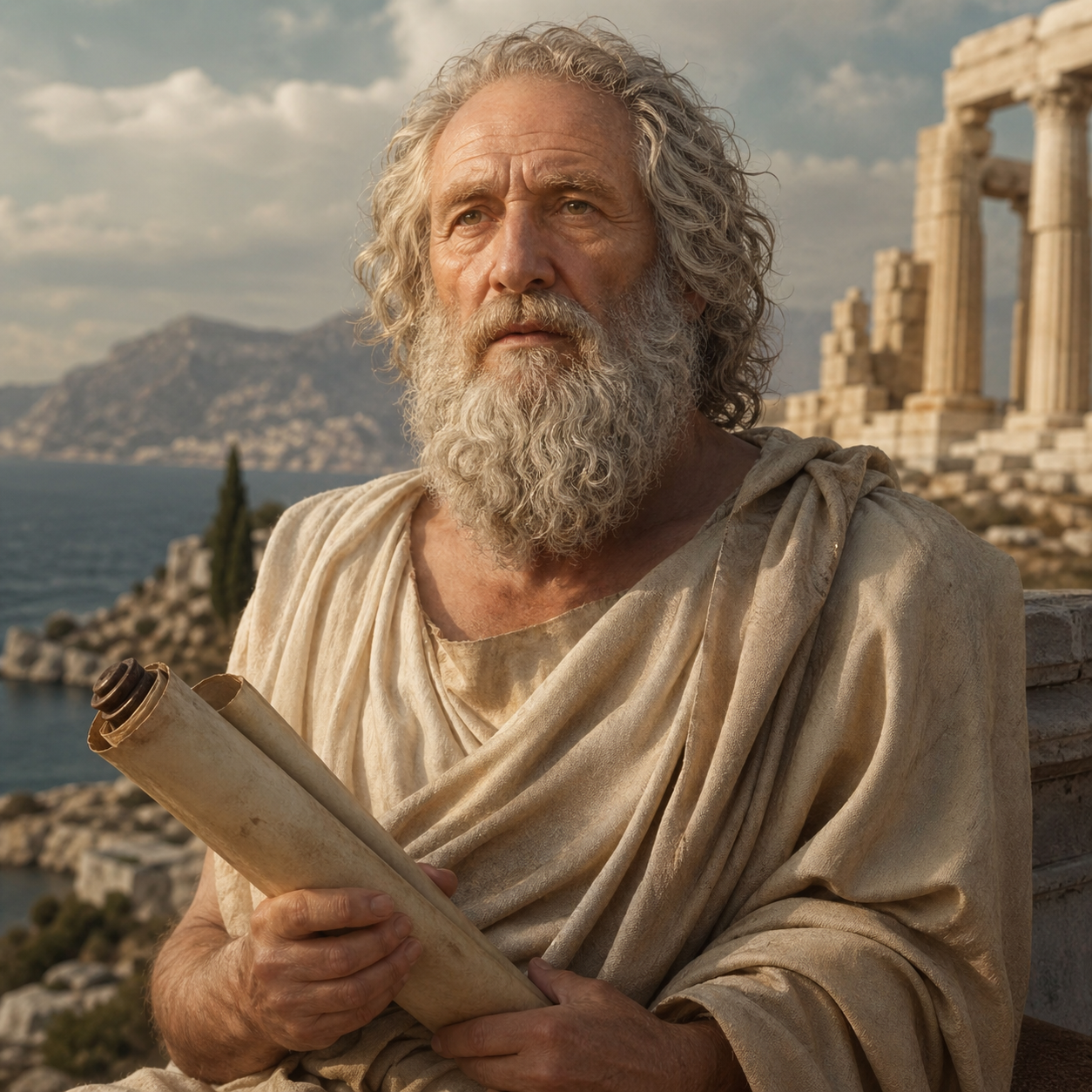
Homer — "The gods, likening themselves to all kinds of strangers, go in various disguises…"
The gods, likening themselves to all kinds of strangers, go in various disguises from city to city, observing the wrongdoing and the righteousness of men.
The gods, likening themselves to all kinds of strangers, go in various disguises from city to city, observing the wrongdoing and the righteousness of men.
Click any product to generate a realistic preview. Up to 3 at a time.
* Initial load can take up to 90 seconds — revising the preview in another color is nearly instant.
"Words empty as the wind are best left unsaid."
"The gods love to thwart a man when he is growing too great."
"Better to live or die, once and for all, than die by inches."
"It is a brave thing to be a hero."
"The gods do not take all men's wits away."
Greek epic poet traditionally credited with the Iliad and the Odyssey, the foundational works of Western literature. Closely associated with Hesiod (near-contemporary Greek poet of Theogony and Works and Days). For an intellectual contrast, see Plato, Greek philosopher of the Republic — Republic Book X bans the poets from the ideal city, with Homer as the explicit target — Plato argued Homer's gods set immoral examples and that poetry corrupts moral education. The founding philosophy-versus-poetry quarrel of Western thought.
Your cart is empty