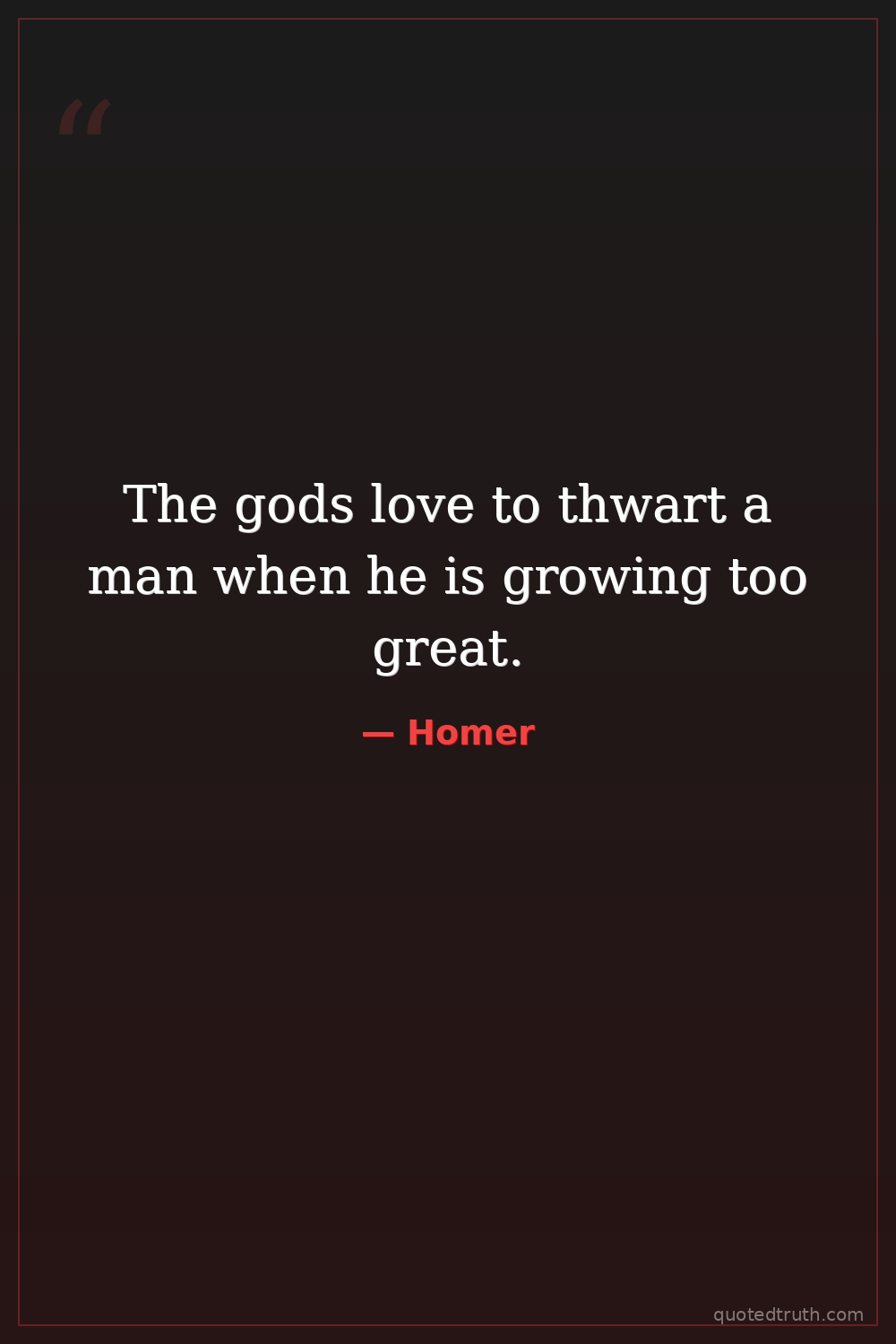
Homer — "The gods love to thwart a man when he is growing too great."
The gods love to thwart a man when he is growing too great.
The gods love to thwart a man when he is growing too great.
Click any product to generate a realistic preview. Up to 3 at a time.
* Initial load can take up to 90 seconds — revising the preview in another color is nearly instant.
"The minds of the everlasting gods are not changed suddenly."
"No winning words about death to me, shining Odysseus! By god, I'd rather slave on earth for another man-- Some dirt-poor tenant farmer who scrapes to keep alive—than rule down here over all the breath…"
"Suffering is but another name for the teaching of experience, which is the parent of instruction and the schoolmaster of life."
"There is nothing more admirable than two people who see eye to eye, true husband and wife, confounding their enemies and delighting their friends."
"My name is Nobody."
Greek epic poet traditionally credited with the Iliad and the Odyssey, the foundational works of Western literature. Closely associated with Hesiod (near-contemporary Greek poet of Theogony and Works and Days). For an intellectual contrast, see Plato, Greek philosopher of the Republic — Republic Book X bans the poets from the ideal city, with Homer as the explicit target — Plato argued Homer's gods set immoral examples and that poetry corrupts moral education. The founding philosophy-versus-poetry quarrel of Western thought.
Your cart is empty