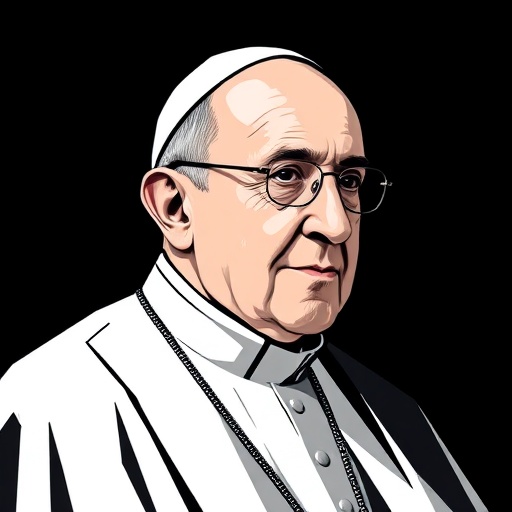
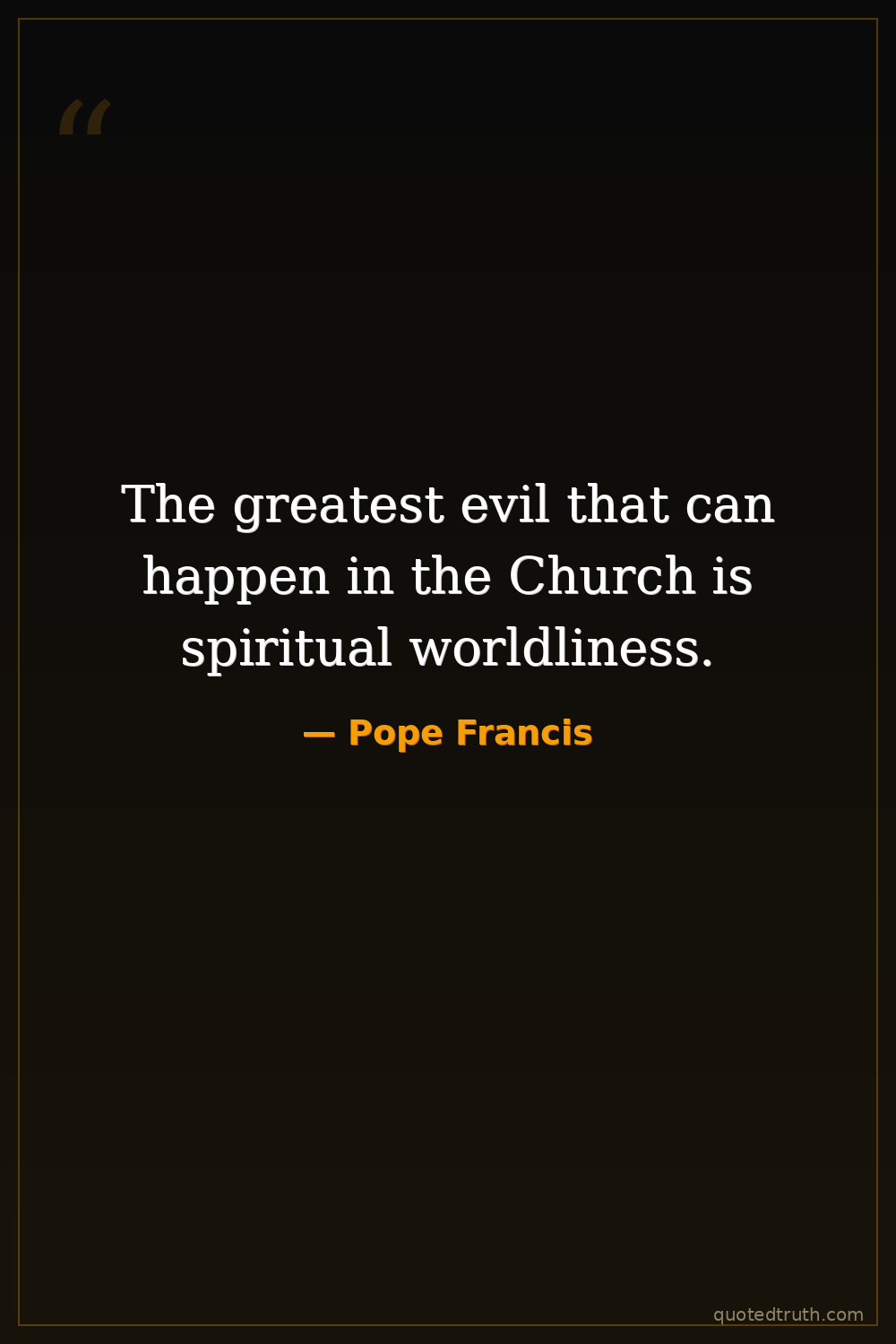
Pope Francis — "The greatest evil that can happen in the Church is spiritual worldliness."
The greatest evil that can happen in the Church is spiritual worldliness.
The greatest evil that can happen in the Church is spiritual worldliness.
Click any product to generate a realistic preview. Up to 3 at a time.
* Initial load can take up to 90 seconds — revising the preview in another color is nearly instant.
"Please, do not let yourselves be robbed of hope!"
"A priest who is a saint told me: 'Women are the ones who move history forward.'"
"I will give everything to the Church. I will not keep anything for myself. I will give everything to the Church. I will not keep anything for myself."
"The devil exists, and he is a real person, not a myth."
"The poor cannot wait."
First Latin American and Jesuit pope (2013-), who has steered the Catholic Church toward pastoral inclusion on LGBTQ pastoral care, divorced Catholics, and climate. Closely associated with Pope John XXIII (the Vatican II reformer pope) and Cardinal Walter Kasper (his theological ally on pastoral reform). For an intellectual contrast, see Cardinal Raymond Burke, American traditionalist cardinal, former head of the Vatican Apostolic Signatura — Burke is the public face of Catholic traditionalism that views Francis's pastoral approach as doctrinally dangerous — he has formally challenged Amoris Laetitia and other Francis reforms.
Found in 1 providers: grok
1 source checked
Spiritual worldliness means when the Church and its leaders become more focused on prestige, power, and institutional self-image than on genuine faith and serving others. It is the corruption of caring how religious you appear rather than actually living it. Francis argues this internal vanity — the Church becoming self-referential and obsessed with its own glory — is more destructive than any external enemy or obvious moral failure.
Francis chose a name symbolizing poverty and humility, refused the papal apartment, and repeatedly rebuked clergy for careerism and lavish living. His entire pontificate fights institutional self-preservation — he launched sweeping Curia reforms and publicly shamed bishops treating the Church as a personal power structure. Raised in Buenos Aires and shaped by work among the poor, his theology centers on a Church that serves outward rather than one that admires itself.
Francis became Pope in 2013 as the Church faced a severe credibility crisis — global clergy sexual abuse cover-ups, the Vatileaks scandal exposing Vatican corruption and power struggles, and plummeting attendance across the Western world. Secularism was accelerating because many saw the institution as self-protecting rather than serving victims. His warning that spiritual vanity destroys the Church from within spoke directly to why millions were abandoning organized religion entirely.
AI-generated insights based on extensive research and information for context. Factual errors? Email [email protected].
Your cart is empty