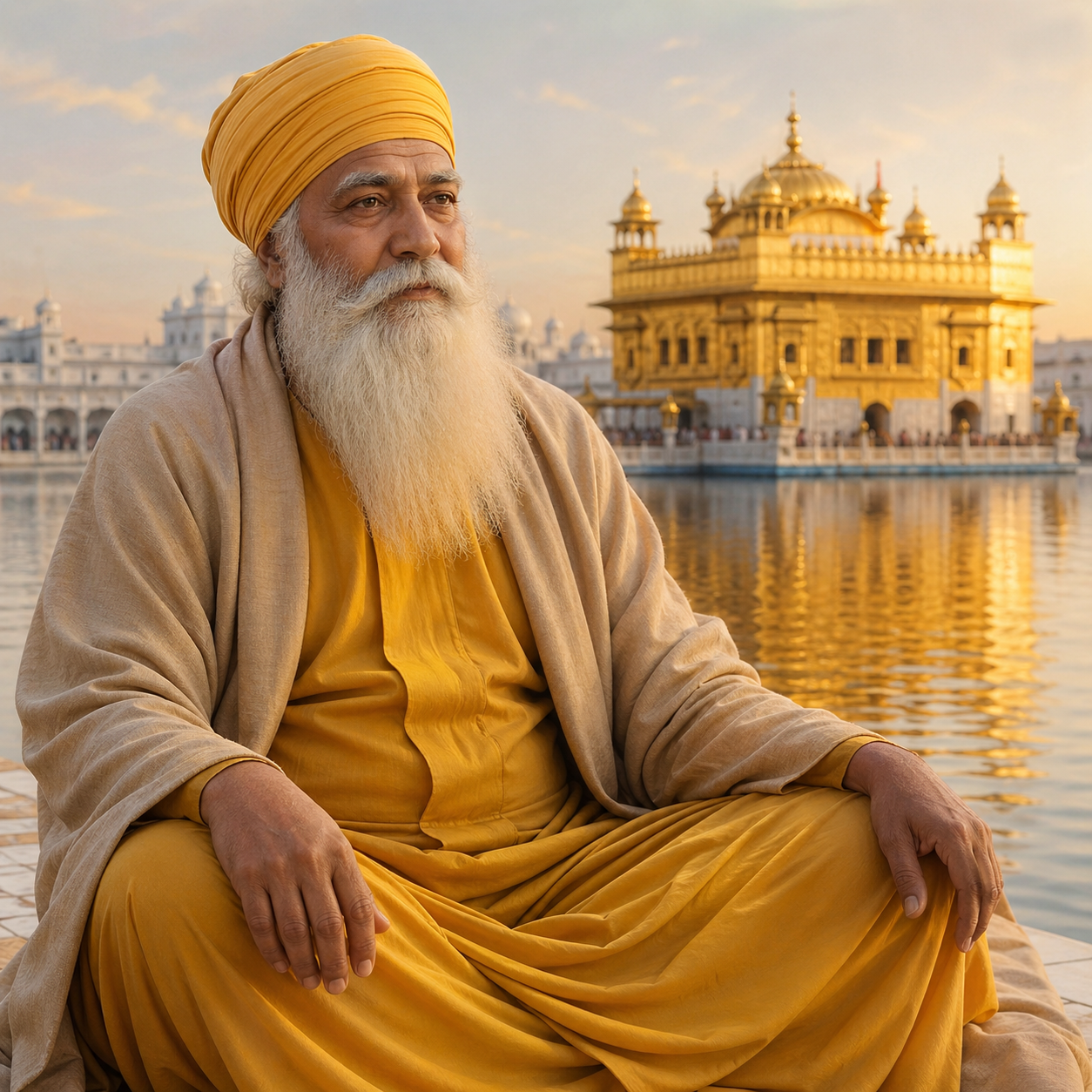
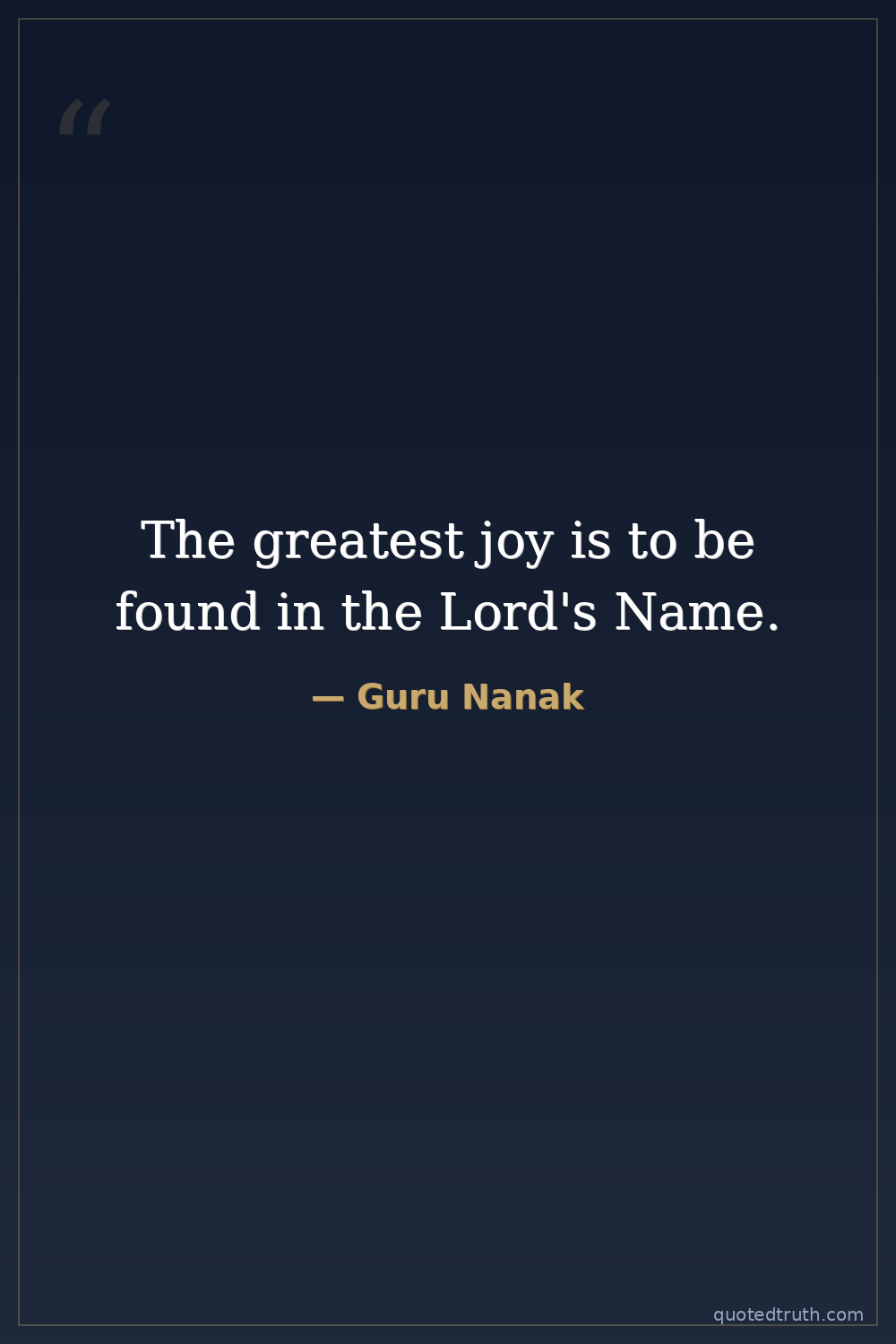
Guru Nanak — "The greatest joy is to be found in the Lord's Name."
The greatest joy is to be found in the Lord's Name.
The greatest joy is to be found in the Lord's Name.
Click any product to generate a realistic preview. Up to 3 at a time.
* Initial load can take up to 90 seconds — revising the preview in another color is nearly instant.
"Why call her bad from whom are born kings?"
"The greatest wealth is to be without desires."
"Why do you go to the forest in search of God? He lives in all, and yet is ever distinct. He abides with you, too."
"The greatest pilgrimage is to the temple of one's own heart. And sometimes, that temple needs a good cleaning."
"The Lord is the ocean, and we are the fish in it."
Founder of Sikhism and the first of the Ten Sikh Gurus, whose teachings of one universal God and rejection of caste shaped Punjab. Closely associated with Kabir (mystical poet whose verses appear in the Sikh Guru Granth Sahib). For an intellectual contrast, see Brahmanical orthodoxy, the Hindu caste-and-ritual establishment of his era — Sikhism was founded as a deliberate alternative to both Hindu ritual hierarchy and Islamic exclusivism — Nanak's universalism was a structural rejection of caste and priestly mediation.
Found in 1 providers: grok
1 source checked
True happiness does not come from wealth, pleasure, or status, but from inwardly remembering and repeating the divine name. The quote says that the highest form of delight a person can experience is the peace and fulfillment that arises from constant loving awareness of God. External joys fade, but this inner connection to the divine is steady, complete, and available to anyone who sincerely turns their heart toward it.
Guru Nanak built Sikhism around Naam Simran, the meditative repetition of God's name, teaching that devotion matters more than ritual, caste, or pilgrimage. A traveler who walked thousands of miles across India, Tibet, and Arabia, he preached one formless God accessible through inner remembrance. As a householder, poet, and composer of hymns later gathered in the Guru Granth Sahib, he modeled that divine joy is found not in renunciation but in honest work paired with constant loving recollection.
In early-sixteenth-century Punjab under the Lodi and emerging Mughal rule, Hindu and Muslim communities were sharply divided by ritual, caste, and Brahminical gatekeeping, while Sufi and Bhakti movements were pushing back with devotional mysticism. Nanak (1469–1539) lived through Babur's 1526 invasion and widespread religious formalism. Declaring joy was found in the divine Name rather than temple rites or Arabic recitations challenged both priesthoods and offered ordinary farmers and laborers direct, equal access to God.
AI-generated insights based on extensive research and information for context. Factual errors? Email [email protected].
Your cart is empty