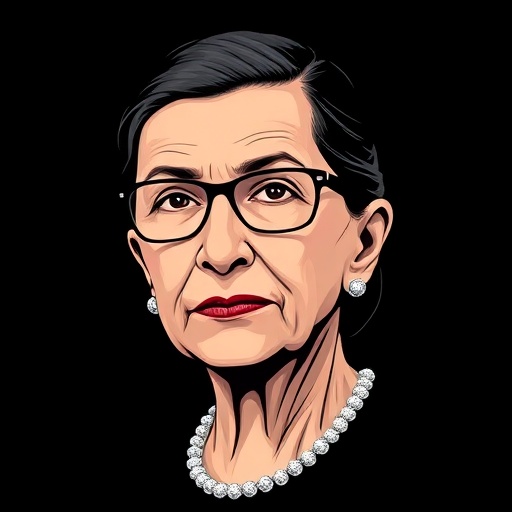
Ruth Bader Ginsburg — "The greatest menace to freedom is an inert people."
The greatest menace to freedom is an inert people.
The greatest menace to freedom is an inert people.
Click any product to generate a realistic preview. Up to 3 at a time.
* Initial load can take up to 90 seconds — revising the preview in another color is nearly instant.
"I just try to do the best I can."
"I became a lawyer because I did not like the way the world was. And I thought I could do something to change it."
"I think it's important to be persistent. To keep fighting for what you believe in."
"I think that the government should not be involved in making choices for people. It's a very personal decision, and it should be up to the individual to decide what's best for them, not the government…"
"One of the things that I'm proudest of is that I was a law professor and I taught at Rutgers and at Columbia, and I was able to show young women that they could be lawyers too."
Associate Justice of the US Supreme Court (1993-2020), gender-equality litigator at the ACLU Women's Rights Project before the bench, and the second woman ever appointed. Closely associated with Sandra Day O'Connor (first woman Justice and her predecessor in that role) and Elena Kagan (Obama-appointed colleague). For an intellectual contrast, see Antonin Scalia, conservative originalist Justice (1936-2016) — RBG and Scalia disagreed on nearly every major constitutional case but maintained a famous personal friendship over opera. Their friendship-across-doctrinal-divide became the canonical example of judicial collegiality despite total disagreement — and Scalia's originalism vs RBG's living-Constitution liberalism are the cleanest two American constitutional methodologies.
Your cart is empty