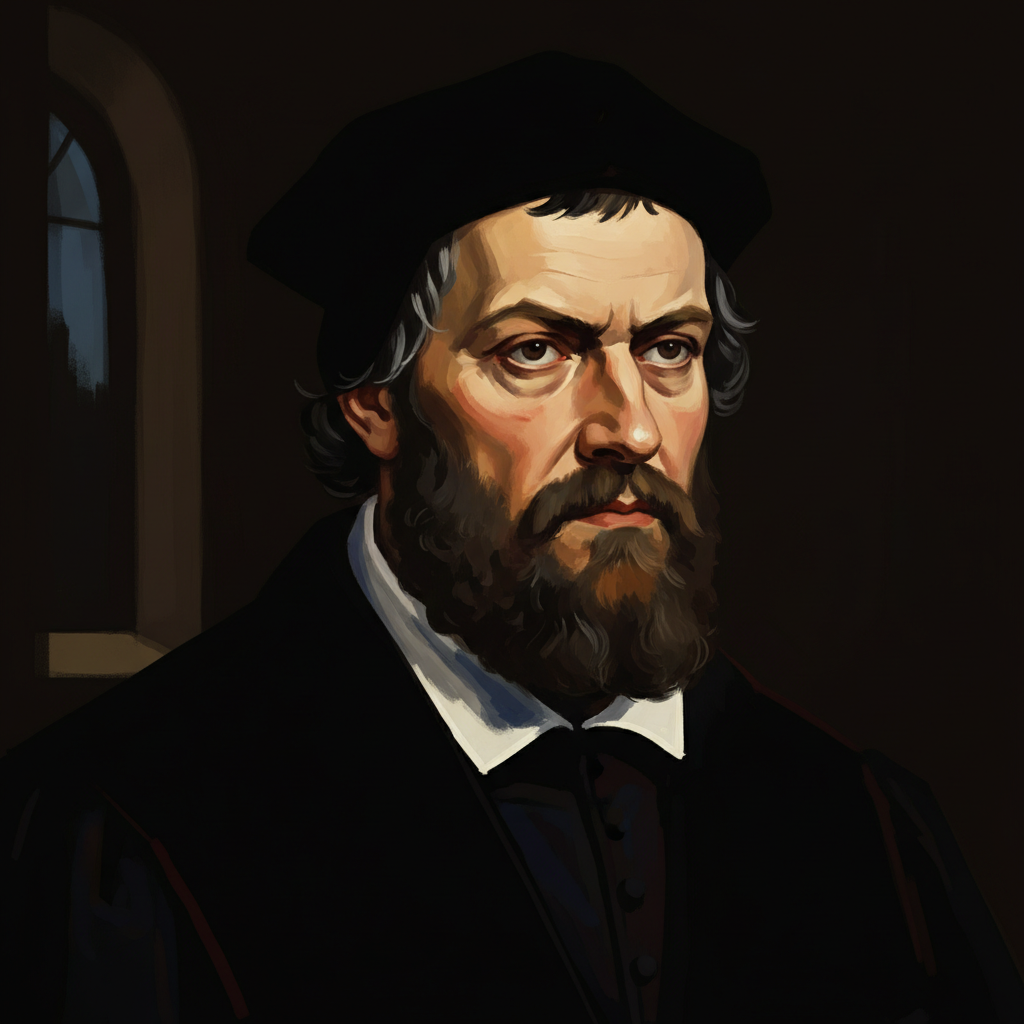
Martin Luther — "The greatest vice is pride."
The greatest vice is pride.
The greatest vice is pride.
Click any product to generate a realistic preview. Up to 3 at a time.
* Initial load can take up to 90 seconds — revising the preview in another color is nearly instant.
"They must be driven from our country."
"I would not give my faith for all the world's goods."
"The greatest blessing of all is to have a wife who is pious, God-fearing, and domestic."
"The whole being of any Christian is faith and love."
"I am a peasant's son; my father, grandfather, and great-grandfather were genuine peasants. So I am a peasant and shall remain one."
German theologian whose 95 Theses (1517) launched the Protestant Reformation and broke the Catholic Church's monopoly on Western Christianity. Closely associated with Philipp Melanchthon (Lutheran systematizer) and John Calvin (later Reformer who built on Luther's break). For an intellectual contrast, see Pope Leo X, Renaissance pope (1513-1521) — Leo X's indulgence sales triggered Luther's break and Leo excommunicated him in 1521 — Luther's entire Reformation is structured as a direct answer to the indulgence-funded Vatican Leo represented.
Found in 1 providers: grok
1 source checked
Pride, the inflated sense of one's own importance, worth, or righteousness, ranks as the worst moral failing a person can have. It sits above greed, lust, or anger because it blinds you to your own faults, makes you dismiss others, and cuts you off from learning, humility, and genuine connection. Every other vice grows easier once you believe you are above correction.
Luther staked his entire theology on this. His doctrine of justification by faith alone argued humans cannot earn salvation through works, because pride in one's own righteousness is the root sin. As an Augustinian monk, he wrestled with scrupulous self-examination and concluded only grace, not merit, saves. His 95 Theses attacked indulgences precisely because they fed spiritual pride, letting buyers feel purchased holiness.
In early-modern Europe, the Catholic Church sold indulgences funding St. Peter's Basilica, and clergy flaunted wealth and authority. The Renaissance had revived classical pride in human achievement, while humanist scholars debated free will and merit. Luther's 1517 Theses ignited the Reformation by confronting institutional arrogance. Calling pride the greatest vice directly indicted the papacy, wealthy prelates, and anyone claiming salvation through their own religious performance rather than through humble faith.
AI-generated insights based on extensive research and information for context. Factual errors? Email [email protected].
Your cart is empty