Martin Luther — "The hair is the finest ornament a woman has. If she be a virgin, let her wear it…"
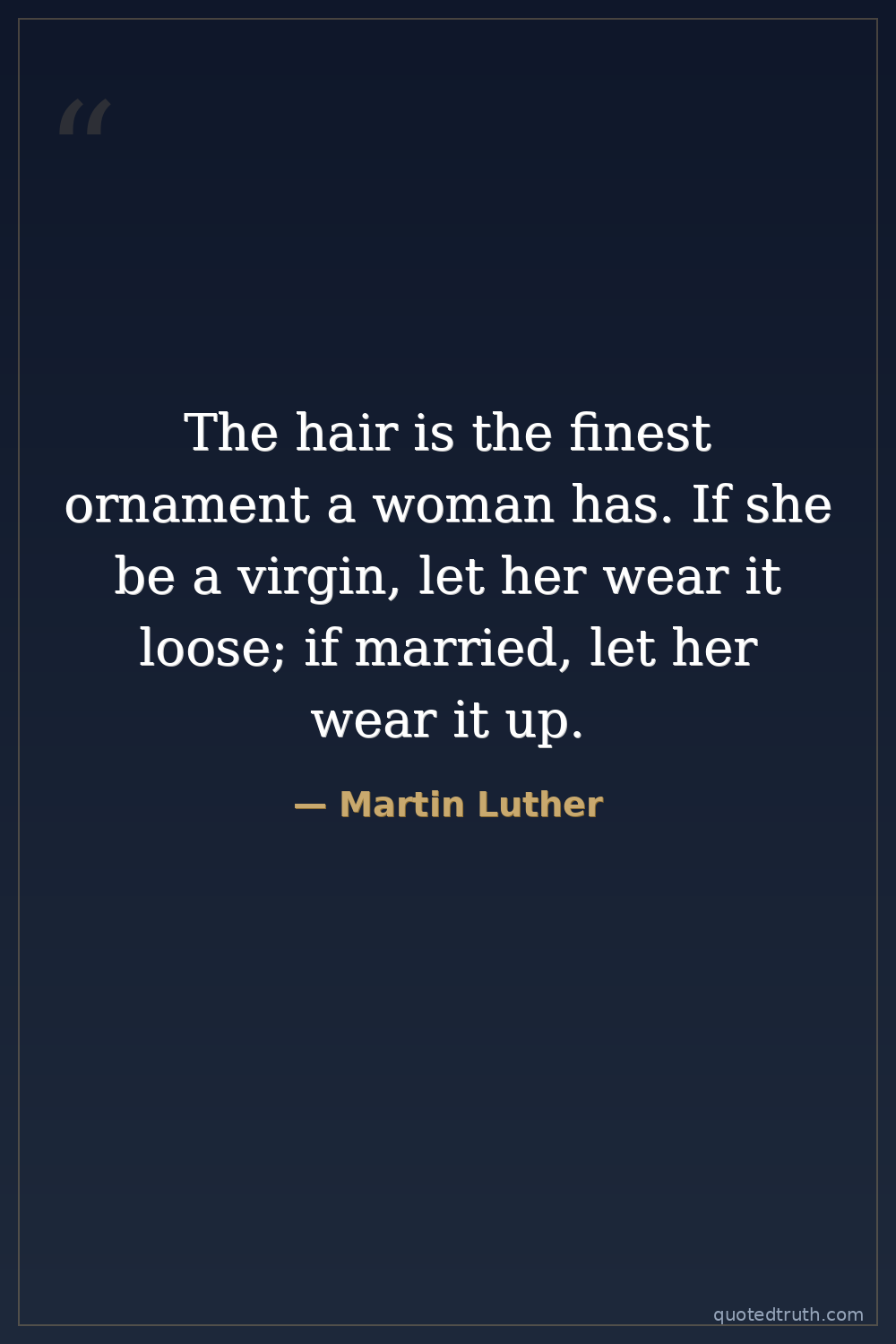
The hair is the finest ornament a woman has. If she be a virgin, let her wear it loose; if married, let her wear it up.
The hair is the finest ornament a woman has. If she be a virgin, let her wear it loose; if married, let her wear it up.
Click any product to generate a realistic preview. Up to 3 at a time.
* Initial load can take up to 90 seconds — revising the preview in another color is nearly instant.
"God foreknows nothing by contingency, but that He foresees, purposes, and does all things according to His immutable, eternal, and infallible will. By this thunderbolt, 'Free-will' is thrown prostrate…"
"I'm like a ripe stool and the world's like a gigantic anus, and we're about to let go of each other."
"If they can bear to live among us Christians and Jews, then they should be forced to work like women in childbirth."
"The human heart is like a millstone in a mill: when you put wheat under it, it turns and grinds and makes flour; if you put no wheat, it still grinds on, but then 'tis itself it grinds away."
"It was I, Martin Luther, who slew all the peasants in the insurrection, for I commanded them to be slaughtered. All their blood is upon my shoulders. But I cast it on our Lord God who commanded me to …"
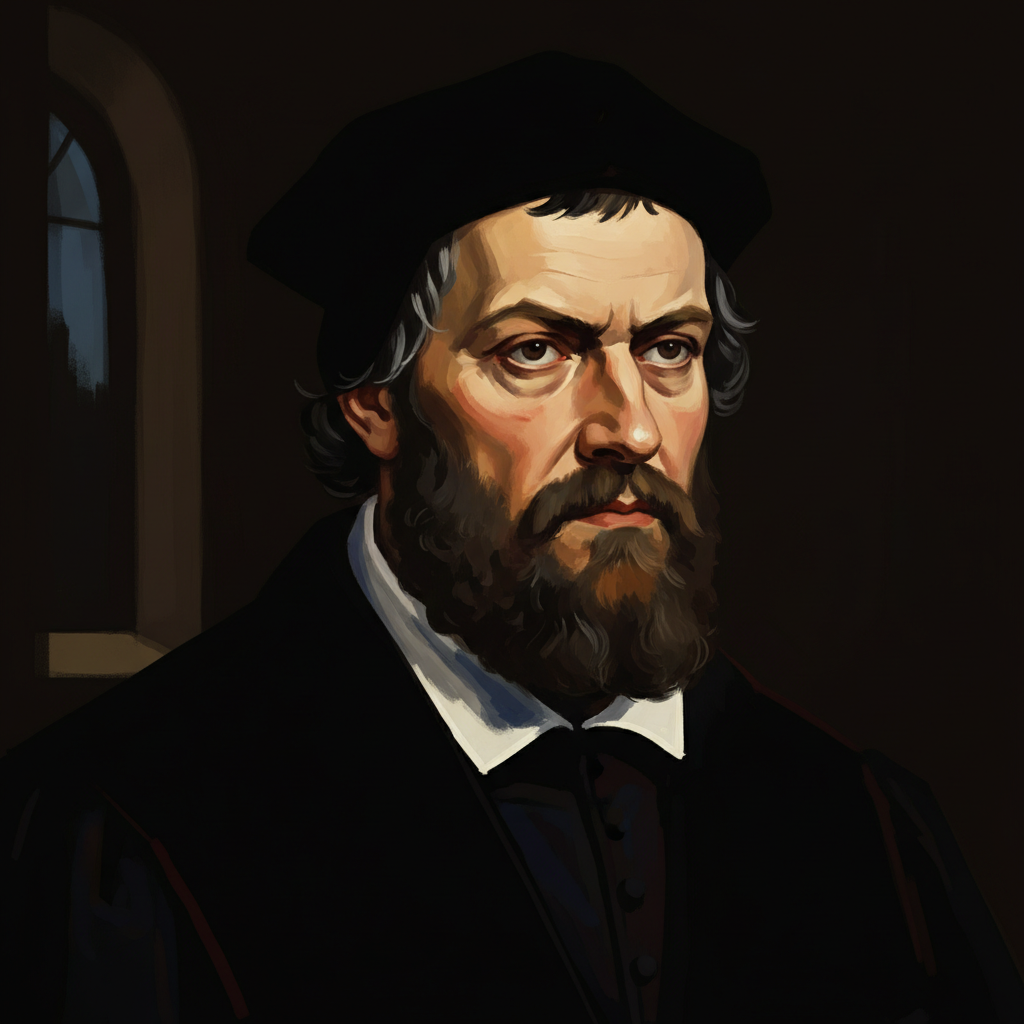
German theologian whose 95 Theses (1517) launched the Protestant Reformation and broke the Catholic Church's monopoly on Western Christianity. Closely associated with Philipp Melanchthon (Lutheran systematizer) and John Calvin (later Reformer who built on Luther's break). For an intellectual contrast, see Pope Leo X, Renaissance pope (1513-1521) — Leo X's indulgence sales triggered Luther's break and Leo excommunicated him in 1521 — Luther's entire Reformation is structured as a direct answer to the indulgence-funded Vatican Leo represented.
Found in 1 providers: gemini
1 source checked
Long hair is a woman's most beautiful natural feature, and how she wears it should signal her marital status. Unmarried young women should let their hair flow freely down their backs, while married women should pin it up or cover it. It frames hairstyle as a public announcement of whether a woman is available for courtship or already belongs to a husband's household.
Luther married former nun Katharina von Bora in 1525, rejecting clerical celibacy and becoming a vocal advocate for Christian marriage and defined household roles. His Table Talk is filled with blunt, domestic pronouncements like this one. As a reformer who preached from Scripture including Paul's teachings on women's hair and head coverings, he readily issued practical rules linking female appearance to marital standing.
In early-modern sixteenth-century Germany, clothing and hairstyle were legally and socially coded markers of status, class, and marital condition, enforced by sumptuary laws. Unmarried maidens commonly wore braided or loose hair, while wives covered theirs with caps, veils, or coifs. The Reformation was actively redefining marriage as a godly calling rather than a lesser state, making visible signs of wifely identity theologically meaningful.
AI-generated insights based on extensive research and information for context. Factual errors? Email [email protected].
Your cart is empty