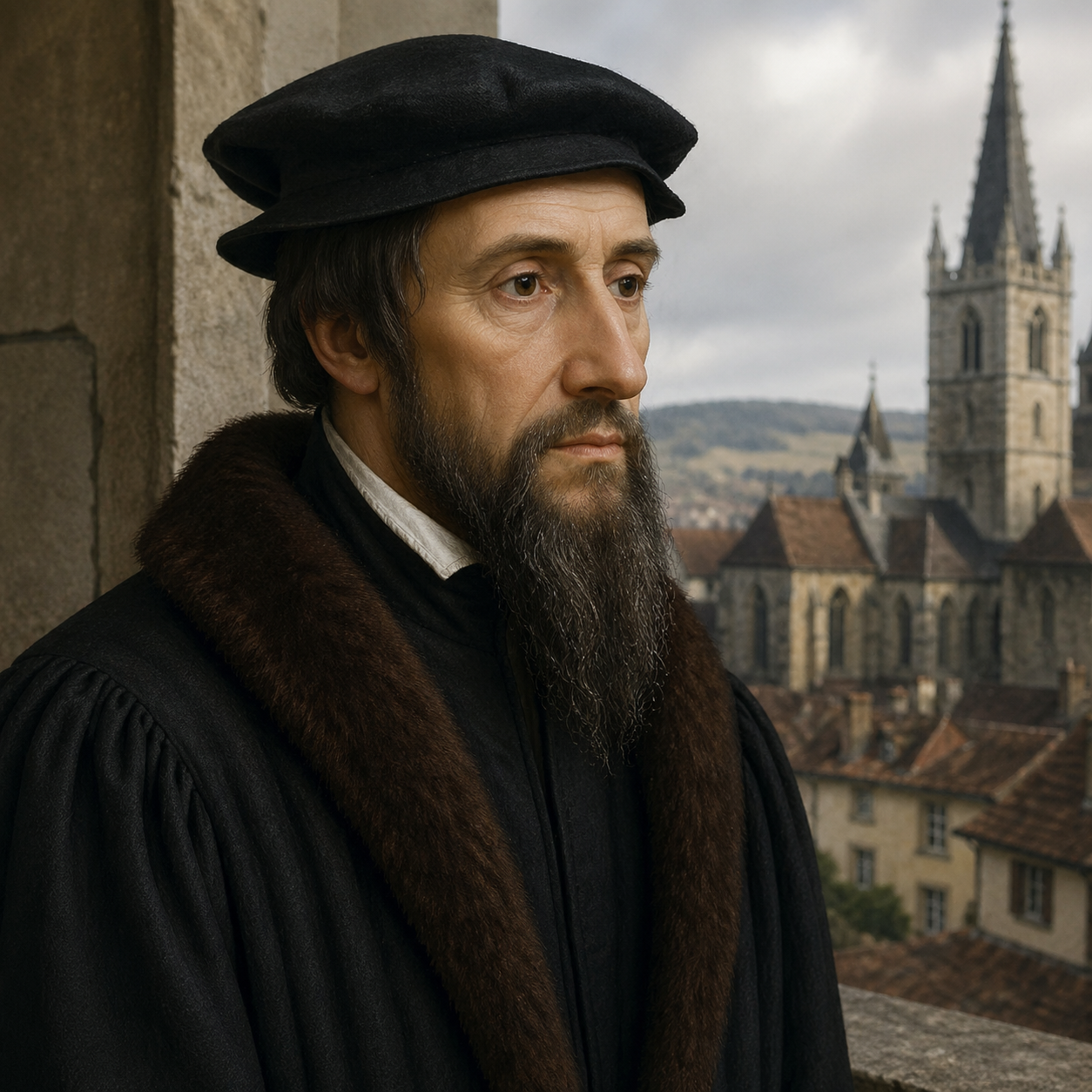
John Calvin — "The human mind is, so to speak, a perpetual forge of idols."
The human mind is, so to speak, a perpetual forge of idols.
The human mind is, so to speak, a perpetual forge of idols.
Click any product to generate a realistic preview. Up to 3 at a time.
* Initial load can take up to 90 seconds — revising the preview in another color is nearly instant.
"The reprobate are not able to resist the will of God, but are forced to obey it."
"The whole life of a Christian should be a meditation on death."
"God's glory is manifested in the salvation of the elect and the damnation of the reprobate."
"The reprobate, though they have the outward call of the Gospel, yet are not inwardly illuminated by the Spirit."
"There is no worse screen to block out the Spirit than an overactive mind."
French theologian whose Institutes of the Christian Religion (1536) systematized Protestant Reformed doctrine, including predestination. Closely associated with Martin Luther (Reformation founder, Calvin's predecessor). For an intellectual contrast, see Jacobus Arminius, Dutch Reformed theologian (1560-1609) — Arminius's rejection of strict double-predestination founded Arminianism — the theological tradition modern Methodism, most evangelicalism, and Pentecostalism descend from. The Calvinist-Arminian debate has divided Protestantism for 400 years.
From 'Institutes of the Christian Religion', describing humanity's innate tendency toward idolatry.
Date: 1536
WisdomFound in 2 providers: deepseek,grok
2 sources checked
The human mind doesn't passively stumble into false worship—it actively and ceaselessly manufactures substitutes for God. Every person, left to their own devices, invents objects of ultimate devotion: wealth, status, pleasure, power, or literal images. The mind is a factory running continuously, producing one idol after another. This isn't occasional weakness; it's the structural condition of human nature after the fall—an inbuilt compulsion to replace the true God with self-made alternatives.
Calvin's entire theological system—anchored in the Institutes of the Christian Religion (1536–1559)—rests on human depravity and God's absolute sovereignty. He spent his career dismantling Catholic practices he considered manufactured religion: saint veneration, relics, indulgences. As Geneva's chief reformer he enforced strict iconoclasm, banning images from churches. The quote distills his core conviction that sinful humans don't just occasionally err—they are structurally and compulsively bent toward self-made gods, making reformation a permanent necessity, not a one-time correction.
Calvin wrote amid the Reformation's peak conflict (1530s–1560s), when Protestants systematically attacked Catholic idolatry—images, relics, and saint cults that had defined medieval Christianity for a thousand years. The printing press spread vernacular Bibles, making scripture newly accessible and undermining Church authority. Humanist thinkers celebrated human reason; Calvin countered that reason itself was the idol factory. The Council of Trent (1545–1563) simultaneously defended these contested practices, sharpening the theological and political stakes of claiming idol-making is innate rather than institutional.
AI-generated insights based on extensive research and information for context. Factual errors? Email [email protected].
Your cart is empty