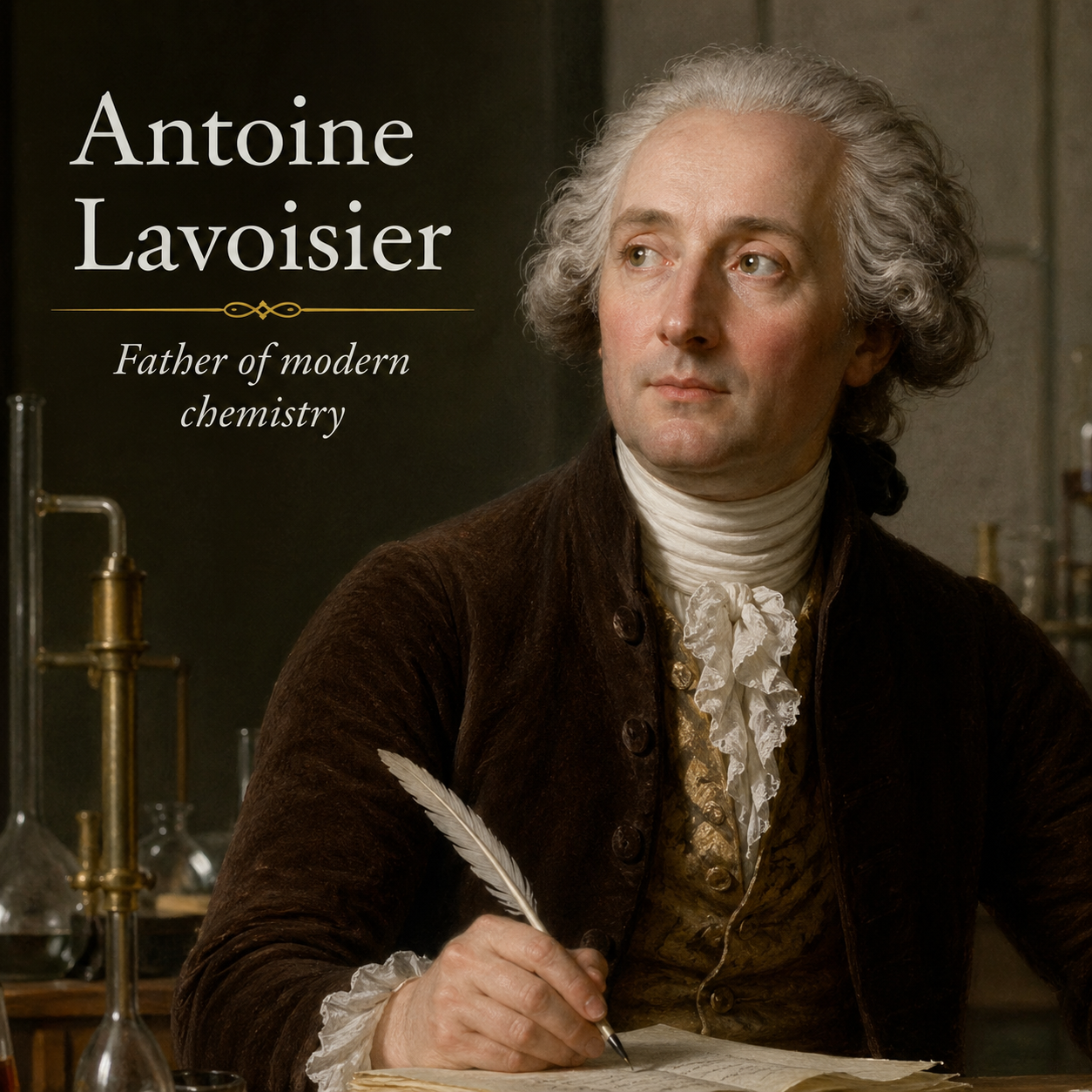
Antoine Lavoisier — "The imagination is a dangerous guide in science, but it can be a useful servant."
The imagination is a dangerous guide in science, but it can be a useful servant.
The imagination is a dangerous guide in science, but it can be a useful servant.
Click any product to generate a realistic preview. Up to 3 at a time.
* Initial load can take up to 90 seconds — revising the preview in another color is nearly instant.
"The greatest pleasure of the human mind is to discover the truth."
"It is impossible for me to write anything without feeling myself inspired by a sort of scientific enthusiasm."
"I have no other ambition than to serve humanity."
"Nothing is created, either in the operations of art, or in those of nature; and it may be considered as a general principle that in every operation there exists an equal quantity of matter before and …"
"I have lived a simple life, devoted to science and to the service of my country."
Found in 1 providers: grok
1 source checked
Letting imagination lead scientific inquiry produces speculation and error. Science must be driven by evidence, not creative fancy. But imagination, kept subordinate, sparks the hypotheses worth testing in the first place. Creativity is how new questions get asked; measurement and experiment are how they get answered. Unchecked fantasy derails science; harnessed imagination fuels it. The servant role, not the master role, is where imagination earns its place.
Lavoisier revolutionized chemistry by replacing phlogiston theory—a speculative idea—with oxygen-based combustion, proven through careful measurement. He insisted on quantitative experimentation over philosophical guessing, establishing the law of conservation of mass. His own imagination conceived bold hypotheses about combustion and respiration, but he validated every claim with precision instruments and meticulous data. His career embodied the quote: creative leaps disciplined by the balance and the flask.
Lavoisier worked during the late 18th-century Enlightenment, when natural philosophy was shedding centuries of Aristotelian speculation and alchemical myth. The Scientific Revolution had established experimentation as a method, but chemistry remained cluttered with unfounded theories like phlogiston. The Enlightenment prized reason and evidence over tradition, yet romantic and speculative thinking still competed with empiricism. Lavoisier's warning against imagination as a guide reflected a discipline actively wrestling free from fantasy.
AI-generated insights based on extensive research and information for context. Factual errors? Email [email protected].
Your cart is empty