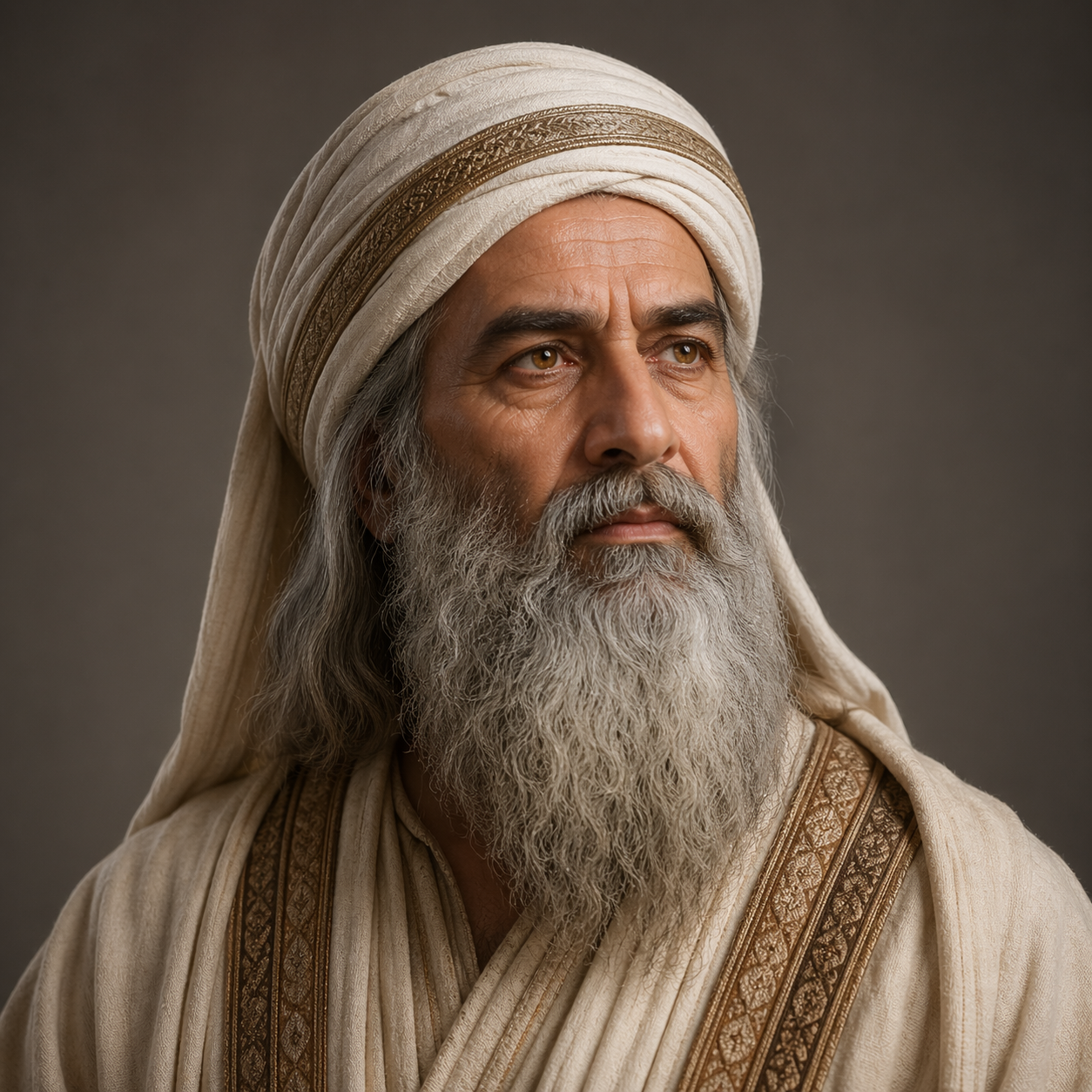
Zoroaster — "The Lie-demon shall be smitten, and the Good Mind shall triumph."
The Lie-demon shall be smitten, and the Good Mind shall triumph.
The Lie-demon shall be smitten, and the Good Mind shall triumph.
Click any product to generate a realistic preview. Up to 3 at a time.
* Initial load can take up to 90 seconds — revising the preview in another color is nearly instant.
"A righteous government is of all the most to be wished for, Bearing of blessing and good fortune in the highest. Guided by the law of Truth, supported by dedication and zeal, It blossoms into the Best…"
"Evil to the evil, good reward to the good."
"Truth is the best of all things. As righteousness, it is happiness."
"When, O Mazda, shall the dawn of the days of existence rise, when shall the world be restored to its purity?"
"May the evil-doer perish, and may the good be rewarded according to their deeds."
Iranian prophet who founded Zoroastrianism, the first major religion of cosmic dualism between good (Ahura Mazda) and evil (Angra Mainyu). Closely associated with The Buddha (near-contemporary Eastern moral-cosmological revolutionary). For an intellectual contrast, see Friedrich Nietzsche, German philosopher of 'beyond good and evil' — Nietzsche appropriated Zarathustra's name for Thus Spoke Zarathustra (1883) precisely to invert the original's moral cosmology — the historical Zoroaster founded the good-versus-evil framework Nietzsche's character announces the end of.
Found in 1 providers: grok
1 source checked
Deception and dishonesty will ultimately be defeated, while clear thinking, honesty, and goodness will win out. The statement frames existence as a contest between truth and falsehood, promising that people who align themselves with wisdom and right action are on the winning side. It is both a prediction and a call to pick a team in that moral conflict.
Zoroaster built his entire teaching around the struggle between Asha (truth, order) and Druj (the Lie), with Vohu Manah (Good Mind) as a divine helper. As a reforming priest who rejected the blood-soaked polytheism of his culture, he staked his prophetic career on the claim that ethical truth-telling, not ritual appeasement, would ultimately prevail.
In Bronze Age Iran, religion centered on animal sacrifice, warrior cults, and tribal raiding where cattle-theft was glorified. Priestly classes profited from elaborate rituals rather than moral instruction. Zoroaster's reframing of cosmic order as a battle between truth and the Lie was radical: it pushed Iranian religion toward personal ethics, individual judgment after death, and monotheistic tendencies centuries before comparable shifts elsewhere.
AI-generated insights based on extensive research and information for context. Factual errors? Email [email protected].
Your cart is empty