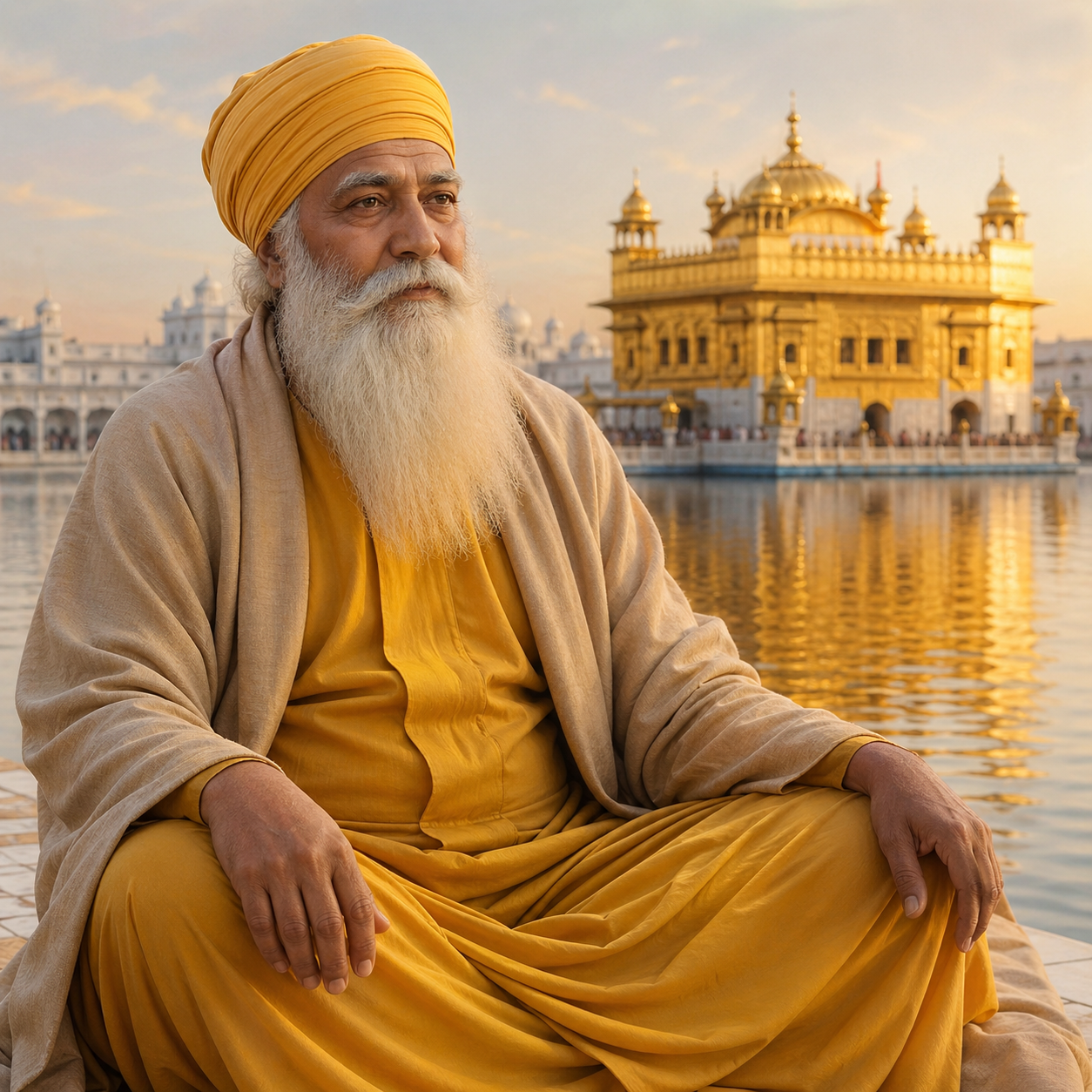
Guru Nanak — "The Lord dwells in every heart; why search for Him outside?"
The Lord dwells in every heart; why search for Him outside?
The Lord dwells in every heart; why search for Him outside?
Click any product to generate a realistic preview. Up to 3 at a time.
* Initial load can take up to 90 seconds — revising the preview in another color is nearly instant.
"Death would not be called bad, O people, if one knew how to truly die."
"Be kind to all beings, this is more meritorious than bathing at the sixty-eight sacred shrines of pilgrimage and donating money."
"Why call her inferior, who gives birth to kings?"
"He who is born, is bound to die. The only thing certain is death. All else is illusion."
"He who has no faith in himself can never have faith in God."
Founder of Sikhism and the first of the Ten Sikh Gurus, whose teachings of one universal God and rejection of caste shaped Punjab. Closely associated with Kabir (mystical poet whose verses appear in the Sikh Guru Granth Sahib). For an intellectual contrast, see Brahmanical orthodoxy, the Hindu caste-and-ritual establishment of his era — Sikhism was founded as a deliberate alternative to both Hindu ritual hierarchy and Islamic exclusivism — Nanak's universalism was a structural rejection of caste and priestly mediation.
Found in 1 providers: gemini
1 source checked
This saying teaches that the divine presence lives inside every person, so looking for God in temples, rituals, pilgrimages, or distant holy places misses the point. The sacred is already within you, closer than your own breath. Instead of outward seeking, turn inward through honest reflection, meditation, and ethical living. Recognizing that same divine spark in every other human naturally leads to equality, compassion, and humility toward all people you encounter.
Guru Nanak built Sikhism on exactly this insight, rejecting caste hierarchy, idol worship, ritual bathing, and priestly gatekeeping common in both Hindu and Muslim practice around him. His travels across India, Tibet, and Arabia spread the teaching of one formless God accessible to anyone. He founded community kitchens (langar) where all castes ate together, lived as a working householder farmer rather than a renunciate, and insisted that sincere remembrance of the divine name mattered more than outward religious performance.
Guru Nanak lived 1469-1539 in Punjab during Mughal expansion and sharp Hindu-Muslim tension, when religious identity was policed through ritual, caste, pilgrimage taxes, and clerical authority. Ordinary people were told salvation required Brahmin mediation or orthodox Islamic observance, and the poor were excluded from both. By declaring God present equally in every heart, Nanak undercut caste, clerical power, and sectarian division at once, offering a radical egalitarian spirituality during an era hungry for it.
AI-generated insights based on extensive research and information for context. Factual errors? Email [email protected].
Your cart is empty