Alan Turing — "The machine can only do what we tell it to do. But what if we tell it to learn?"
The machine can only do what we tell it to do. But what if we tell it to learn?
The machine can only do what we tell it to do. But what if we tell it to learn?
Click any product to generate a realistic preview. Up to 3 at a time.
* Initial load can take up to 90 seconds — revising the preview in another color is nearly instant.
"We are trying to create a machine that can solve problems."
"No, I'm not interested in developing a powerful brain. All I'm interested in is a moderately trained brain. The kind that would be useful in daily life."
"The problem of creating intelligent machines is one of the most challenging and exciting problems in all of science."
"The human brain is a very remarkable thing, but it is not infallible."
"The human mind is a probabilistic machine."
Attributed, general implication from his writings on machine learning, but exact quote is elusive.
Date: Approx. 1950
ShockingFound in 1 providers: grok
1 source checked
The quote challenges the assumption that computers are purely mechanical executors of fixed instructions. It acknowledges the real constraint — machines do only what they're programmed to do — then pivots to a transformative question: what if the instruction itself is to acquire new capabilities? This is the conceptual seed of machine learning: not programming answers, but programming the capacity to discover answers through experience.
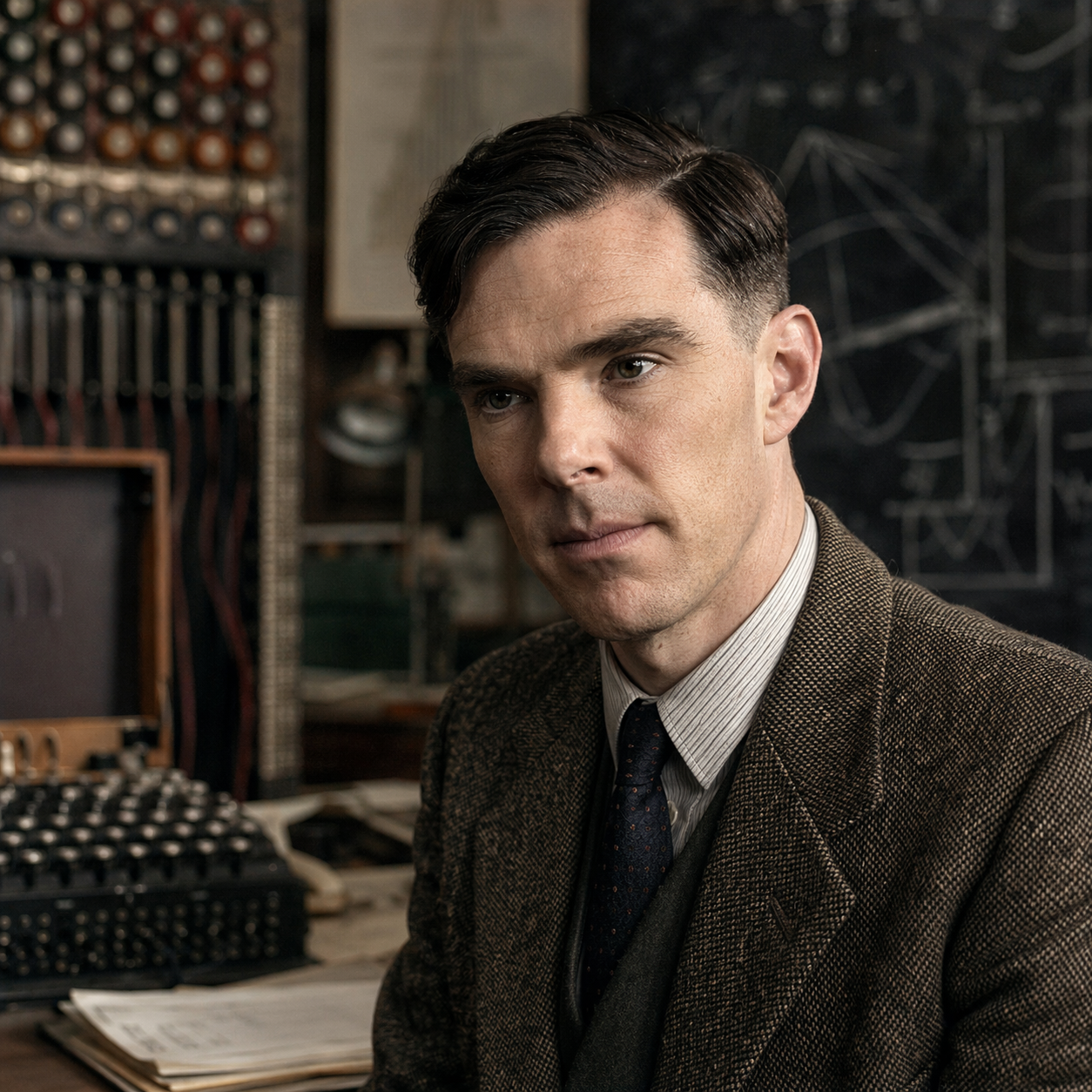
Turing's 1950 paper 'Computing Machinery and Intelligence' proposed the Turing Test and explicitly theorized 'child machines' that learn rather than execute fixed programs. He worked at Bletchley Park designing adaptive decryption logic against Enigma, and later at Manchester developing early neural network concepts. His entire career was built on pushing computation beyond rote instruction into genuine problem-solving capacity.
In the late 1940s and 1950s, computers were enormous, expensive calculators running deterministic programs for military and scientific tasks. The Cold War accelerated computing investment, but the dominant view held that machines were tools, never minds. Psychology was dominated by behaviorism. Against this backdrop, Turing's suggestion that machines might learn rather than simply execute was a profound philosophical and scientific provocation.
AI-generated insights based on extensive research and information for context. Factual errors? Email [email protected].
Your cart is empty