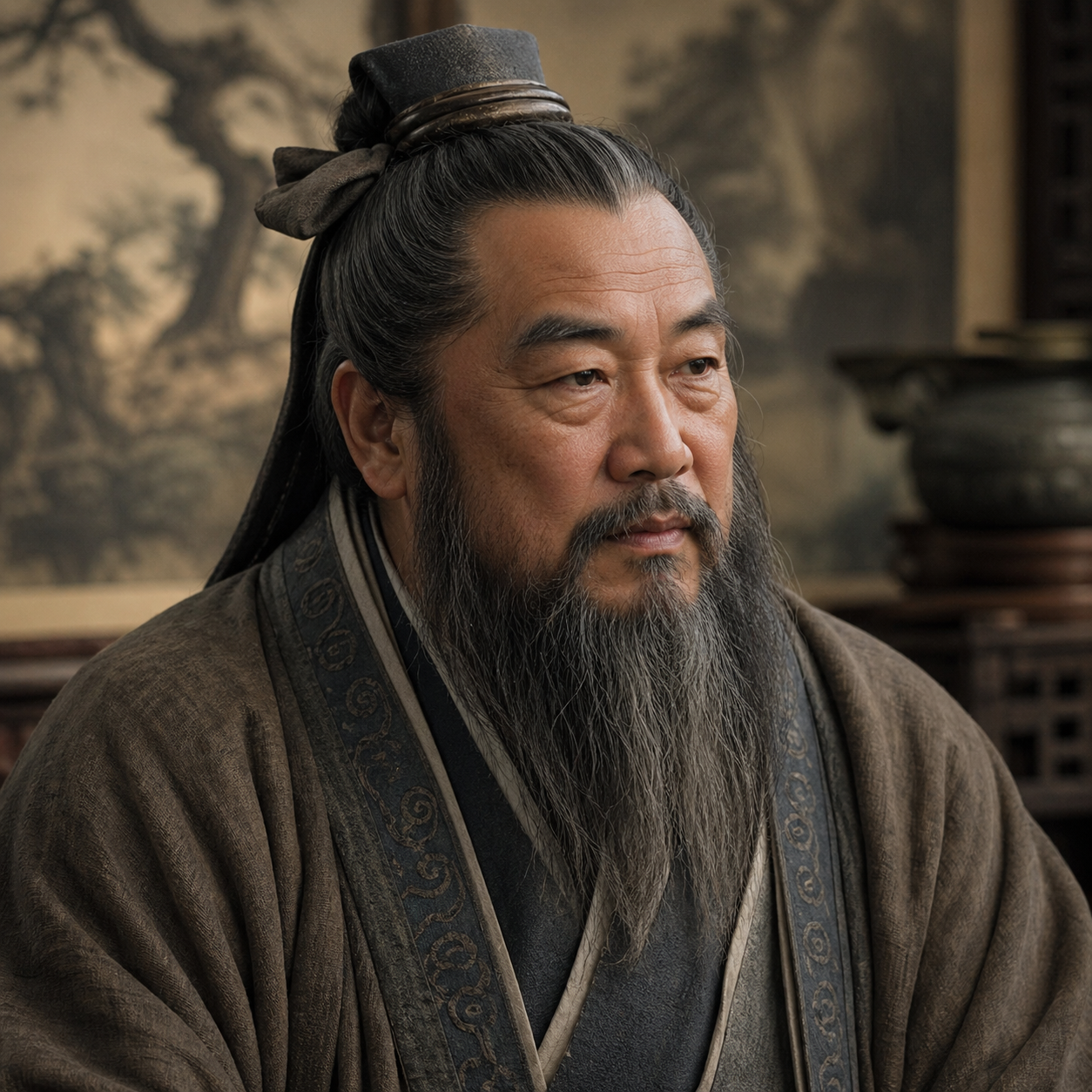
Confucius — "The Master said, 'If the will be set on virtue, there will be no practice of wic…"
The Master said, 'If the will be set on virtue, there will be no practice of wickedness.'
The Master said, 'If the will be set on virtue, there will be no practice of wickedness.'
Click any product to generate a realistic preview. Up to 3 at a time.
* Initial load can take up to 90 seconds — revising the preview in another color is nearly instant.
"The superior man is easy to serve but difficult to please; the inferior man is difficult to serve but easy to please."
"When he eats, the gentleman does not seek to stuff himself. In his home he does not seek luxury. He is diligent in his work and cautious in his speech. He associates with those who possess the Way, an…"
"First he behaves properly and then he speaks, so that his words follow his actions."
"Study the past if you would define the future."
"The gentleman reveres three things. He reveres the mandate of Heaven; he reveres great people; and he reveres the words of sages."
Chinese philosopher and teacher whose teachings (compiled by his students in the Analects) became the foundational ethical framework of East Asian civilization for 2,500 years. Closely associated with Mencius (his most-influential follower a century later). For an intellectual contrast, see Laozi, near-contemporary Chinese sage and Tao Te Ching author — Confucius systematized social order through ritual and family hierarchy; Laozi's Taoist effortless-action philosophy argued such systems were the disease, not the cure. The two founding poles of Chinese moral philosophy — every East Asian moral tradition since has positioned itself between them.
The standard scholarly entry points to Confucius's work: Philip J. Ivanhoe (Georgetown, Chinese philosophy) — Confucian Moral Self Cultivation (2000); Edward Slingerland (UBC, Asian Studies) — Effortless Action: Wu-wei as Conceptual Metaphor (2003); Tu Weiming (Harvard, Confucian scholar) — Confucian Thought: Selfhood as Creative Transformation (1985). These are the works graduate seminars cite when teaching Confucius.
Found in 1 providers: grok
1 source checked
When you genuinely commit your inner intent to moral goodness, wrongdoing simply stops being an option. It is not about willpower suppressing bad urges, but about orientation: once your deepest aims point toward virtue, the motivation to act wickedly dissolves. Bad behavior springs from misaligned priorities, so fixing the will at the root prevents the branches of harmful action from ever growing.
Confucius spent his life arguing that moral cultivation, not law or punishment, is the foundation of a good society. As a teacher and failed political advisor, he believed rulers and commoners alike could transform through self-examination and a fixed moral purpose. This saying captures his core doctrine of ren (humaneness) and the idea that character precedes conduct, which shaped his teaching across roughly forty years of wandering instruction.
Confucius lived during the late Spring and Autumn period (551–479 BCE), when the Zhou dynasty's authority was collapsing and rival states waged constant war. Traditional rituals were decaying, corruption was rampant, and assassinations of rulers were common. Against this chaos, Confucius offered moral self-cultivation as a cure for social breakdown, insisting that ordered hearts would produce an ordered state where brute coercion and shifting alliances had failed.
AI-generated insights based on extensive research and information for context. Factual errors? Email [email protected].
Your cart is empty