Francis Crick — "The more I learn about science, the more I realize that there is no God."
The more I learn about science, the more I realize that there is no God.
The more I learn about science, the more I realize that there is no God.
Click any product to generate a realistic preview. Up to 3 at a time.
* Initial load can take up to 90 seconds — revising the preview in another color is nearly instant.
"The brain is a machine that makes theories."
"No important discovery is ever made without a 'mad' guess."
"The brain is a machine."
"The scientific view of the world is a harsh one."
"The human brain is a wonderful thing. It starts working the moment you are born and never stops until you stand up to speak in public."
Found in 1 providers: grok
1 source checked
As scientific understanding deepens, the explanatory gaps that religion traditionally fills shrink. Physics, chemistry, evolution, and molecular biology reveal mechanisms behind phenomena once attributed to divine will. The quote argues that accumulating knowledge doesn't leave room for a creator—natural laws fully account for existence. The more rigorously you examine how the universe actually works, the less logically necessary, or even plausible, a God becomes.
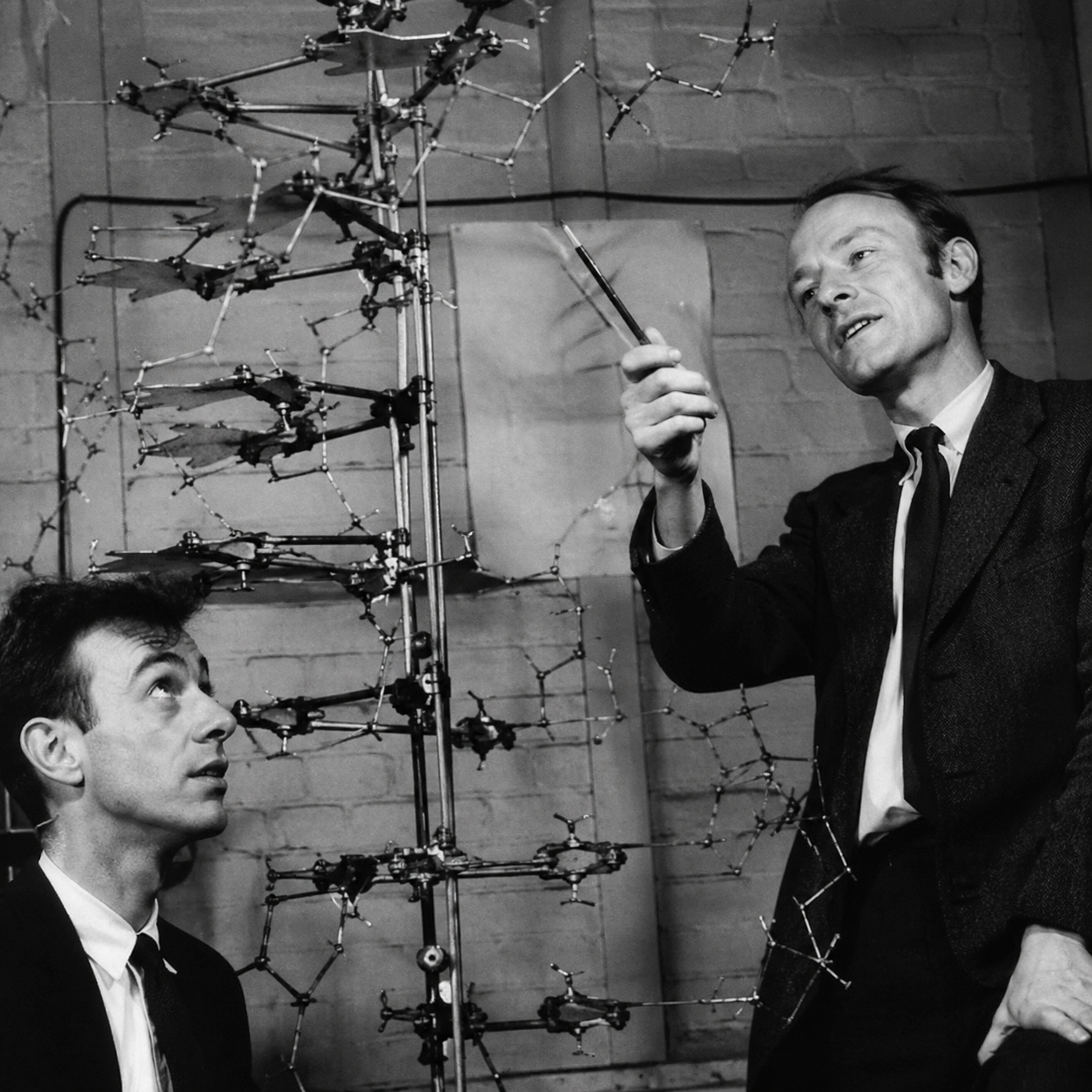
Crick abandoned Christianity as a teenager and remained a lifelong atheist. His 1953 co-discovery of DNA's double helix showed that the blueprint of life is a molecule—no divine spark required. He later dedicated himself to consciousness research at the Salk Institute, arguing the mind is purely neurological. His entire scientific career was a sustained effort to replace supernatural explanations with physical, testable mechanisms.
The mid-20th century saw science systematically dismantle longstanding mysteries: DNA explained heredity, the Big Bang reshaped cosmology, vaccines defeated ancient plagues, and rockets reached orbit. The modern evolutionary synthesis had just united Darwin with genetics, shrinking divine creation's foothold. Across the West, secular humanism grew, religious authority weakened among intellectuals, and science increasingly displaced theology as the framework for answering fundamental questions about life and existence.
AI-generated insights based on extensive research and information for context. Factual errors? Email [email protected].
Your cart is empty