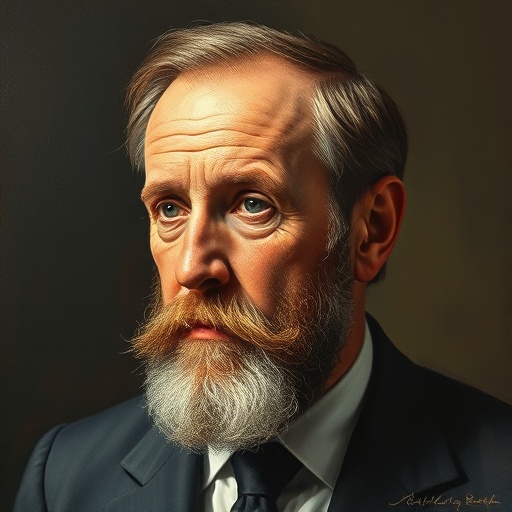
Niels Bohr — "The more I learn, the more I realize how much I don't know."
The more I learn, the more I realize how much I don't know.
The more I learn, the more I realize how much I don't know.
Click any product to generate a realistic preview. Up to 3 at a time.
* Initial load can take up to 90 seconds — revising the preview in another color is nearly instant.
"Atomic physics has taught us that we cannot be observers without at the same time being participants."
"Prediction is very difficult, especially if it's about the future."
"The progress of science depends on the freedom of thought."
"The meaning of our words is always context-dependent."
"If quantum mechanics hasn't profoundly shocked you, you haven't understood it yet."
Found in 1 providers: grok
1 source checked
The quote expresses intellectual humility — genuine learning doesn't make you more certain, it reveals how vast the unknown truly is. The deeper you go into any subject, the more you encounter its complexity and the boundaries of human understanding. True expertise isn't mastery of all answers; it's recognizing how many questions remain. Knowledge expands your awareness of ignorance as much as it fills gaps.
Bohr revolutionized physics with his 1913 atomic model, yet spent his career questioning and revising foundational assumptions. He championed the Copenhagen interpretation, accepting inherent uncertainty as fundamental to quantum mechanics — not a gap in knowledge but a property of reality itself. His decades-long philosophical debates with Einstein showed a man deeply comfortable without final answers, embodying this sentiment directly in his scientific practice.
Bohr worked during the early 20th century's quantum revolution, when physicists discovered that classical Newtonian certainty collapsed at the atomic level. The 1920s and 1930s brought Heisenberg's uncertainty principle, wave-particle duality, and probabilistic outcomes replacing deterministic laws. Science was no longer about clockwork rules but navigating irreducible uncertainty. The more physicists learned, the more they confronted how counterintuitive and incomplete human understanding of nature remained.
AI-generated insights based on extensive research and information for context. Factual errors? Email [email protected].
Your cart is empty