Ada Lovelace — "The more I study, the more insatiable do I feel my genius for it to be."
The more I study, the more insatiable do I feel my genius for it to be.
The more I study, the more insatiable do I feel my genius for it to be.
Click any product to generate a realistic preview. Up to 3 at a time.
* Initial load can take up to 90 seconds — revising the preview in another color is nearly instant.
"I am a passionate creature, and I cannot be content with anything less than the best."
"The Analytical Engine holds a position wholly its own; it is not merely an arithmetic machine, but a machine that can operate on symbols generally."
"My brain is a queer piece of mechanism."
"I consider myself a high priestess of science."
"I have a profound conviction that the world is on the cusp of a great scientific revolution."
Found in 1 providers: deepseek
1 source checked
The deeper someone dives into a subject, the stronger their hunger to learn more becomes. True mastery doesn't produce satisfaction — it reveals how vast the territory is. Each answer unlocks ten new questions. The quote captures how genuine intellectual passion is self-reinforcing: knowledge doesn't quench curiosity but amplifies it, turning study into an obsession that feels almost biological in its intensity.
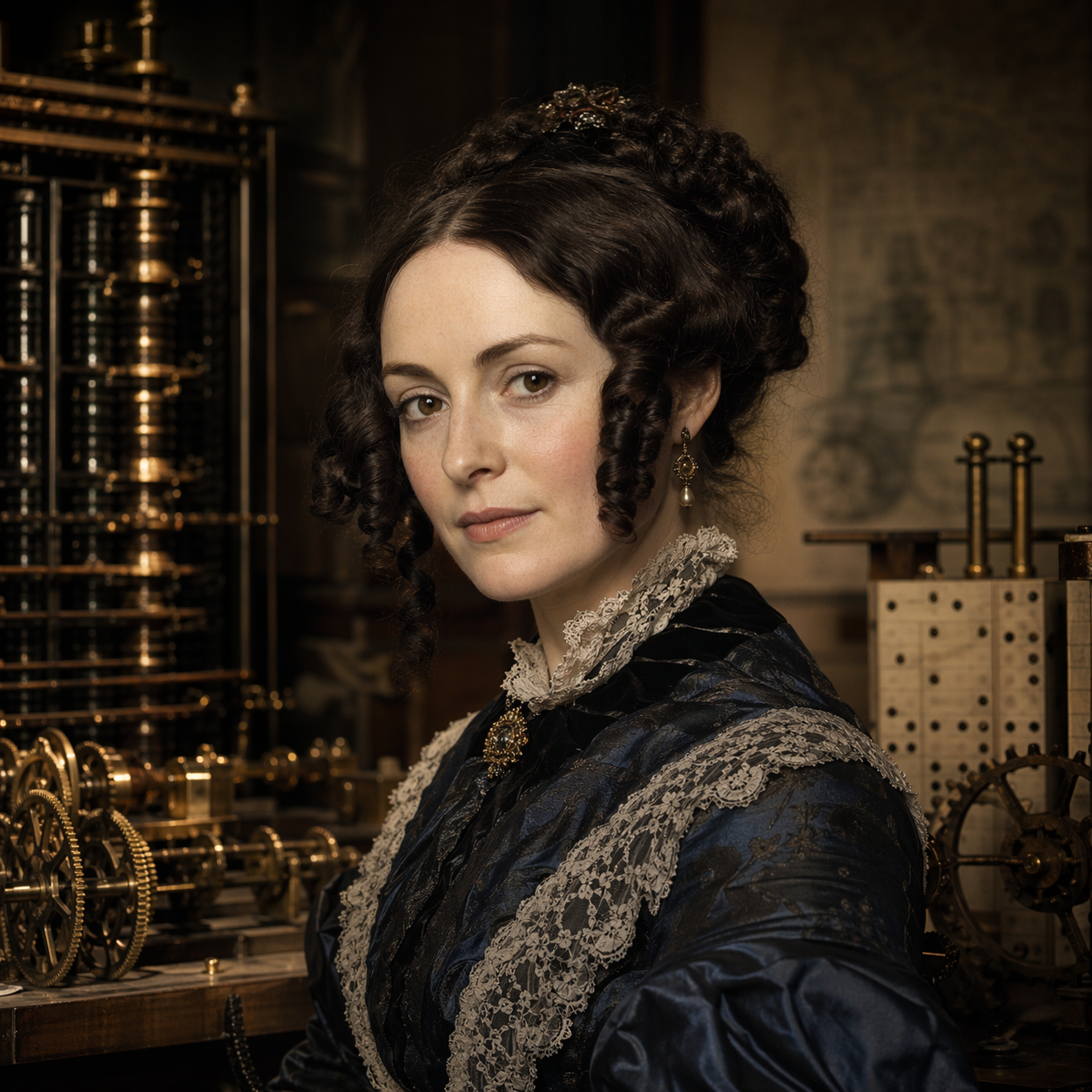
Lovelace displayed this insatiable drive throughout her short life. Trained in mathematics by her mother to suppress what was feared as her poet-father Byron's dangerous imagination, she instead fused both impulses. Her collaboration with Babbage on the Analytical Engine produced notes longer than his own paper, including the first algorithm. She wrote privately of her ambition to contribute foundational mathematical work, sensing her mind was built for something extraordinary.
In 1840s Britain, women were largely excluded from universities and scientific institutions. Yet the period buzzed with mechanization, industrial transformation, and debates about whether machines could think. Lovelace operated in aristocratic scientific salons where ideas flowed freely despite gender barriers. Her hunger for study was radical — respectable women pursued accomplishments, not genius. Charles Babbage, Michael Faraday, and Mary Somerville modeled a new kind of rigorous scientific culture she desperately wanted to join fully.
AI-generated insights based on extensive research and information for context. Factual errors? Email [email protected].
Your cart is empty