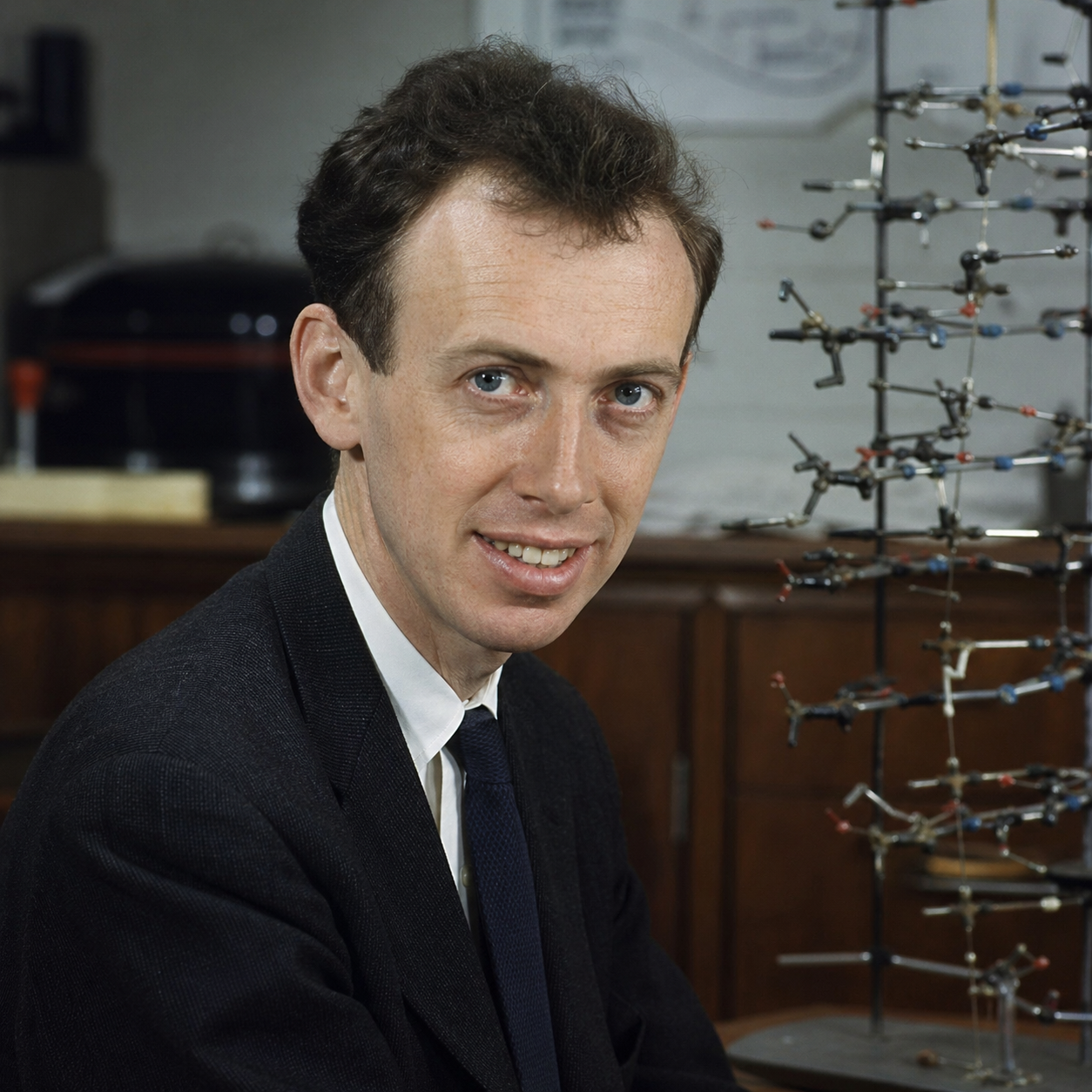
James Watson — "The more you know, the more you realize you don't know."
The more you know, the more you realize you don't know.
The more you know, the more you realize you don't know.
Click any product to generate a realistic preview. Up to 3 at a time.
* Initial load can take up to 90 seconds — revising the preview in another color is nearly instant.
"People say it would be terrible if we made all girls pretty. I think it would be great."
"The greatest adventure is to explore the unknown."
"People who have to deal with black employees find this a problem, because they're not as good as white employees."
"I’m not a racist in a conventional way. I’ve never been a racist. I’ve never been anti-Semitic. I’m not prejudiced."
"There's a difference between a scientist and a politician. A scientist wants to know the truth, a politician wants to get elected."
Found in 1 providers: grok
1 source checked
Real expertise reveals the limits of your own understanding. As you learn more about a subject, you uncover deeper layers of complexity, unanswered questions, and gaps that beginners never notice. Confidence often shrinks as competence grows, because each answer opens a dozen new questions. Genuine knowledge breeds humility, while shallow familiarity tends to produce overconfidence. The wisest people sound the least certain because they actually grasp the size of the unknown.
Watson co-discovered DNA's double helix in 1953 with Crick, unlocking the molecular basis of heredity yet exposing vast unknowns about gene function, regulation, and the human genome. He went on to lead the Human Genome Project, where each sequenced base raised new questions about epigenetics, protein folding, and disease. His career embodies how a single landmark discovery can reveal an even larger frontier of biological mysteries that subsequent generations still struggle to map.
Watson worked through the post-war molecular biology revolution, when X-ray crystallography, sequencing, and recombinant DNA reshaped science from the 1950s into the genomic era. The 1990–2003 Human Genome Project promised to decode life, but instead revealed junk DNA, regulatory complexity, and the proteome's depth. Each decade, new tools like PCR, CRISPR, and sequencing expanded both knowledge and the catalogue of mysteries, making intellectual humility a defining posture of modern biology.
AI-generated insights based on extensive research and information for context. Factual errors? Email [email protected].
Your cart is empty