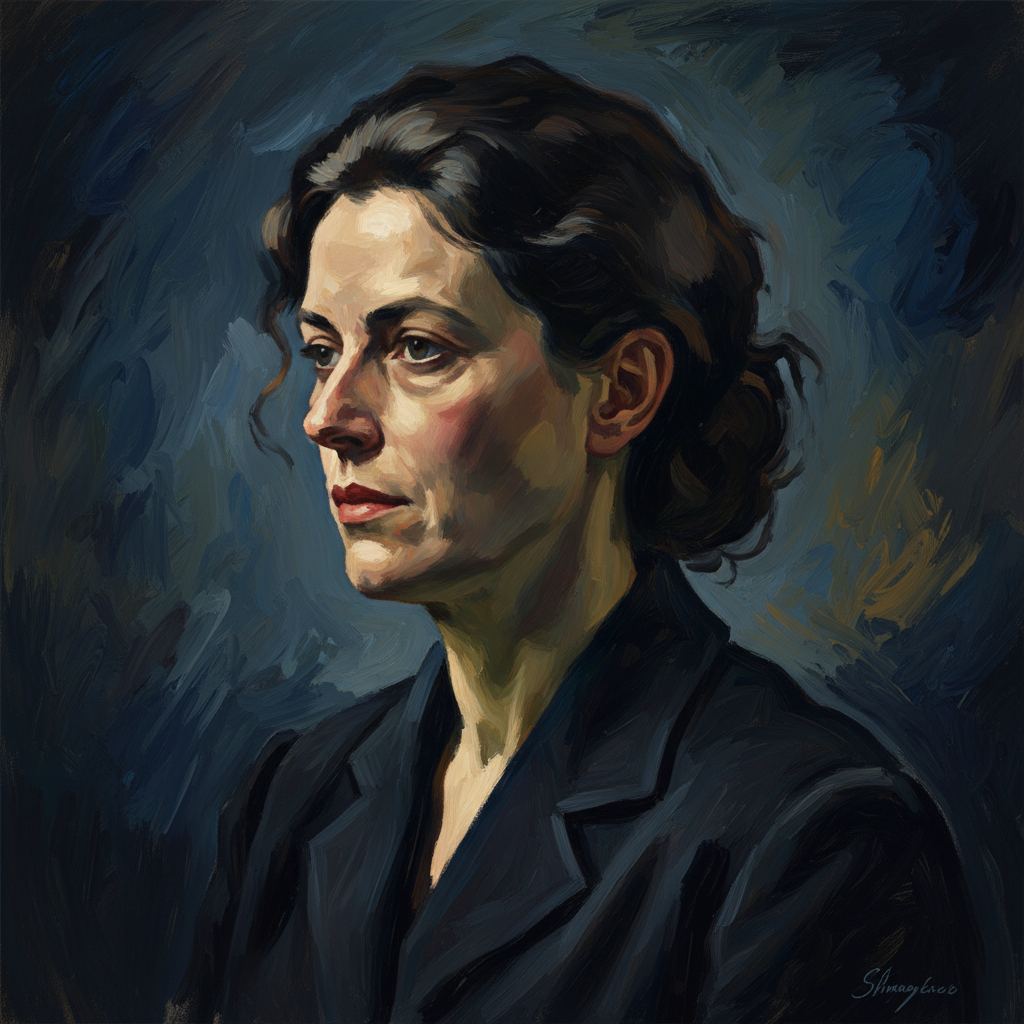
Simone de Beauvoir — "The most authentic human existence is one that is constantly in flux, constantly…"
The most authentic human existence is one that is constantly in flux, constantly becoming.
The most authentic human existence is one that is constantly in flux, constantly becoming.
Click any product to generate a realistic preview. Up to 3 at a time.
* Initial load can take up to 90 seconds — revising the preview in another color is nearly instant.
"The present is not a potential past; it is the moment of choice and action."
"The more she is in love, the more she loses herself; the more he is in love, the more he finds himself."
"To be oneself, simply oneself, is so amazing and so unique."
"I am going to die, and I don't know what to do with myself."
"The true meaning of life is to plant trees, under whose shade you do not expect to sit."
French existentialist philosopher whose The Second Sex (1949) is the foundational text of modern feminist theory. Closely associated with Jean-Paul Sartre (lifetime partner and existentialist co-founder) and Albert Camus (existentialist contemporary in Paris). For an intellectual contrast, see Camille Paglia, American cultural critic and Sexual Personae author — Paglia argues for biological-essentialist roots of gender that Beauvoir's social-construction view — 'one is not born, but rather becomes, a woman' — explicitly rejects. The two are the cleanest constructed-vs-essentialist poles in feminist theory.
The standard scholarly entry points to Simone de Beauvoir's work: Toril Moi (Duke, James B. Duke Distinguished Professor) — Simone de Beauvoir: The Making of an Intellectual Woman (1994); Margaret A. Simons (Southern Illinois University, Emerita) — Beauvoir and The Second Sex (1999); Kate Kirkpatrick (Oxford, Regent's Park College) — Becoming Beauvoir: A Life (2019). These are the works graduate seminars cite when teaching Simone de Beauvoir.
Your cart is empty