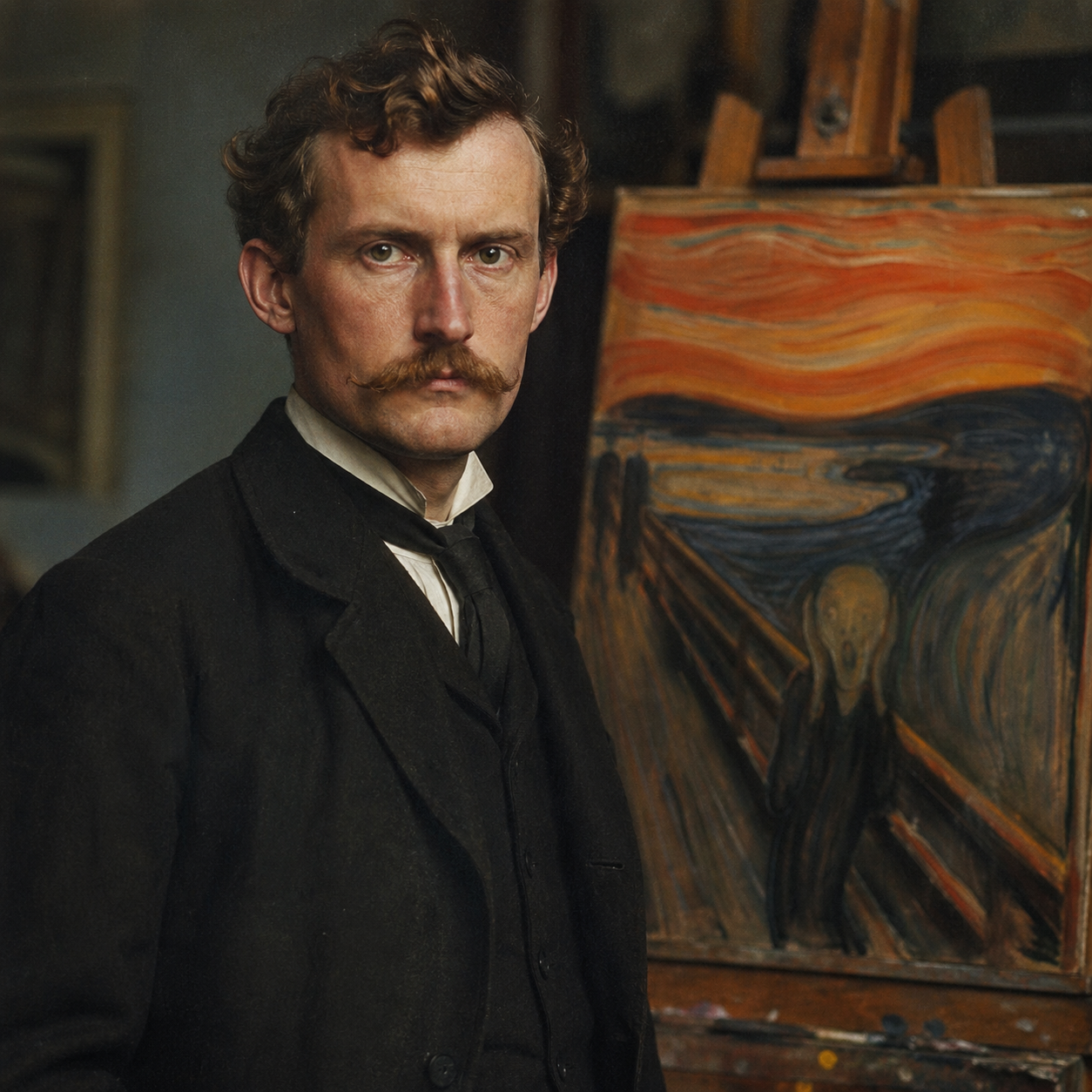
Edvard Munch — "The most beautiful things are often the most fragile."
The most beautiful things are often the most fragile.
The most beautiful things are often the most fragile.
Click any product to generate a realistic preview. Up to 3 at a time.
* Initial load can take up to 90 seconds — revising the preview in another color is nearly instant.
"I find it difficult to imagine an afterlife, such as Christians, or at any rate many religious people, conceive it, believing that the conversations with relatives and friends interrupted here on eart…"
"The viewer should feel the pain, the joy, the love, the hate, the fear, the horror."
"The soul is an entity that exists in a state of eternal flux."
"The colors live a remarkable life of their own after they have been applied to the canvas."
"Nature is not only all that is visible to the eye… it also includes the inner pictures of the soul."
Norwegian Expressionist painter whose The Scream (1893) became the iconic image of modern existential dread. Closely associated with James Ensor (Belgian Expressionist peer) and Egon Schiele (younger Expressionist heir). For an intellectual contrast, see Pierre-Auguste Renoir, French Impressionist (1841-1919) — Munch and Renoir were exact contemporaries painting the same Belle Époque from opposite emotional poles — Renoir's dappled-light bourgeois pleasure and Munch's anxiety-soaked bourgeois terror are the late-19th-century painting's two halves. The same world; the cleanest emotional inversion.
Your cart is empty