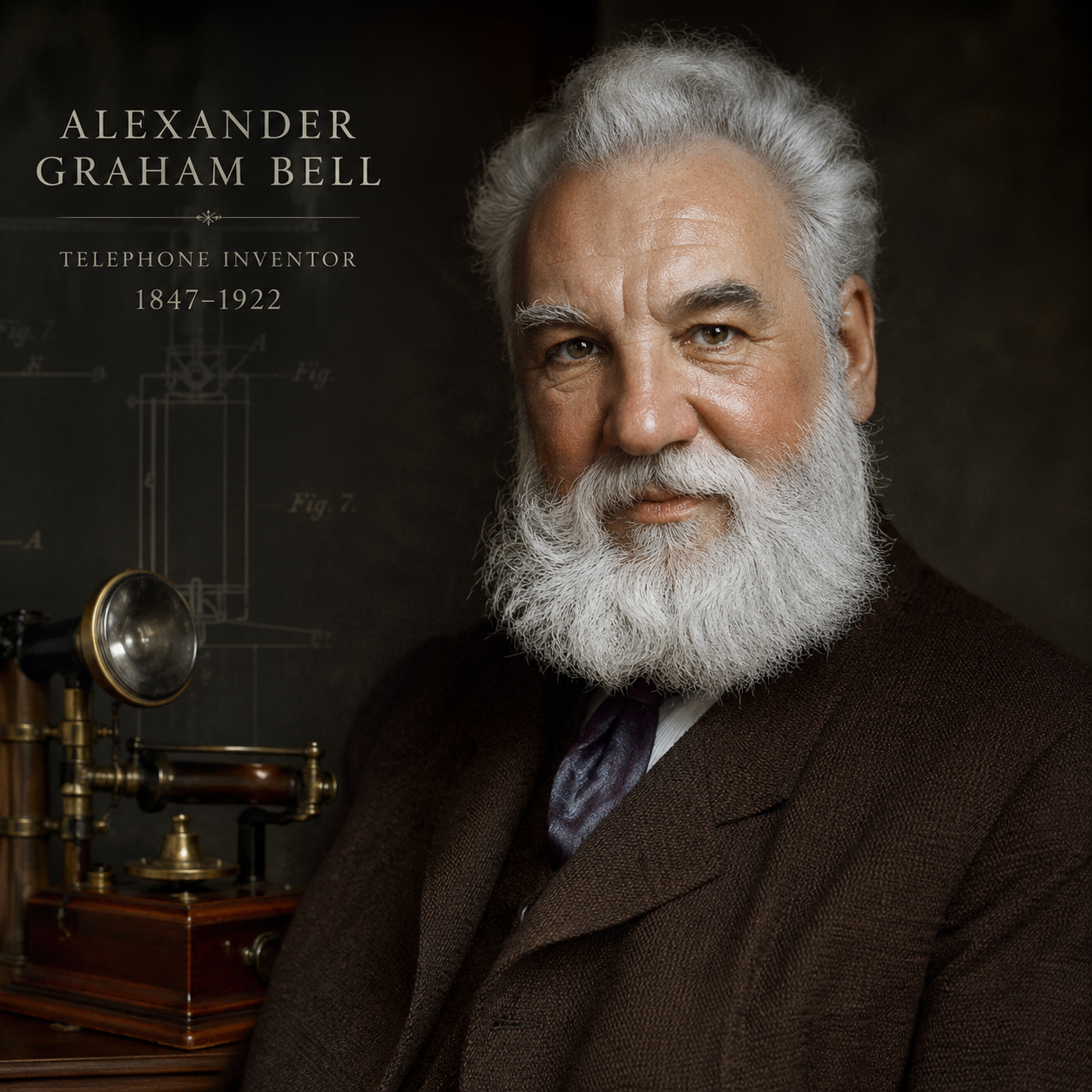
Alexander Graham Bell — "The only difference between a successful person and others is not a lack of stre…"
The only difference between a successful person and others is not a lack of strength, not a lack of knowledge, but rather a lack of will.
The only difference between a successful person and others is not a lack of strength, not a lack of knowledge, but rather a lack of will.
Click any product to generate a realistic preview. Up to 3 at a time.
* Initial load can take up to 90 seconds — revising the preview in another color is nearly instant.
"The world is full of people who are waiting for someone to come along and inspire them to be what they always wanted to be."
"Environment counts for a great deal. A man's particular idea may have no chance for growth or encouragement in his community. Real success is denied that man, until he finds a proper environment."
"Don't keep forever on the public road, going only where others have gone. Leave the beaten track occasionally and dive into the woods. Every time you do so you will be certain to find something that y…"
"The most successful men in the end are those whose success is the result of steady accretion."
"The greatest achievement is to rise above yourself."
Found in 1 providers: grok
1 source checked
Success isn't blocked by weakness or ignorance — most people who fall short already possess adequate strength and knowledge. What separates achievers from everyone else is sheer willpower: the refusal to quit when progress stalls. This reframes failure not as a talent deficit but as a motivational one, placing success within reach of anyone willing to sustain effort and push through difficulty consistently.
Bell's telephone wasn't born of genius alone — he competed fiercely against Elisha Gray, filing his landmark patent in 1876 on the same day, winning by a razor margin. Largely self-taught, lacking formal engineering credentials, he drove the invention forward through relentless persistence. His lifelong advocacy for the deaf — inspired by his deaf mother and wife Mabel — further reveals a man whose defining trait was determined commitment over institutional advantage.
Bell operated during America's Gilded Age, when industrialists like Carnegie and Rockefeller embodied the self-made-man ideal. Social Darwinism was fashionable, framing success as proof of natural superiority and inherited breeding. Bell's framing cuts directly against that: strength and knowledge aren't the gatekeepers — will is. In an era when class and formal education were widely seen as true determinants of achievement, this was a quietly democratizing claim.
AI-generated insights based on extensive research and information for context. Factual errors? Email [email protected].
Your cart is empty