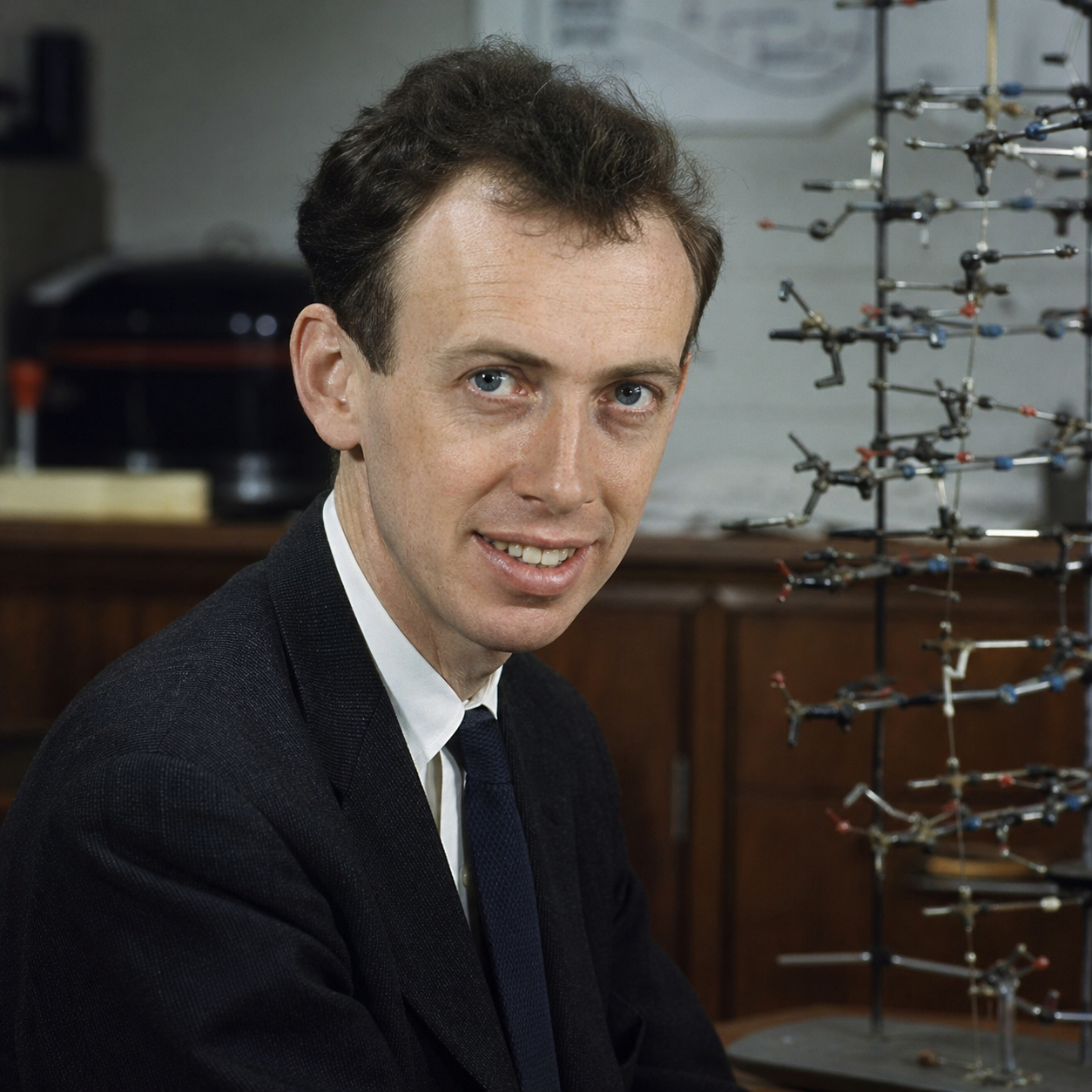
James Watson — "The only people who really believe in free will are novelists."
The only people who really believe in free will are novelists.
The only people who really believe in free will are novelists.
Click any product to generate a realistic preview. Up to 3 at a time.
* Initial load can take up to 90 seconds — revising the preview in another color is nearly instant.
"Some people don't like the truth. That's their problem, not mine."
"It's good to be a little bit mad."
"My views are based on data, not on wishful thinking."
"I think it's important to be honest about these things."
"There's a difference between a scientist and a politician. A scientist wants to know the truth, a politician wants to get elected."
Found in 1 providers: deepseek
1 source checked
Watson is saying that genuine belief in human free will survives mainly in fiction, where authors invent characters who choose their fates. In real life, our decisions are shaped by genes, brain chemistry, upbringing, and circumstance. Scientists who study how biology drives behavior tend to see 'choice' as the output of physical processes, not a soul freely deciding. Only storytellers, he suggests, still treat people as fully autonomous agents.
As co-discoverer of the DNA double helix in 1953, Watson spent his career showing that traits, diseases, and behaviors trace back to molecular code. He championed the Human Genome Project and pushed hard genetic determinism, often controversially linking genes to intelligence and personality. For a man who saw life written in base pairs, free will looked like a comforting illusion, while novelists, unconstrained by chromosomes, were free to pretend their characters truly chose.
Watson worked through the late twentieth and early twenty-first centuries, when neuroscience, behavioral genetics, and brain imaging steadily eroded the folk idea of an unconstrained will. Libet's readiness-potential experiments, twin studies, and the 2003 Human Genome Project reshaped debates about responsibility, addiction, and crime. Meanwhile, literary fiction kept producing characters who defy fate. Watson's quip lands in that gap between a deterministic scientific worldview and a culture still telling stories of heroic, self-authored choice.
AI-generated insights based on extensive research and information for context. Factual errors? Email [email protected].
Your cart is empty