Francis Crick — "The origin of life appears to be almost a miracle, so many are the conditions wh…"
The origin of life appears to be almost a miracle, so many are the conditions which would have had to be satisfied to get it going.
The origin of life appears to be almost a miracle, so many are the conditions which would have had to be satisfied to get it going.
Click any product to generate a realistic preview. Up to 3 at a time.
* Initial load can take up to 90 seconds — revising the preview in another color is nearly instant.
"If you want to get ahead in science, you have to be a bit of a maverick."
"Free will is an illusion."
"The brain is a machine assembled not to understand itself, but to survive."
"I'm a reductionist."
"The scientific view of the world is a harsh one."
Found in 1 providers: deepseek
1 source checked
Crick is saying that for life to start from non-living matter, an extraordinary number of precise chemical and physical conditions had to align simultaneously. The combination is so improbable that it borders on miraculous. He is not endorsing the supernatural; he is acknowledging how staggeringly unlikely the spontaneous emergence of self-replicating molecules truly is, given what we understand about chemistry, energy gradients, and the fragile pathways needed to assemble functioning biology.
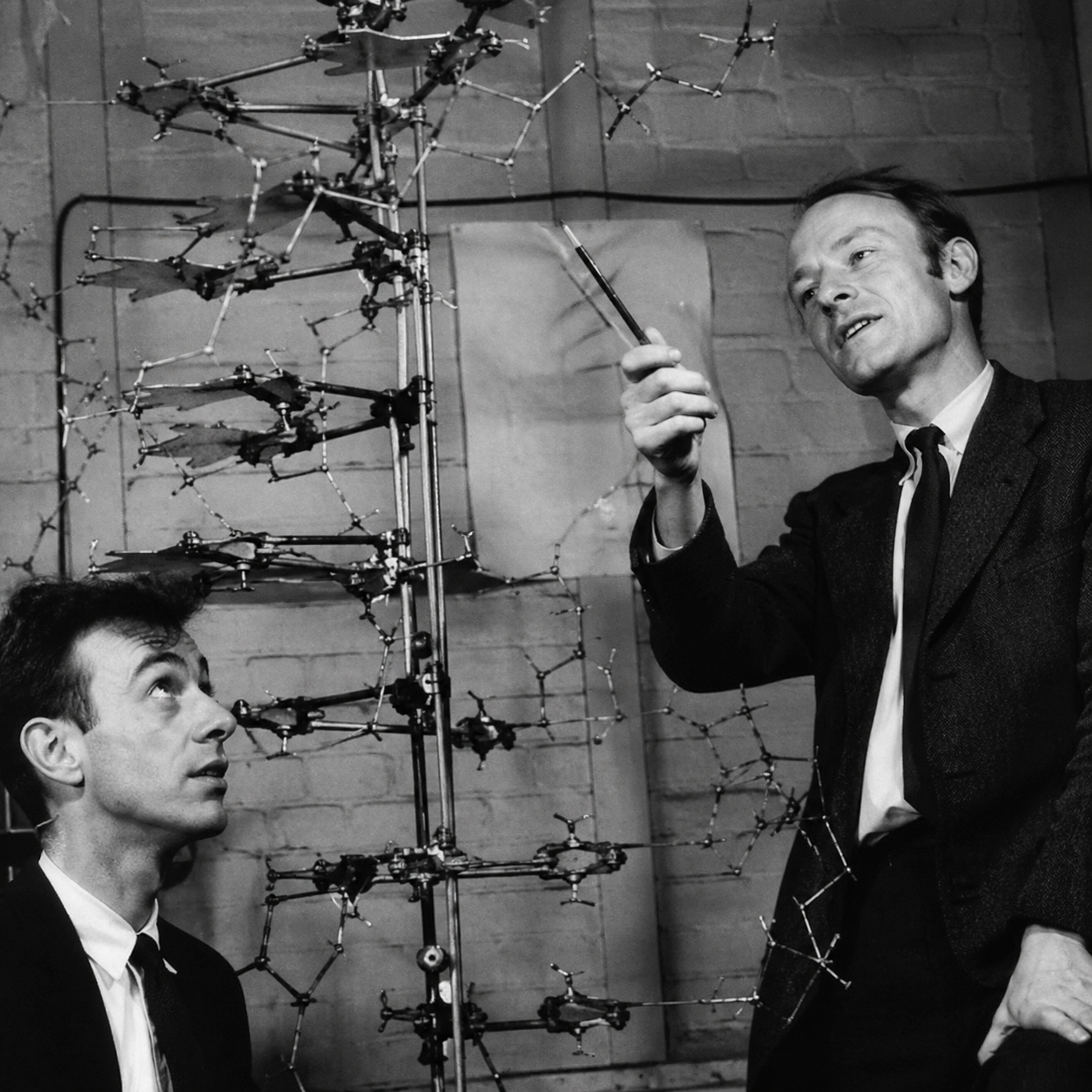
Crick co-discovered DNA's double helix in 1953 with Watson, winning the 1962 Nobel Prize. Late in his career he turned to origin-of-life questions and even co-proposed directed panspermia, suggesting microbes may have been seeded from elsewhere. This quote reflects his honest scientific humility: a militant atheist and rigorous materialist who nonetheless found abiogenesis statistically baffling, prompting him to seriously entertain extraterrestrial origins rather than dismiss the puzzle.
Crick wrote this in 1981's Life Itself, during a decade when molecular biology was exploding but origin-of-life chemistry kept stalling. Stanley Miller's 1953 spark experiments had not led to self-replicating systems, RNA-world ideas were just emerging, and Viking's 1976 Mars probes returned ambiguous results. Against this backdrop of growing genetic knowledge yet persistent abiogenesis mystery, Crick voiced the field's quiet unease about how, exactly, chemistry crossed into biology.
AI-generated insights based on extensive research and information for context. Factual errors? Email [email protected].
Your cart is empty