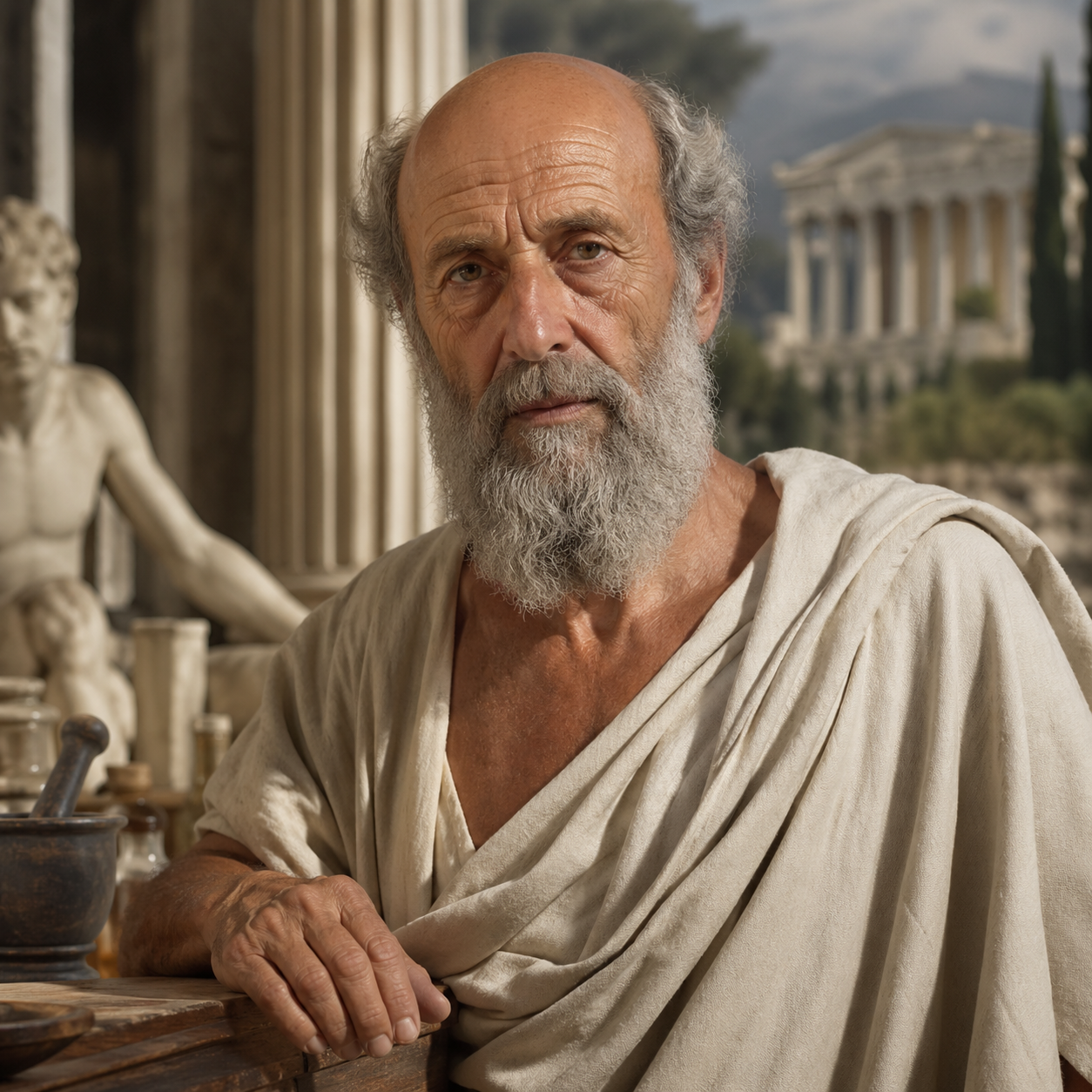
Hippocrates — "The physician must be a gentle hand, a sharp eye, and a clean heart."
The physician must be a gentle hand, a sharp eye, and a clean heart.
The physician must be a gentle hand, a sharp eye, and a clean heart.
Click any product to generate a realistic preview. Up to 3 at a time.
* Initial load can take up to 90 seconds — revising the preview in another color is nearly instant.
"Conclusions which are merely verbal cannot bear fruit, only those do which are based on demonstrated fact. For affirmation and talk are deceptive and treacherous. Wherefore one must hold fast to facts…"
"To eat when you are sick, is to feed your sickness."
"If you are not your own doctor, you are a fool."
"Those diseases which medicines do not cure, iron cures; those which iron does not cure, fire cures; and those which fire does not cure, are to be reckoned wholly incurable."
"The way to health is to have an aromatic bath and a scented massage every day."
Describing the ideal qualities of a medical practitioner.
Date: Uncertain (attributed)
Art & CreativityFound in 1 providers: gemini
1 source checked
A doctor needs three things working together: skilled, careful hands for treatment, keen observation to diagnose accurately, and honest ethical intentions free from self-interest or corruption. Competence alone isn't enough — the healer must combine technical ability with moral integrity and attentive perception to truly serve patients well.
Hippocrates founded Western medicine on ethics as much as practice, authoring the Hippocratic Oath that bound physicians to patient welfare above profit or harm. He emphasized clinical observation — examining patients directly rather than relying on superstition — and believed a physician's character was inseparable from their healing capacity.
In ancient Greece, medicine competed with temple healers, religious ritual, and folk remedies. Hippocrates worked around 400 BCE when disease was commonly attributed to divine punishment. Establishing medicine as a rational, ethical discipline required distinguishing the physician's moral responsibility from priestly authority, making character and observational skill foundational claims against superstition-based healing.
AI-generated insights based on extensive research and information for context. Factual errors? Email [email protected].
Your cart is empty