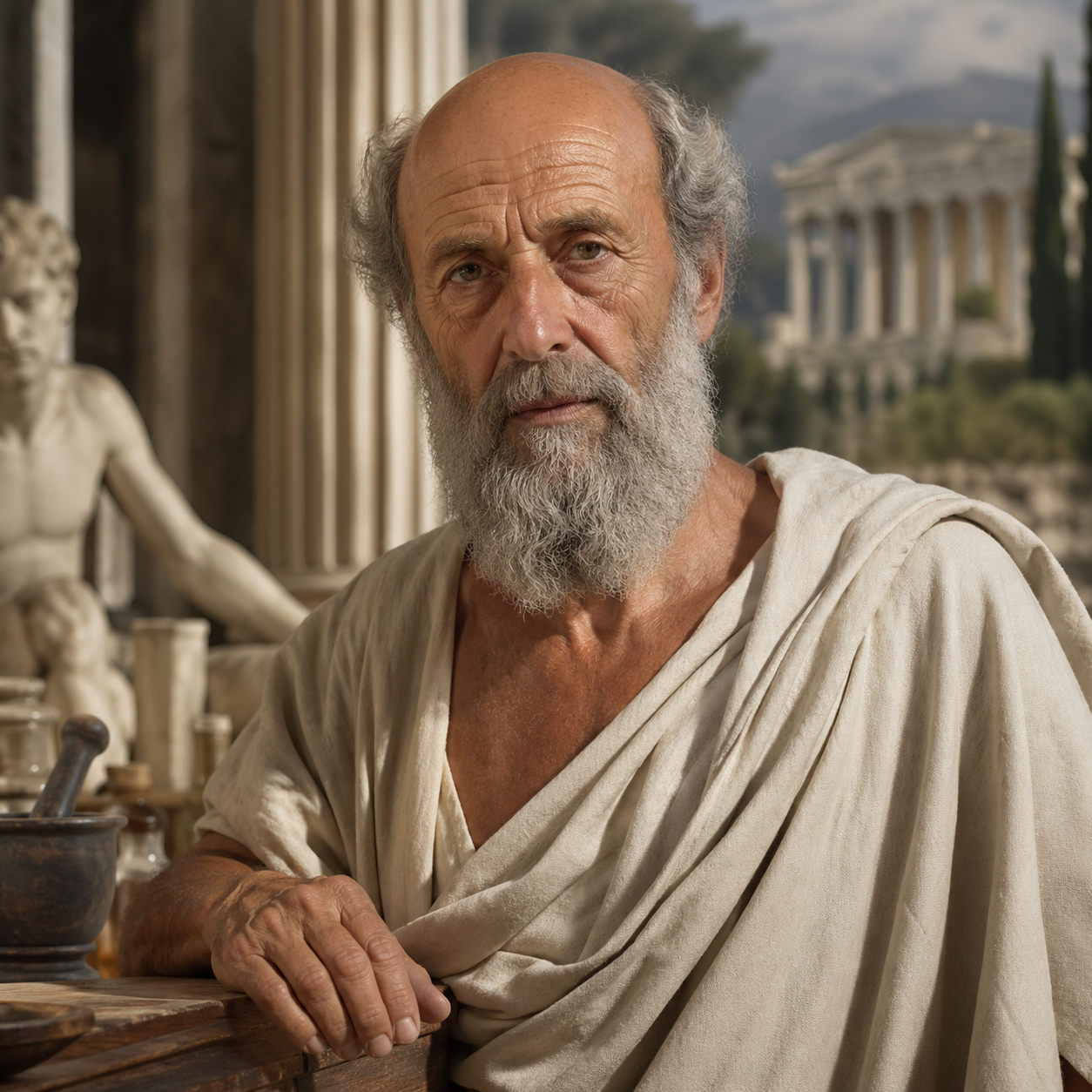
Hippocrates — "The physician must be a lover of wisdom."
The physician must be a lover of wisdom.
The physician must be a lover of wisdom.
Click any product to generate a realistic preview. Up to 3 at a time.
* Initial load can take up to 90 seconds — revising the preview in another color is nearly instant.
"It is cold that generates disease."
"The greatest wealth is health."
"Everyone has a doctor in him or her; we just have to help it in its work."
"Into whatsoever houses I enter, I will go into them for the benefit of the sick, and will abstain from every voluntary act of mischief and corruption."
"The powers of the physician are not in his drugs, but in his wisdom."
Connecting medicine with philosophy, similar to 'best physician is also a philosopher'.
Date: c. 460-370 BCE
Love & RelationshipsFound in 1 providers: gemini
1 source checked
A doctor cannot function on technical skill alone — genuine curiosity, philosophical reasoning, and the pursuit of understanding are essential to good medicine. Wisdom means knowing not just what to do, but why: understanding causes, patterns, and the limits of one's knowledge. It demands intellectual humility and continuous inquiry rather than mechanical application of rules.
Hippocrates built medicine on systematic observation and rational inquiry rather than superstition or divine intervention. He separated medicine from philosophy yet insisted practitioners think philosophically — questioning assumptions, analyzing symptoms, considering the whole patient. His Hippocratic Corpus reflects a mind deeply committed to reasoned investigation, making this statement essentially autobiographical and foundational to his entire legacy.
In ancient Greece around 400 BCE, medicine was entangled with religion and magic — illness was often attributed to divine punishment or demonic forces. Simultaneously, Greek philosophy was flourishing through Socrates and Plato. Hippocrates positioned medicine within this rational tradition, demanding that healers think like philosophers: systematically, skeptically, and ethically. This was a radical intellectual break from priestly healing traditions.
AI-generated insights based on extensive research and information for context. Factual errors? Email [email protected].
Your cart is empty