Allen Ginsberg — "The poet is a criminal. He stands against the law."
The poet is a criminal. He stands against the law.
The poet is a criminal. He stands against the law.
Click any product to generate a realistic preview. Up to 3 at a time.
* Initial load can take up to 90 seconds — revising the preview in another color is nearly instant.
"I'm a free spirit, but I'm not a wild child."
"Holy the groaning saxophone! Holy the bop apocalypse! Holy the jazzbands marijuana hipsters peace & junk & drums!"
"The universe turns inside out to devour me!"
"This is the end, the redemption from Wilderness, way for the Wonderer, House sought for All, black handkerchief washed clean by weeping—page beyond Psalm—Last change of mine and Naomi—to God's perfect…"
"The only way to overcome the devil is to love him."
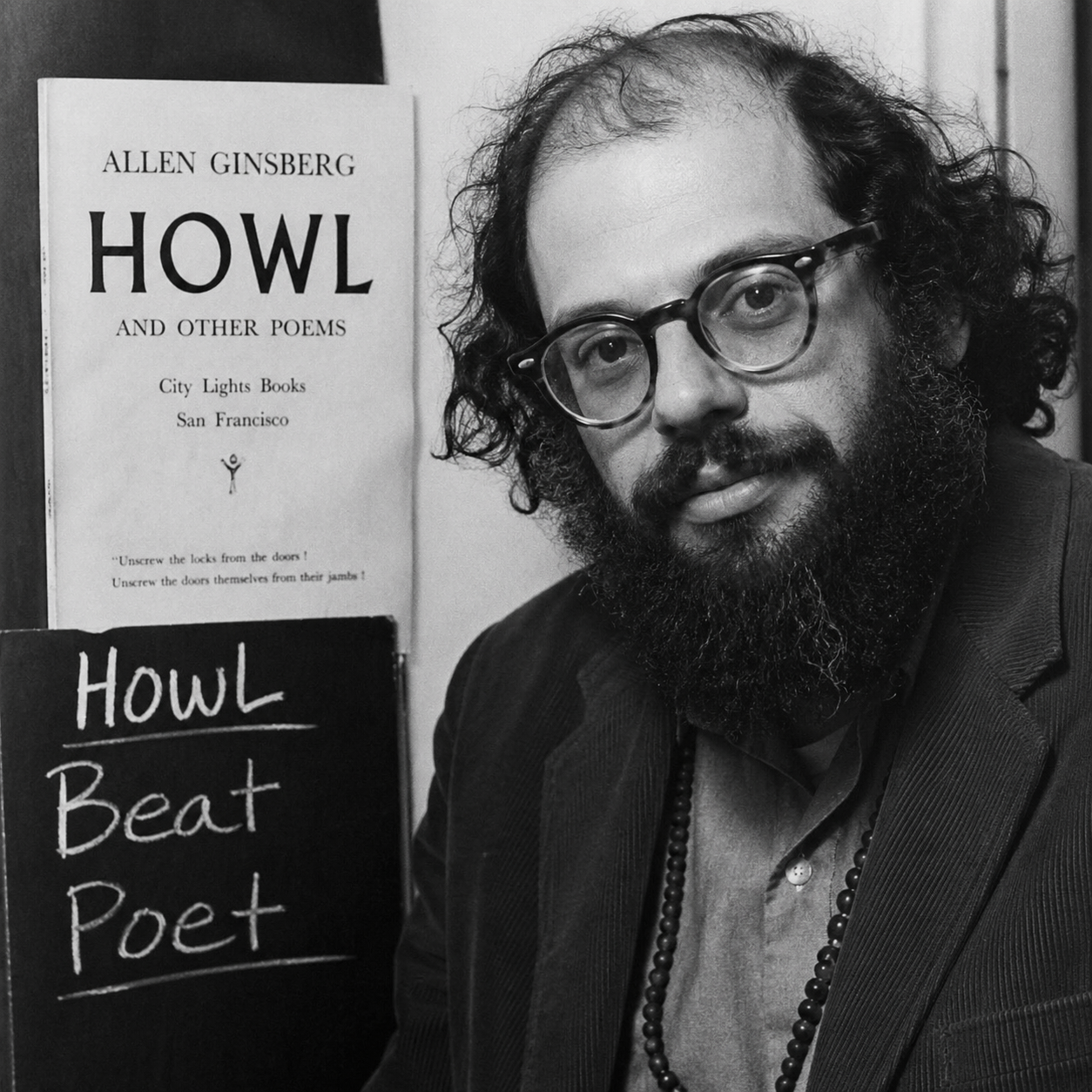
American Beat poet whose Howl (1956) faced an obscenity trial and became a counterculture manifesto. Closely associated with Jack Kerouac (Beat novelist, On the Road) and William S. Burroughs (fellow Beat, Naked Lunch). For an intellectual contrast, see T.S. Eliot, high-modernist poet of The Waste Land — Ginsberg's open-line confessional Beat verse was a deliberate rejection of Eliot's allusive academic formalism — the two halves of mid-century American poetry.
Your cart is empty