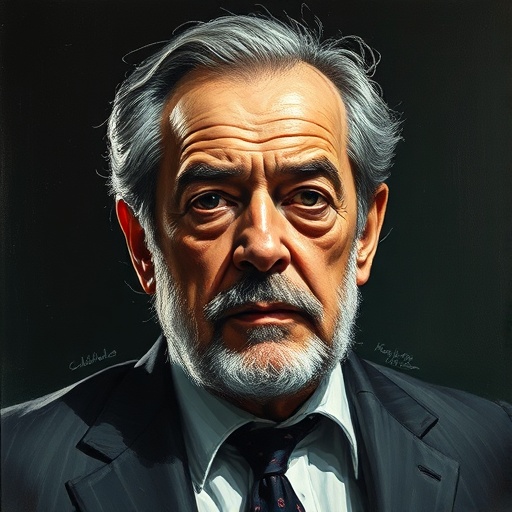
Stanley Kubrick — "The purpose of art is to make us feel. Not necessarily to make us happy."
The purpose of art is to make us feel. Not necessarily to make us happy.
The purpose of art is to make us feel. Not necessarily to make us happy.
Click any product to generate a realistic preview. Up to 3 at a time.
* Initial load can take up to 90 seconds — revising the preview in another color is nearly instant.
"The greatest discovery of all time is that a person can change his future by merely changing his attitude."
"The only way to do great work is to love what you do."
"Only the very young and the very old can afford to be honest."
"Mr. President, I'm Not Saying We Wouldn't Get Our Hair Mussed. But I Do Say No More Than 10 To 20 Million Killed Tops...Depending On The Brakes."
"Perhaps it's a good thing that I'm not very social, because I don't think I could stand the company of most living people."
American filmmaker (2001: A Space Odyssey, Dr. Strangelove, The Shining) whose perfectionist year-long shoots and 100-take method redefined auteurist cinema. Closely associated with Orson Welles (auteur predecessor and Citizen Kane director) and Steven Spielberg (younger collaborator (A.I. Artificial Intelligence)). For an intellectual contrast, see Quentin Tarantino, postmodern American filmmaker — Kubrick's films erase influences into singular monolithic vision; Tarantino's foreground every reference as a deliberate tribute. The two opposite ways auteurist cinema can be made.
Found in 1 providers: grok
1 source checked
Your cart is empty