Edward Jenner — "The pursuit of knowledge is an endless one; but it is also a most delightful one…"
The pursuit of knowledge is an endless one; but it is also a most delightful one.
The pursuit of knowledge is an endless one; but it is also a most delightful one.
Click any product to generate a realistic preview. Up to 3 at a time.
* Initial load can take up to 90 seconds — revising the preview in another color is nearly instant.
"The practice of vaccination is now so generally adopted, that it is hardly necessary to recommend it."
"The deviation of the Cow Pox from its true character appears to be very frequent; and when it does appear, it is, as far as I have seen, uniformly in the following manner: The vesicle, instead of bein…"
"The joy I felt at the prospect before me of being the instrument destined to take away from the world one of its greatest calamities was so excessive that I sometimes found myself in a kind of reverie…"
"This Inquiry will lay all those troublesome ghosts which have so long haunted the Metropolis with their ox-faces, & dismal hootings against Vaccination. However, tis all for the best – you may depend …"
"Altho' I should be happy to shield it myself from the speckled Monster, yet I would advise you not long to risk my coming to Town. I will just add that I consider the Vaccine Lancet in the hand of [Dr…"
Found in 1 providers: grok
1 source checked
Learning never stops — there's always more to discover — but that's not a burden, it's a joy. The quote rejects the idea that knowledge has a finish line and instead frames the infinite nature of discovery as something to embrace. Curiosity itself is the reward, not any final destination. The more you learn, the more you want to know, and that restless desire is pleasurable rather than exhausting.
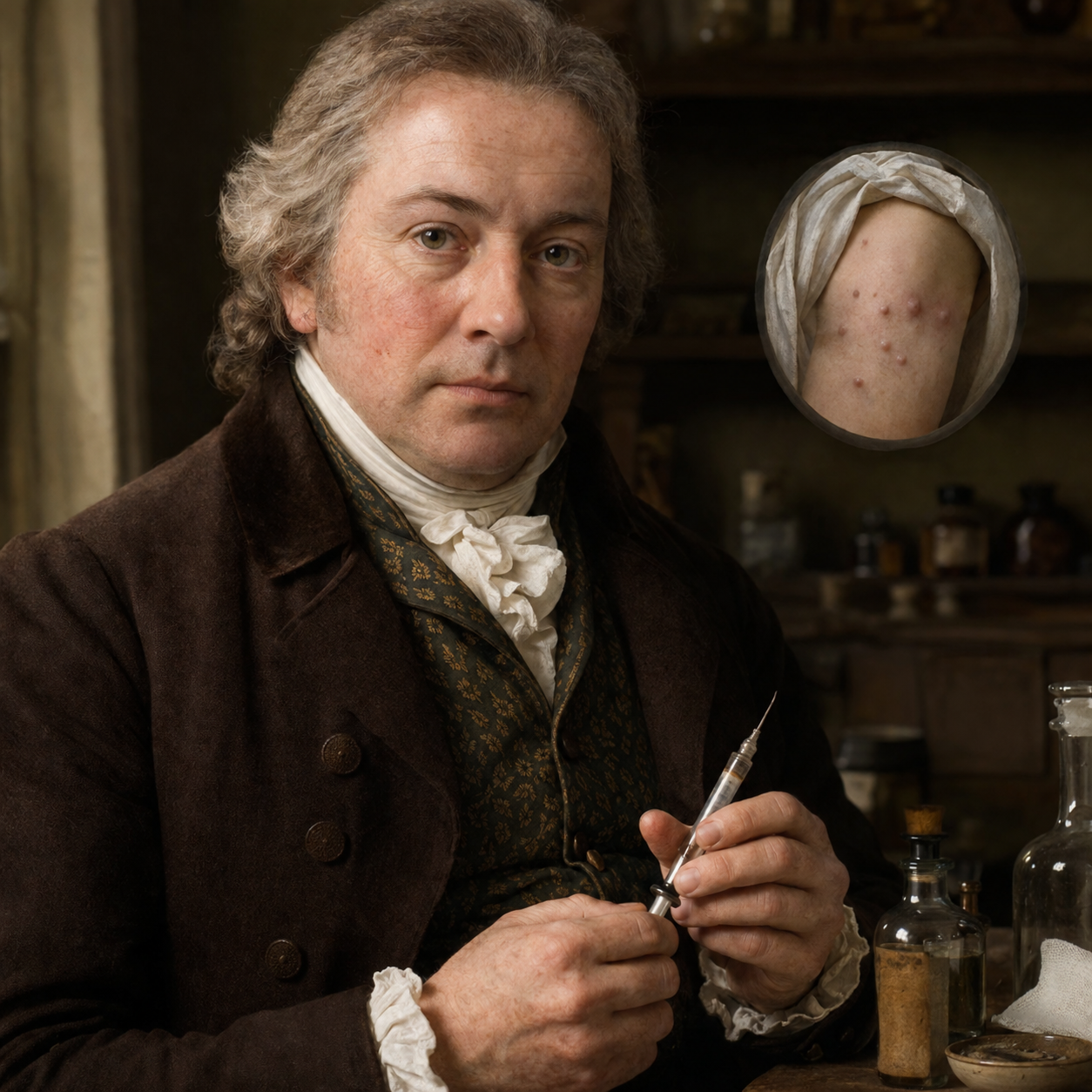
Jenner spent decades observing milkmaids, studying cowpox, and testing hypotheses before proving vaccination worked — driven entirely by curiosity, not certainty. He faced fierce professional ridicule yet kept pushing. His career embodied this quote: he didn't stop at the smallpox vaccine but continued researching natural history, bird migration, and hibernation until his death. Knowledge as delight, not mere duty, explains his stubborn, lifelong scientific curiosity.
Jenner lived during the Enlightenment's peak and the early Industrial Revolution, when scientific societies were proliferating and empirical inquiry was displacing superstition. Smallpox killed roughly 400,000 Europeans annually, making the stakes of discovery viscerally real. In this climate — where knowledge could literally end plagues — framing endless inquiry as delightful rather than daunting was a radical, hopeful declaration about human progress and the promise of reason.
AI-generated insights based on extensive research and information for context. Factual errors? Email [email protected].
Your cart is empty