John Calvin — "The reprobate are raised up to manifest the glory of God, when, by their condemn…"
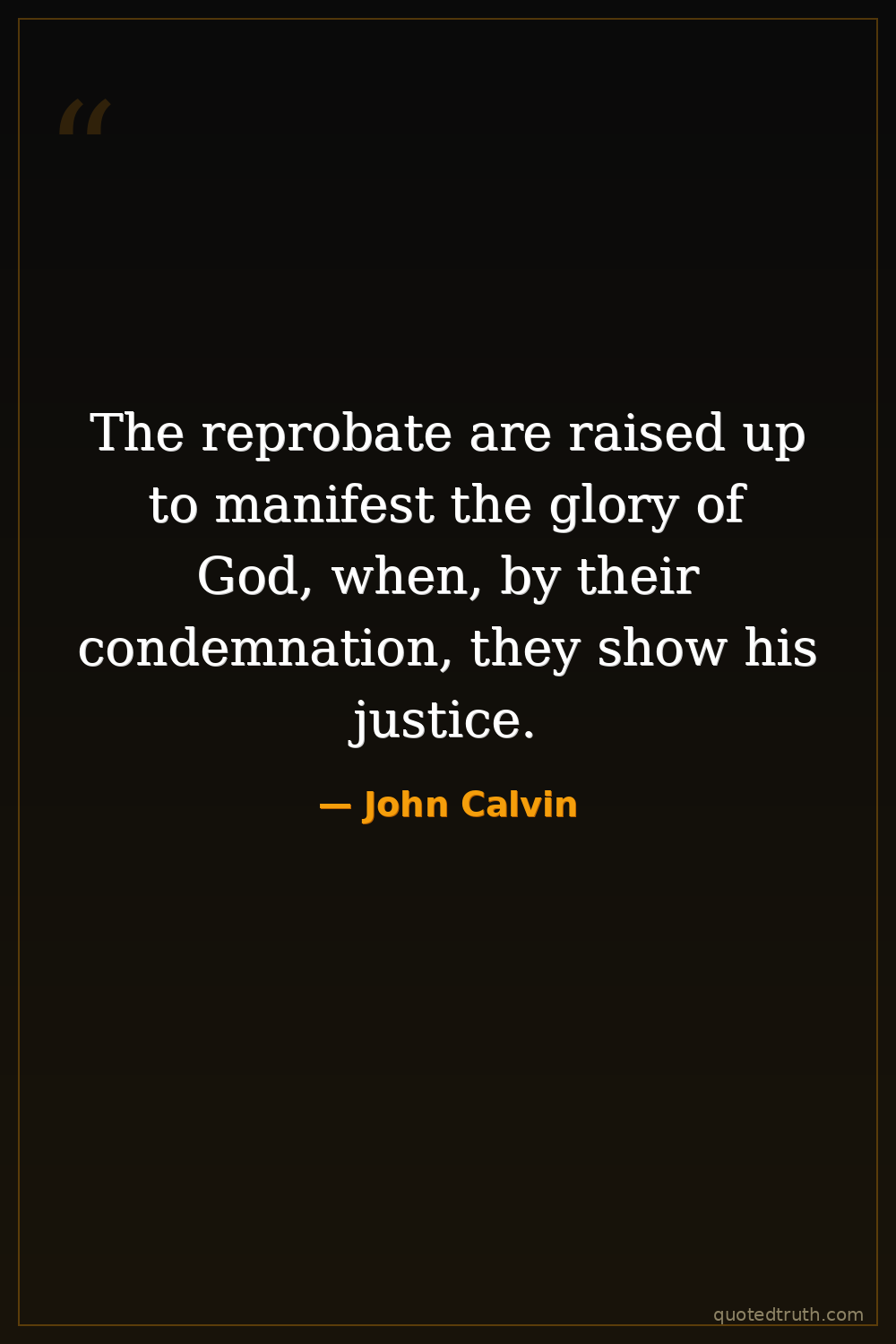
The reprobate are raised up to manifest the glory of God, when, by their condemnation, they show his justice.
The reprobate are raised up to manifest the glory of God, when, by their condemnation, they show his justice.
Click any product to generate a realistic preview. Up to 3 at a time.
* Initial load can take up to 90 seconds — revising the preview in another color is nearly instant.
"The church is the mother of all the godly."
"The natural gifts were corrupted in man through sin, but his supernatural gifts were stripped from him."
"The reprobate are often endued with excellent gifts, but these are given them, not for their salvation, but for their condemnation."
"The whole life of a Christian should be a perpetual exercise of repentance."
"There is no other way to be saved than by the grace of God."
French theologian whose Institutes of the Christian Religion (1536) systematized Protestant Reformed doctrine, including predestination. Closely associated with Martin Luther (Reformation founder, Calvin's predecessor). For an intellectual contrast, see Jacobus Arminius, Dutch Reformed theologian (1560-1609) — Arminius's rejection of strict double-predestination founded Arminianism — the theological tradition modern Methodism, most evangelicalism, and Pentecostalism descend from. The Calvinist-Arminian debate has divided Protestantism for 400 years.
Found in 1 providers: grok
1 source checked
Even those condemned to damnation serve a divine purpose — their punishment reveals God's justice to the world. The damned are not failures of providence but instruments of it. Their condemnation makes God's righteous judgment visible, just as the saved display his mercy. In this framework, no human being exists outside God's sovereign design; every soul, saved or condemned, ultimately glorifies him.
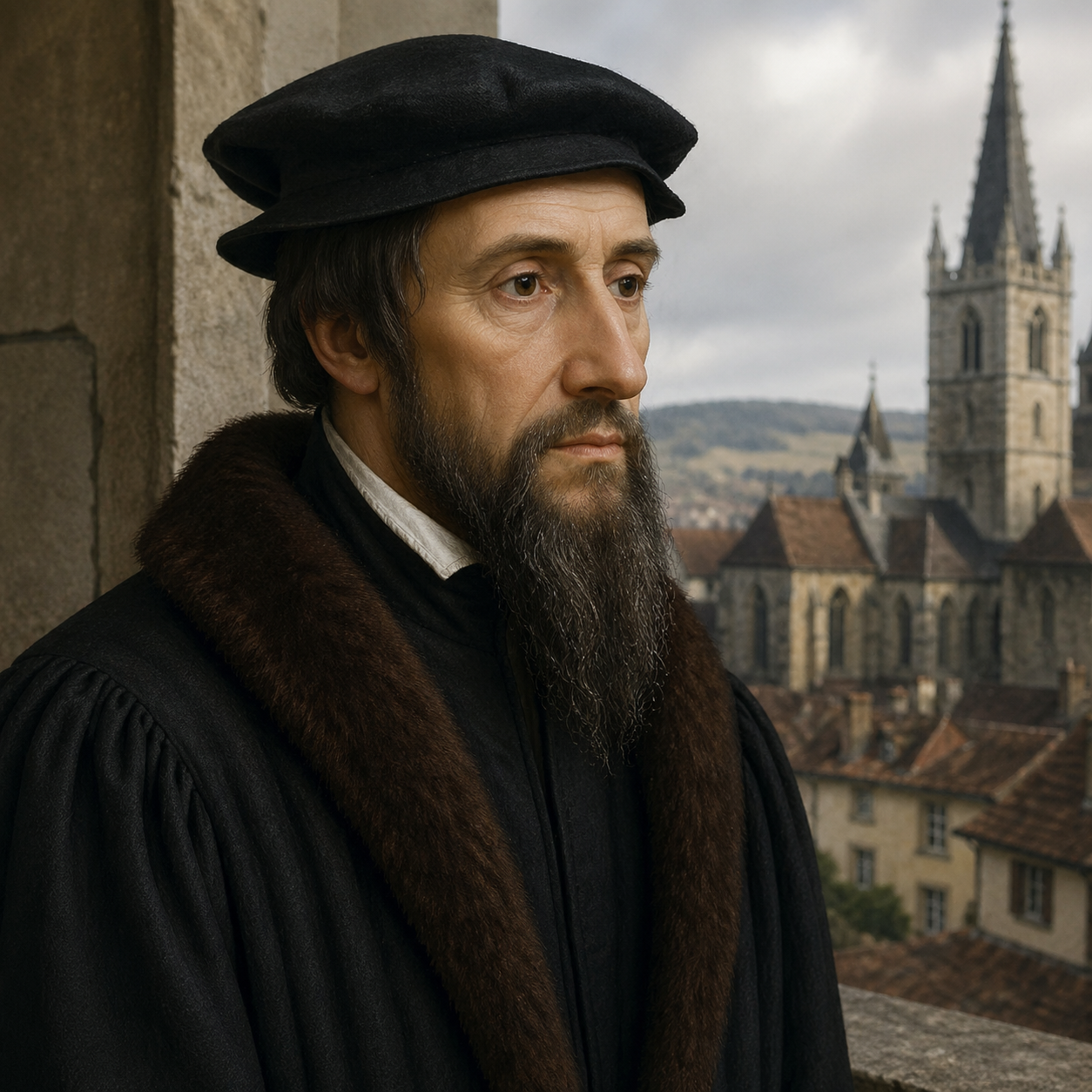
Calvin built his entire theology around God's absolute sovereignty. His doctrine of double predestination — that God elects some to salvation and ordains others to damnation before birth — sits at the heart of the Institutes of the Christian Religion. As Geneva's dominant reformer, he governed a city on these principles, believing human institutions and individual lives, including the condemned, existed to glorify a God whose will could never be frustrated.
The Protestant Reformation shattered Catholic Europe's unified vision of salvation through works and sacraments. Luther's break in 1517 unleashed fierce debates over grace, free will, and damnation. Calvin, writing amid religious wars and the Council of Trent's Catholic counter-response, pushed divine sovereignty to its limit. In an age when heretics burned and martyrs died, the question of who was saved — and why — carried enormous personal, political, and social stakes.
AI-generated insights based on extensive research and information for context. Factual errors? Email [email protected].
Your cart is empty