Rosalind Franklin — "The results suggest a helical structure (which must be very closely packed) cont…"
The results suggest a helical structure (which must be very closely packed) containing 2, 3, or 4 co‐axial nucleic acid chains per helical unit.
The results suggest a helical structure (which must be very closely packed) containing 2, 3, or 4 co‐axial nucleic acid chains per helical unit.
Click any product to generate a realistic preview. Up to 3 at a time.
* Initial load can take up to 90 seconds — revising the preview in another color is nearly instant.
"My own work is concerned with the structure of nucleic acids. I am trying to determine the structure of DNA."
"The more evidence I collect, the closer I feel to understanding the true nature of DNA."
"I do not like the idea of a woman going into science as a career."
"It's a pity that scientific recognition often comes with so much struggle and politics."
"I am not easily deterred by setbacks."
Found in 1 providers: deepseek
1 source checked
The data from X-ray crystallography indicates DNA forms a helix, wound tightly enough that its components are compacted close together. The evidence points to two, three, or four chains of nucleic acid running parallel along a shared central axis. Franklin is deliberately cautious — she reports what the results suggest rather than declaring certainty, modeling the careful, evidence-bound reasoning that defines rigorous experimental science.
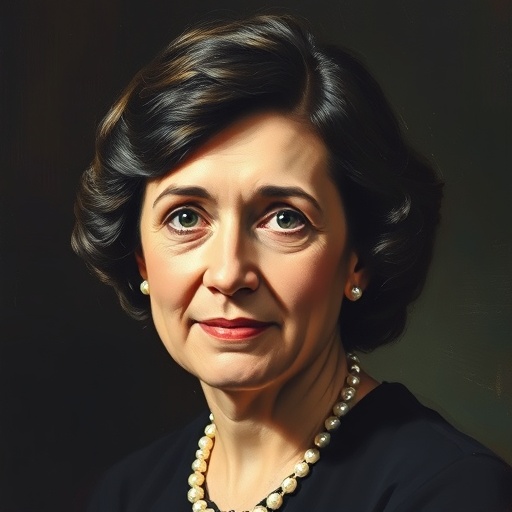
Franklin was one of history's finest X-ray crystallographers, whose painstaking work at King's College London produced Photo 51 and precise structural measurements of DNA. This quote captures her defining trait: epistemic discipline. While Watson and Crick speculated boldly, Franklin let data set the limits of her claims. Her work was shared with Watson without her consent, and the 1962 Nobel Prize went to others — she had died in 1958.
Written circa 1952, this note came during the fiercest race in biology's history. Watson and Crick at Cambridge, Pauling at Caltech, and Franklin at King's College were all chasing DNA's structure. The post-war scientific boom poured funding into molecular biology. The answer would unlock genetics, medicine, and evolution. Within a year, Watson and Crick published their double-helix model, built partly on Franklin's data — data she had not authorized them to see.
AI-generated insights based on extensive research and information for context. Factual errors? Email [email protected].
Your cart is empty