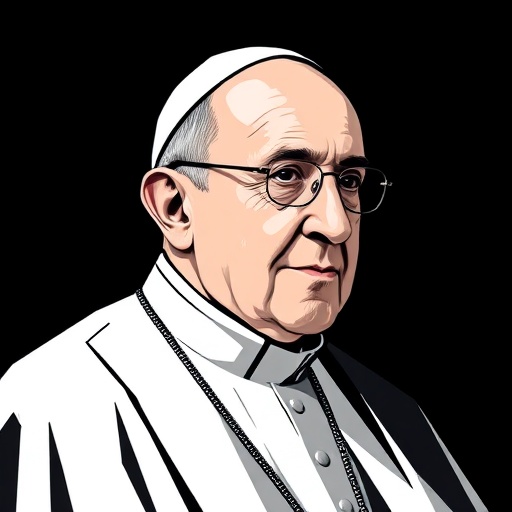
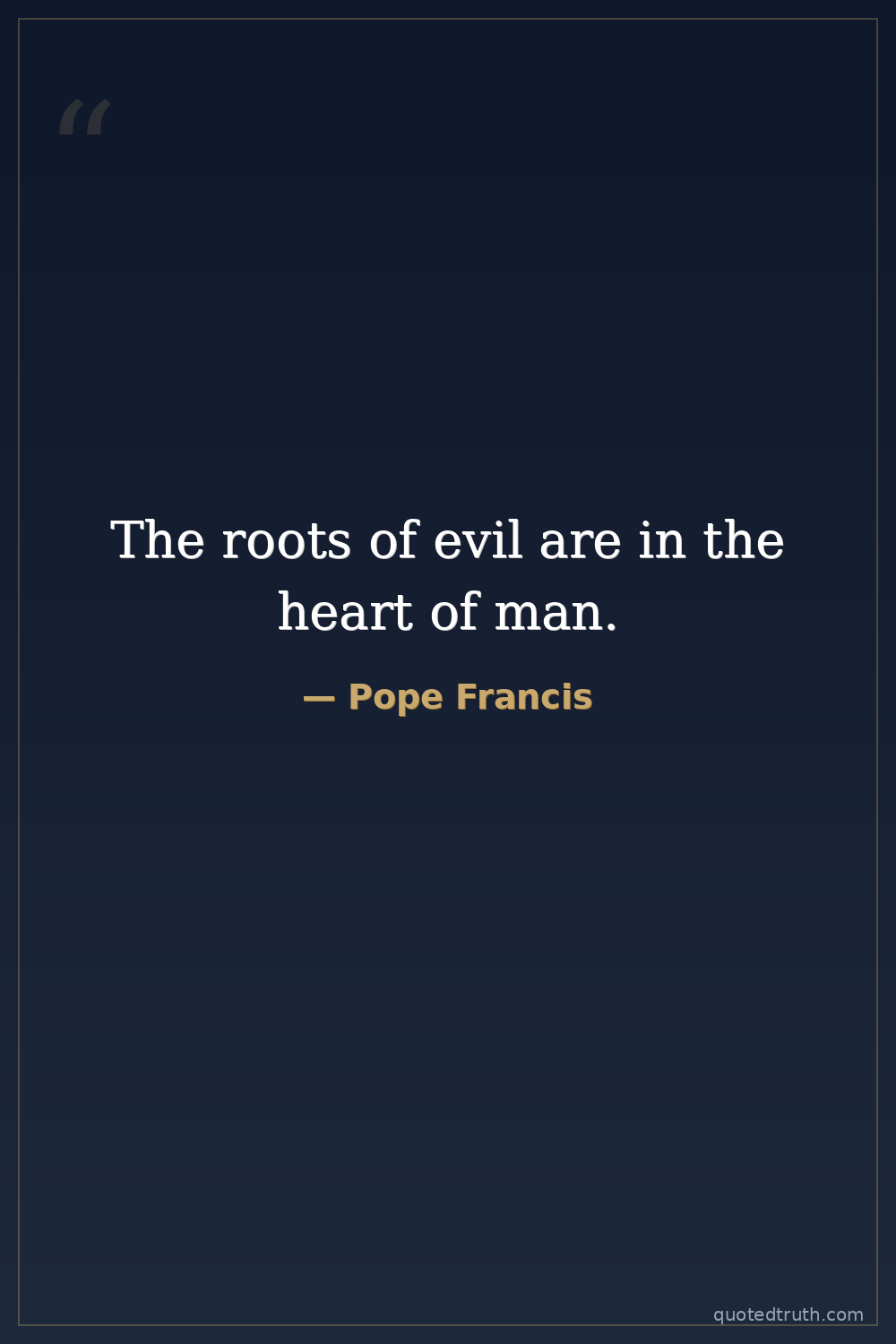
Pope Francis — "The roots of evil are in the heart of man."
The roots of evil are in the heart of man.
The roots of evil are in the heart of man.
Click any product to generate a realistic preview. Up to 3 at a time.
* Initial load can take up to 90 seconds — revising the preview in another color is nearly instant.
"The greatest danger is not sin, but rather spiritual comfort, the temptation to live a comfortable life, a tranquil life, a life where everything is in order."
"A priest who is a saint told me: 'Women are the ones who move history forward.'"
"No one can be condemned forever, because that is not the logic of the Gospel."
"It’s true that I’m a bit of a daredevil, but I’m a bit of a daredevil because I’m old, and I don’t have much to lose."
"I don't have a plan. I don't have a program. I don't have anything. I'm just trying to be a good shepherd."
First Latin American and Jesuit pope (2013-), who has steered the Catholic Church toward pastoral inclusion on LGBTQ pastoral care, divorced Catholics, and climate. Closely associated with Pope John XXIII (the Vatican II reformer pope) and Cardinal Walter Kasper (his theological ally on pastoral reform). For an intellectual contrast, see Cardinal Raymond Burke, American traditionalist cardinal, former head of the Vatican Apostolic Signatura — Burke is the public face of Catholic traditionalism that views Francis's pastoral approach as doctrinally dangerous — he has formally challenged Amoris Laetitia and other Francis reforms.
Found in 1 providers: grok
1 source checked
Evil doesn't originate in systems, circumstances, or outside forces—it grows from within individual human beings. This places moral responsibility squarely on personal character: greed, indifference, pride, and cruelty are choices made in the human heart. Lasting change requires interior conversion, not merely external reform. It's a deeply Catholic but universally resonant idea—that fixing institutions without transforming people leaves the true source of harm untouched.
Pope Francis, the first Jesuit pope, grounds his ministry in Ignatian spirituality's emphasis on interior examination and personal conversion. He has repeatedly confronted corruption inside the Vatican, the clergy sex abuse crisis, and global inequality—all of which he traces to hardened hearts. His pastoral visits to prisons, slums, and refugee camps reflect his conviction that human cruelty is a spiritual failure demanding not just policy reform but soul-level transformation.
Francis became pope in 2013 amid the Vatican Bank scandal and a Church shaken by sex abuse revelations. His papacy has spanned ISIS terrorism, European refugee crises, climate emergencies, and rising nationalism. In an era when systemic explanations dominate public discourse—blaming algorithms, governments, corporations—his insistence on individual moral accountability offers a counter-narrative: no external fix resolves what corruption, indifference, and violence have planted in human hearts.
AI-generated insights based on extensive research and information for context. Factual errors? Email [email protected].
Your cart is empty