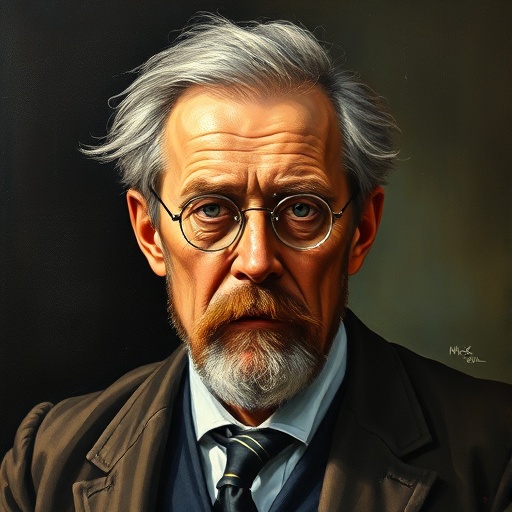
Max Planck — "The scientist needs a vivid imagination to create hypotheses and theories. The b…"
The scientist needs a vivid imagination to create hypotheses and theories. The best scientists are also artists.
The scientist needs a vivid imagination to create hypotheses and theories. The best scientists are also artists.
Click any product to generate a realistic preview. Up to 3 at a time.
* Initial load can take up to 90 seconds — revising the preview in another color is nearly instant.
"The pursuit of knowledge is an endless journey."
"It was a dark and stormy night..."
"The scientist's highest aim is to find the truth."
"The pioneer feels nature as an enemy, or as a force to be conquered."
"An important scientific innovation rarely makes its way by gradually winning over and converting its opponents: it rarely happens that Saul becomes Paul."
Found in 1 providers: grok
1 source checked
Great science is not just cold calculation. To propose new hypotheses, a scientist must picture realities no one has yet observed, leap beyond the data, and see patterns others miss. That creative act is artistic in nature. The finest scientific minds combine rigorous observation with the imaginative vision of a painter or poet, using creativity to invent the frameworks that experiments then test and confirm.
Planck lived this claim. To reconcile blackbody radiation data, he imagined energy itself came in discrete packets, a leap so strange he initially called it an act of desperation. That imaginative jump birthed quantum theory. A lifelong pianist who nearly pursued music professionally, Planck openly saw art and science as kindred creative disciplines, and he credited intuition alongside mathematics as essential to his breakthroughs.
In the late 1800s, many physicists believed their field was nearly finished, with only minor details left to measure. Planck's 1900 quantum hypothesis shattered that confidence and opened the revolutionary modern era of Einstein, Bohr, and Heisenberg. Amid rigid German academic formality and rising industrial rationalism, Planck's defense of imagination pushed back against the view of scientists as mere technicians, reframing discovery as a profoundly creative human endeavor.
AI-generated insights based on extensive research and information for context. Factual errors? Email [email protected].
Your cart is empty