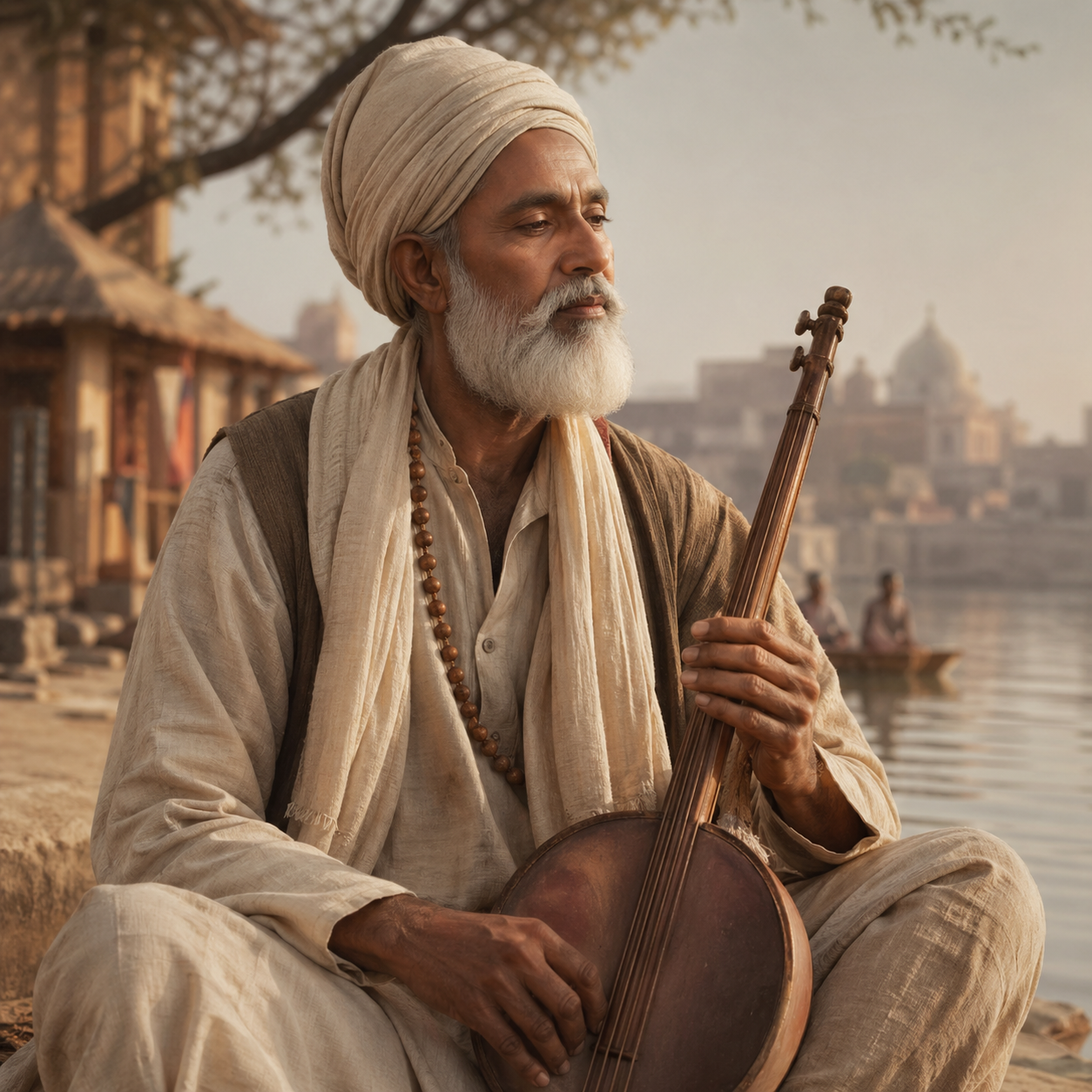
Kabir — "The snake has poison, but it does not bite itself. The human has anger, but it b…"
The snake has poison, but it does not bite itself. The human has anger, but it bites himself.
The snake has poison, but it does not bite itself. The human has anger, but it bites himself.
Click any product to generate a realistic preview. Up to 3 at a time.
* Initial load can take up to 90 seconds — revising the preview in another color is nearly instant.
"The moon shines in my body, but my blind eyes cannot see it: The moon is within me, and so is the sun. The unstruck drum of Eternity is sounded within me; but my deaf ears cannot hear it."
"I laugh when I hear that people go on pilgrimage to find God."
"When the Guest is being searched for, it is the intensity of the search for Him that does all the work."
"The true pilgrimage is to go within, and to find the divine abode in one's own heart."
"Take a pitcher full of water and set it down in the water-now it has water inside and water outside. We mustn't give it a name, lest silly people start talking again about the body and the soul."
Indian mystic poet whose verses (preserved in the Sikh Guru Granth Sahib and the Hindu Bhakti tradition) attacked both Hindu and Islamic orthodoxy. Closely associated with Guru Nanak (founder of Sikhism, who incorporated Kabir's verses). For an intellectual contrast, see Brahmanical priesthood, the ritualistic Hindu establishment of his era — Kabir's poetry is the founding text of bhakti devotional rebellion against ritualistic Hinduism — his verses ridicule caste, ritual purity, and priestly mediation as religious theatre.
Your cart is empty