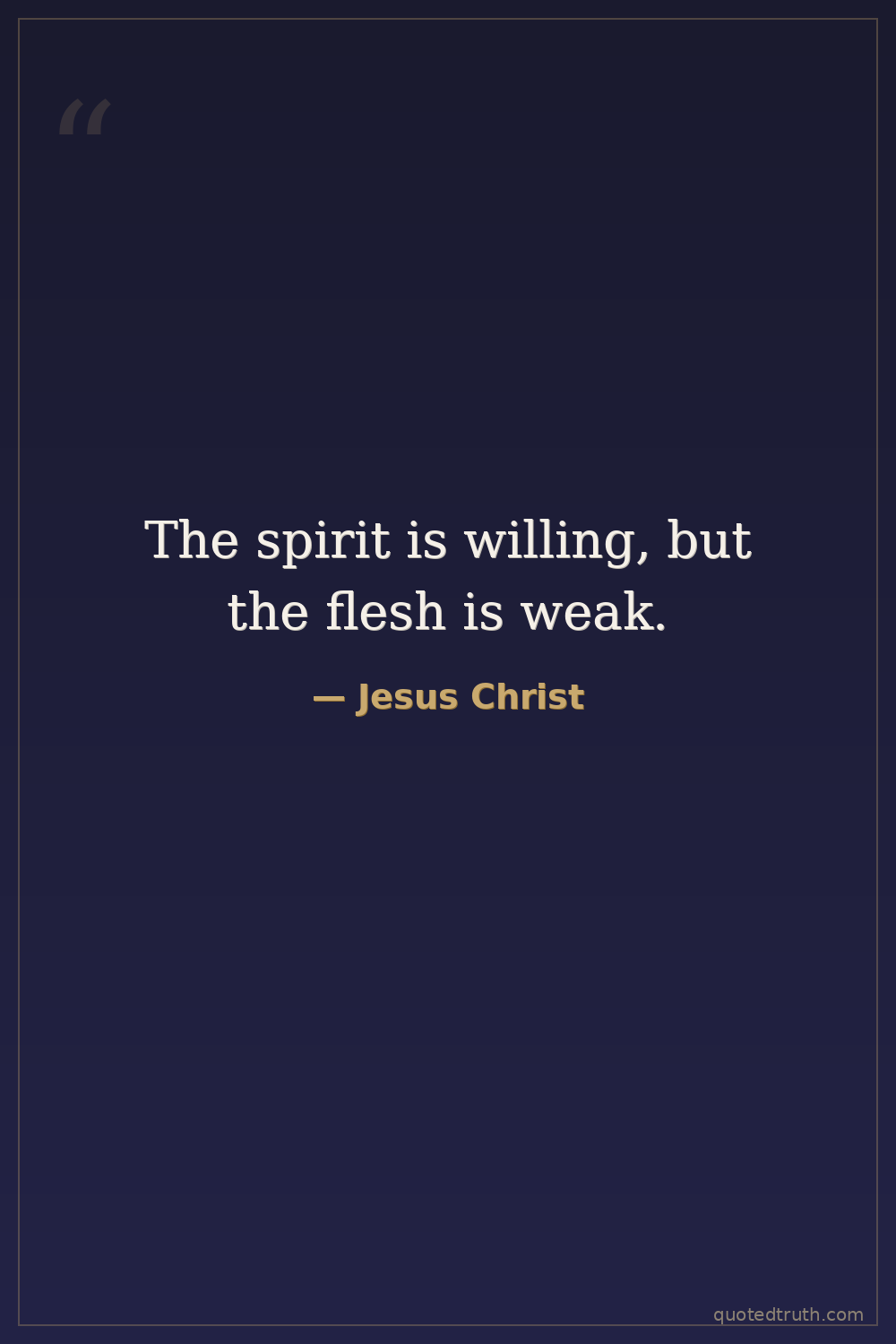
Jesus Christ — "The spirit is willing, but the flesh is weak."
The spirit is willing, but the flesh is weak.
The spirit is willing, but the flesh is weak.
Click any product to generate a realistic preview. Up to 3 at a time.
* Initial load can take up to 90 seconds — revising the preview in another color is nearly instant.
"But if anyone slaps you on the right cheek, turn to him the other also."
"For all who draw the sword will die by the sword."
"Love your enemies and pray for those who persecute you."
"Follow me, and leave the dead to bury their own dead."
"You serpents, you brood of vipers, how are you to escape being sentenced to hell?"
From a remark to his disciples in Gethsemane (Matthew 26:41)
Date: c. 30-33 CE
PhilosophicalFound in 1 providers: gemini
1 source checked
People often want to do the right thing, but their bodies, emotions, or habits betray that intention. You genuinely mean to stay awake, resist a craving, keep a promise, or follow through on a commitment, yet exhaustion, appetite, or fear wins out. The saying names the gap between sincere intent and actual performance, acknowledging human frailty without excusing it and urging vigilance because good intentions alone cannot carry you through a hard moment.
Jesus said this in Gethsemane to Peter, James, and John after finding them asleep while he prayed before his arrest. It captures his realistic view of human nature: he chose fallible disciples, warned Peter he would deny him, and taught that prayer and watchfulness are needed because sincerity alone fails. The line fits a teacher who demanded repentance yet forgave weakness, seeing people clearly without condemning them.
First-century Judea was under Roman occupation, with Passover crowds in Jerusalem and Jewish authorities wary of messianic unrest. Jesus spoke these words hours before his arrest, during a night of prayer on the Mount of Olives. In a culture steeped in apocalyptic expectation and covenantal discipline, staying awake in vigil carried religious weight. Bodily endurance, fasting, and prayer were spiritual markers, so sleeping disciples at such a moment exposed the very human-frailty gap Jesus named.
AI-generated insights based on extensive research and information for context. Factual errors? Email [email protected].
Your cart is empty