William Harvey — "The study of nature is the study of God."
The study of nature is the study of God.
The study of nature is the study of God.
Click any product to generate a realistic preview. Up to 3 at a time.
* Initial load can take up to 90 seconds — revising the preview in another color is nearly instant.
"All we know is that the blood is in motion, but what sets it in motion is God’s secret."
"The physician must be a philosopher, for there is not so great a difference between them."
"The heart is the seat of the affections."
"The vital spirit is not a separate entity, but intimately connected with the blood."
"The greatest discovery is to find the truth."
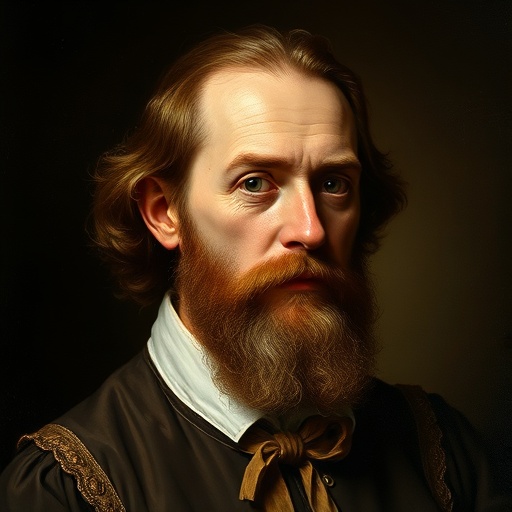
English physician whose On the Motion of the Heart and Blood in Animals (1628) demonstrated blood circulation, overturning 1,400 years of Galenic medicine. Closely associated with Francis Bacon (his contemporary in the new English empiricism). For an intellectual contrast, see Galenic medicine, the 2nd-century Greek medical tradition (humors, blood-as-consumed-fuel) — Harvey calculated that the heart pumps more blood per hour than the body could possibly produce as fuel — a single quantitative observation that demolished the entire Galenic-Aristotelian medical worldview. The cleanest example in medical history of arithmetic disproving 14 centuries of authority.
A theological statement on the religious aspect of scientific inquiry, similar to Linnaeus.
Date: Uncertain (attributed)
BiblicalFound in 1 providers: gemini
1 source checked
Examining the natural world and understanding God are the same act. When you dissect an animal, map a heartbeat, or trace the path of blood, you are reading the language of the divine. Scientific knowledge and spiritual knowledge are not separate pursuits but one continuous revelation. Nature is God's text; rigorous study is the act of reading it honestly.
Harvey spent decades cutting open hearts, watching valves open and close, measuring blood volume to prove circulation — acts then considered radical. Yet he saw his empirical method as reverence, not rebellion. A devout Protestant, he viewed the heart's elegant mechanical perfection as divine engineering. His discovery that blood circulates in a closed loop felt to him like uncovering God's blueprint for sustaining life.
Harvey worked during the Scientific Revolution, when Galileo and Kepler were rewriting humanity's understanding of the cosmos. But empirical science still needed theological cover — the Inquisition burned Giordano Bruno in 1600. Natural theology, the idea that studying creation reveals God's wisdom, gave scientists legitimate ground. Dissecting bodies was not blasphemy but piety. The quote captures exactly how early-modern thinkers reconciled radical empiricism with unshaken religious faith.
AI-generated insights based on extensive research and information for context. Factual errors? Email [email protected].
Your cart is empty