Confucius — "The superior man is easy to serve but difficult to please; the inferior man is d…"
The superior man is easy to serve but difficult to please; the inferior man is difficult to serve but easy to please.
The superior man is easy to serve but difficult to please; the inferior man is difficult to serve but easy to please.
Click any product to generate a realistic preview. Up to 3 at a time.
* Initial load can take up to 90 seconds — revising the preview in another color is nearly instant.
"To be able to practice five things everywhere under heaven constitutes perfect virtue... gravity, generosity of soul, sincerity, earnestness, and kindness."
"The Master said, 'It is not easy to find a man who has learned for three years without having his thoughts bent on learning.'"
"The superior man does not even for the space of a single meal act contrary to virtue. In moments of haste, he cleaves to it. In seasons of danger, he cleaves to it."
"The Master said, 'The superior man is universally benevolent, and not partisan. The mean man is partisan, and not universally benevolent.'"
"The superior man is distressed by his lack of ability, not by the failure of others to recognize him."
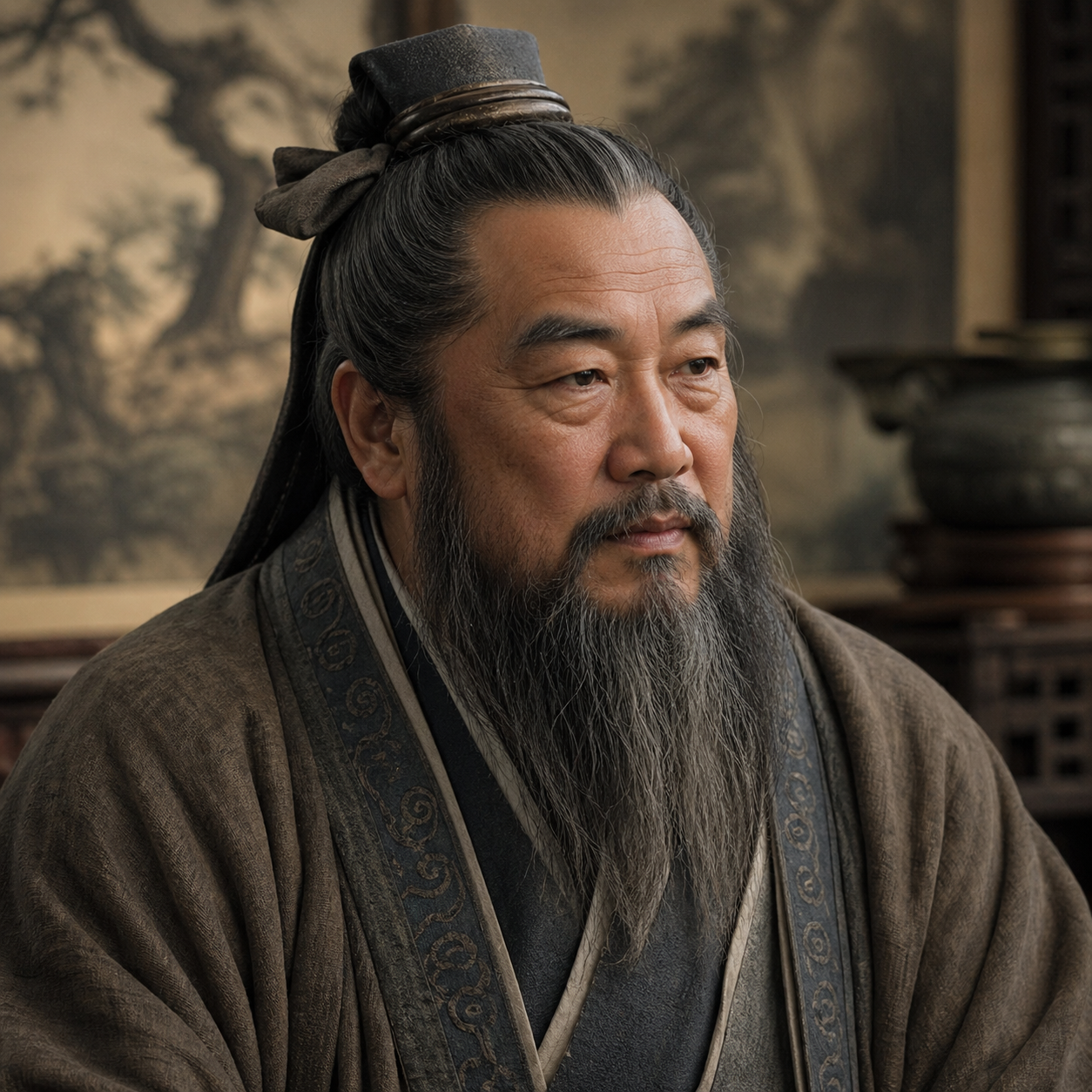
Chinese philosopher and teacher whose teachings (compiled by his students in the Analects) became the foundational ethical framework of East Asian civilization for 2,500 years. Closely associated with Mencius (his most-influential follower a century later). For an intellectual contrast, see Laozi, near-contemporary Chinese sage and Tao Te Ching author — Confucius systematized social order through ritual and family hierarchy; Laozi's Taoist effortless-action philosophy argued such systems were the disease, not the cure. The two founding poles of Chinese moral philosophy — every East Asian moral tradition since has positioned itself between them.
The standard scholarly entry points to Confucius's work: Philip J. Ivanhoe (Georgetown, Chinese philosophy) — Confucian Moral Self Cultivation (2000); Edward Slingerland (UBC, Asian Studies) — Effortless Action: Wu-wei as Conceptual Metaphor (2003); Tu Weiming (Harvard, Confucian scholar) — Confucian Thought: Selfhood as Creative Transformation (1985). These are the works graduate seminars cite when teaching Confucius.
Found in 1 providers: deepseek
1 source checked
A person of strong character is straightforward to work with because they hold reasonable expectations and judge fairly, but earning genuine approval from them requires real merit since they won't settle for flattery or shortcuts. A shallow, self-serving person is the opposite: they make demands that are hard to meet and play favorites, yet they're easily won over with compliments, gifts, or appeals to their ego rather than honest competence.
Confucius spent decades serving various rulers and advising officials, giving him deep insight into workplace dynamics and moral hierarchy. His philosophy centered on the junzi, the cultivated gentleman whose integrity shaped every relationship. He valued ren (humaneness) and yi (righteousness) over personal gain, and frequently criticized petty officials who rewarded sycophancy. This saying captures his lifelong effort to distinguish genuine virtue from performative loyalty in governance.
Confucius lived during the Spring and Autumn period (551–479 BCE), an era of political fragmentation as the Zhou dynasty weakened and feudal states competed violently. Court life was rife with intrigue, where officials often advanced through flattery, bribery, and shifting loyalties rather than competence. Confucius traveled between states seeking rulers who valued merit over manipulation, largely unsuccessfully. His teachings responded directly to this moral decay, offering a framework for ethical service and leadership amid widespread corruption.
AI-generated insights based on extensive research and information for context. Factual errors? Email [email protected].
Your cart is empty