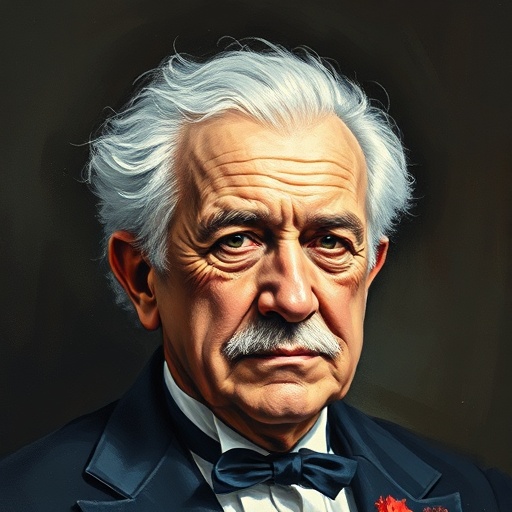
Thomas Edison — "The three great essentials to achieve anything worthwhile are, first, hard work;…"
The three great essentials to achieve anything worthwhile are, first, hard work; second, stick-to-itiveness; third, common sense.
The three great essentials to achieve anything worthwhile are, first, hard work; second, stick-to-itiveness; third, common sense.
Click any product to generate a realistic preview. Up to 3 at a time.
* Initial load can take up to 90 seconds — revising the preview in another color is nearly instant.
"Until man duplicates a blade of grass, nature can laugh at his so-called scientific knowledge."
"I don't think there is any such thing as an immortal soul. I think that the soul is just a function of the brain, and when the brain dies, the soul dies."
"I have always been a great admirer of women. I think they are the most wonderful creatures on earth."
"I owe my success to the fact that I never had a clock in my workroom. Seventy-five of us worked twenty hours every day and slept only four hours — and thrived on it."
"Five percent of the people think; ten percent of the people think they think; and the other eighty-five percent would rather die than think."
Found in 1 providers: grok
1 source checked
Success in any meaningful endeavor comes down to three basics: putting in genuine effort, refusing to quit when things get difficult, and using practical judgment to make sound decisions. Talent and inspiration matter less than showing up day after day, pushing through obstacles, and applying straightforward thinking to solve real problems. It is a formula that values persistence and pragmatism over genius or luck.
Edison famously said genius is one percent inspiration and ninety-nine percent perspiration, and his career proved it. He tested thousands of filament materials before landing on one that worked for the incandescent bulb, ran Menlo Park as a relentless invention factory, and held 1,093 US patents. His phonograph, motion picture camera, and electrical grid all emerged from grinding iteration rather than flashes of insight.
Edison worked during the late nineteenth and early twentieth centuries, when America was industrializing rapidly and self-made inventors could build empires. Electricity, telegraphy, and mass production were transforming daily life, and a culture of rugged individualism celebrated men who rose through grit rather than pedigree. Horatio Alger stories were bestsellers, and practical tinkerers competed fiercely with rivals like Tesla and Westinghouse to commercialize breakthrough technologies for a booming consumer market.
AI-generated insights based on extensive research and information for context. Factual errors? Email [email protected].
Your cart is empty