Edward Jenner — "The true philosopher is he who is always learning, and who is never ashamed to c…"
The true philosopher is he who is always learning, and who is never ashamed to confess his ignorance.
The true philosopher is he who is always learning, and who is never ashamed to confess his ignorance.
Click any product to generate a realistic preview. Up to 3 at a time.
* Initial load can take up to 90 seconds — revising the preview in another color is nearly instant.
"I shall endeavor still further to prosecute this inquiry, an inquiry I trust not merely speculative, but of sufficient moment to inspire the pleasing hope of its becoming essentially beneficial to man…"
"You see by the papers how I'm annoyed by a set of blockheads who write about the imperfection of the cowpox, as a vaccine, without any knowledge scarcely of its phenomena."
"I am not surprised that men are not grateful to me; but I wonder that they are not grateful to God for the good which He has made me the instrument of conveying to my fellow creatures."
"The joy I felt at the prospect before me of being the instrument destined to take away from the world one of its greatest calamities was so excessive that I sometimes found myself in a kind of reverie…"
"The most important lesson that I have learned in life is, that we should always endeavour to do our duty."
Found in 1 providers: grok
1 source checked
A genuine thinker never stops acquiring knowledge and feels no embarrassment admitting what they don't know. Intellectual humility isn't weakness—it's the engine of real learning. The moment someone believes they've mastered everything, growth stops. Honest acknowledgment of ignorance is what separates those who actually advance understanding from those who merely protect their reputation.
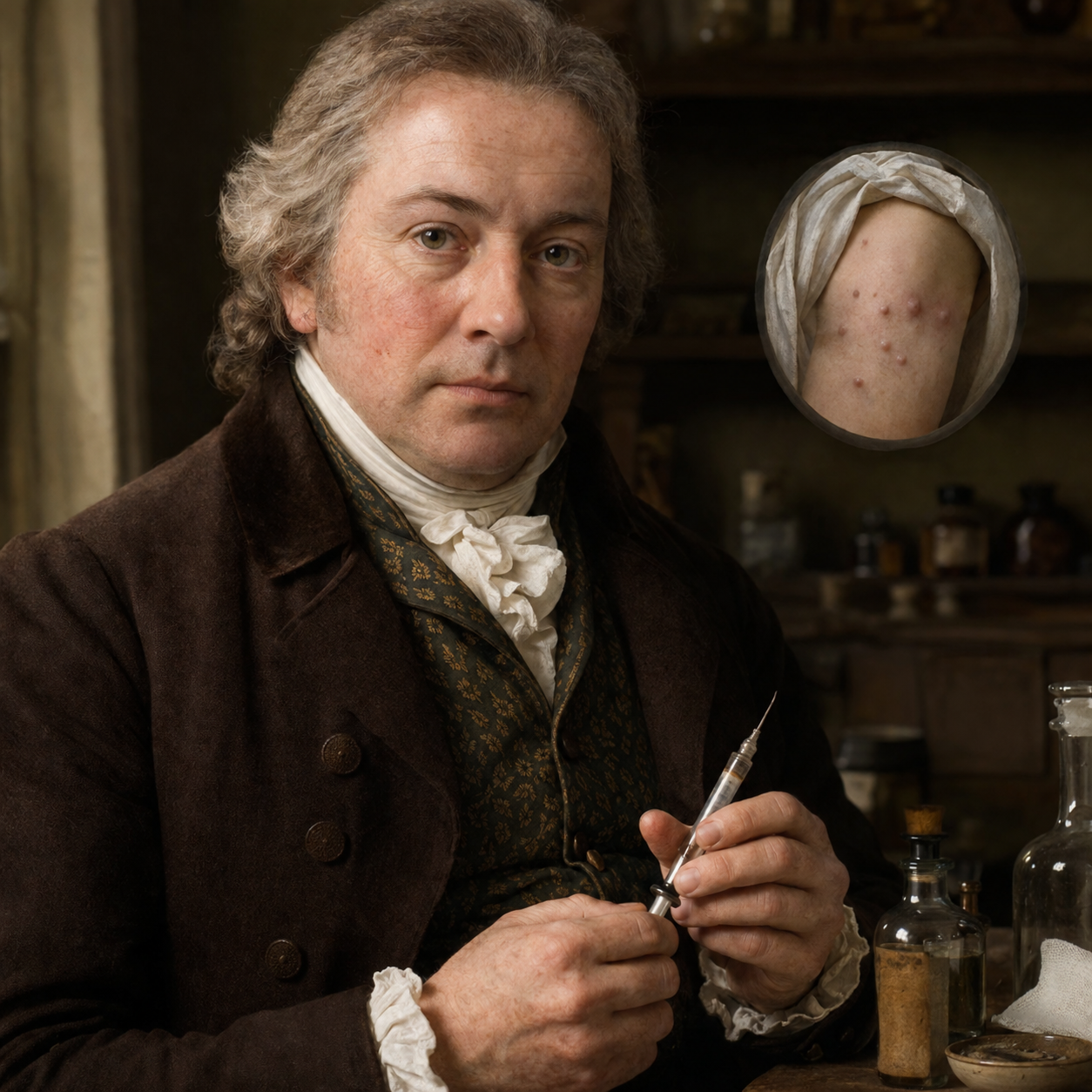
Jenner, a country physician with no university medical degree, pursued smallpox vaccination against fierce establishment ridicule. He submitted observations the Royal Society initially rejected. His willingness to keep experimenting, revise hypotheses, and endure public skepticism rather than retreat into defensiveness embodied exactly this principle—lifelong learning over credentialed certainty.
The late 18th century saw Enlightenment rationalism collide with deep superstition and institutional conservatism. Established medical bodies fiercely guarded orthodoxy. Germ theory didn't yet exist; variolation was dangerous and controversial. Admitting ignorance was professionally risky—empirical medicine was still fighting to displace tradition, making Jenner's humble, evidence-first approach genuinely countercultural.
AI-generated insights based on extensive research and information for context. Factual errors? Email [email protected].
Your cart is empty